A skylight’s two-part value proposition
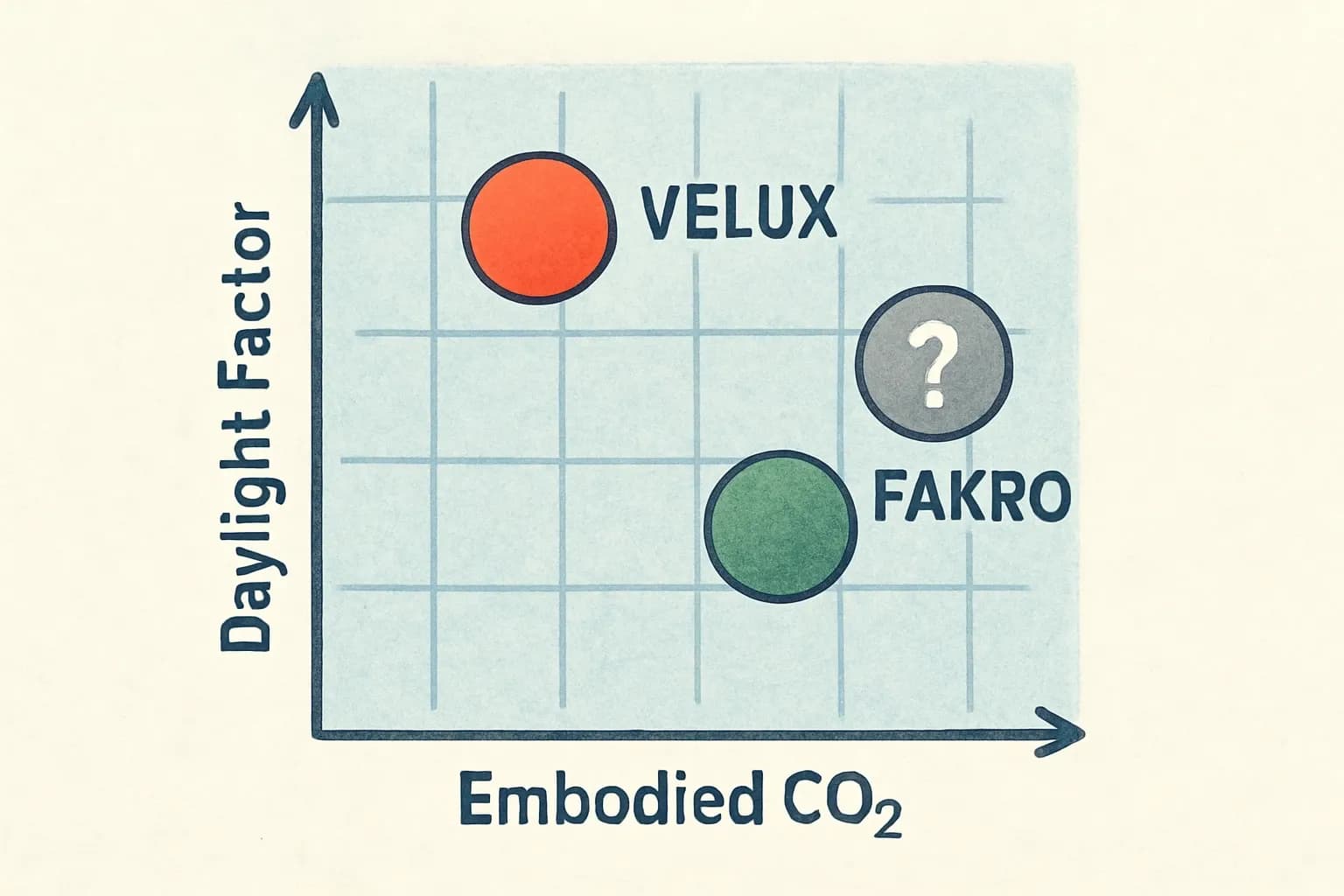
Daylighting metrics such as Useful Daylight Illuminance and the old-school daylight factor still sway architects because they cut plug-load energy and tick wellness boxes in LEED v5. Roof glazing lifts those metrics fast—one simulation showed a five percent daylight factor with just a 12 % glazing-to-floor ratio once skylights were added (VELUX Energy Study, 2016). The commercial hook is clear: less wall glass, more floorplate flexibility, smaller HVAC loads.
The embodied-carbon scoreboard
Published EPDs reveal notable spread in cradle-to-gate (A1-A3) Global Warming Potential:
- VELUX fixed wooden skylight, triple glazing: 146 kg CO₂e/m² (IBU EPD-VEL-20250262, 2025).
- FAKRO wooden roof window, standard spec: 113 kg CO₂e/m² (ITB EPD No. 578/2023).
- Columbia offers no third-party EPD as of October 2025, so its upfront carbon is anyone’s guess.
That forty-percent gap between VELUX and FAKRO comes mainly from different frame composites and factory energy mixes. Without verified data, Columbia stays off the low-carbon shortlist automatically for any Buy-Clean bid.
Ready to optimize your daylight specs and sustainability credentials?
Follow us on LinkedIn for insights that help you win tenders and enhance your competitive edge.
Daylight delivered per tonne emitted
A crude but helpful ratio is lumen-hours delivered in year one divided by embodied CO₂. Assuming identical aperture areas, VELUX’s higher solar transmittance (0.54 vs 0.48 for the FAKRO pane sets) keeps the two brands neck-and-neck on “light per kilogram” despite the carbon gap. If your brief prizes operational savings over embodied carbon, the brighter unit can still win.
Lessons from the missing EPD
Columbia’s absence shows how non-data products now slip off spec sheets. More state DOTs demand upfront-carbon numbers in 2025 procurement guides, and private developers copy that language. A skylight that can’t document A1-A3 today risks becoming the DVD of roof openings: still functional, rarely selected.
Data collection gotchas for skylight LCAs
Skylight bills of materials juggle glass recipes, spacers, gaskets, desiccants, coatings, motors, and sometimes custom curbs. Skip one and the carbon number skews low, risking rejection at verification. Early interviews with plant engineers save weeks hunting for small-batch inputs later. Nobody likes that scramble.
Takeaways for product managers
- Lock daylight-factor targets first, then optimise frame/glazing combos to hit them with minimal embodied CO₂.
- Publish an EPD before rivals do; the first compliant spec often becomes the default.
- Treat data gathering as an R&D sprint, not clerical work—it decides whether marketing can claim "low-carbon daylight." One missing gasket record can tank the schedule.
Closing thought
The skylight sweet spot is brilliant interiors with a carbon profile solid enough for the submittal binder. Nail both sides and you stop selling holes in roofs and start selling daylight as-a-service. That sells like hot cakes, every time, even in a crowded bid room with tight margin pressure. (Sorry, couldn’t resist the food metaphor—it’s hungry work.)