Master declaration, explained
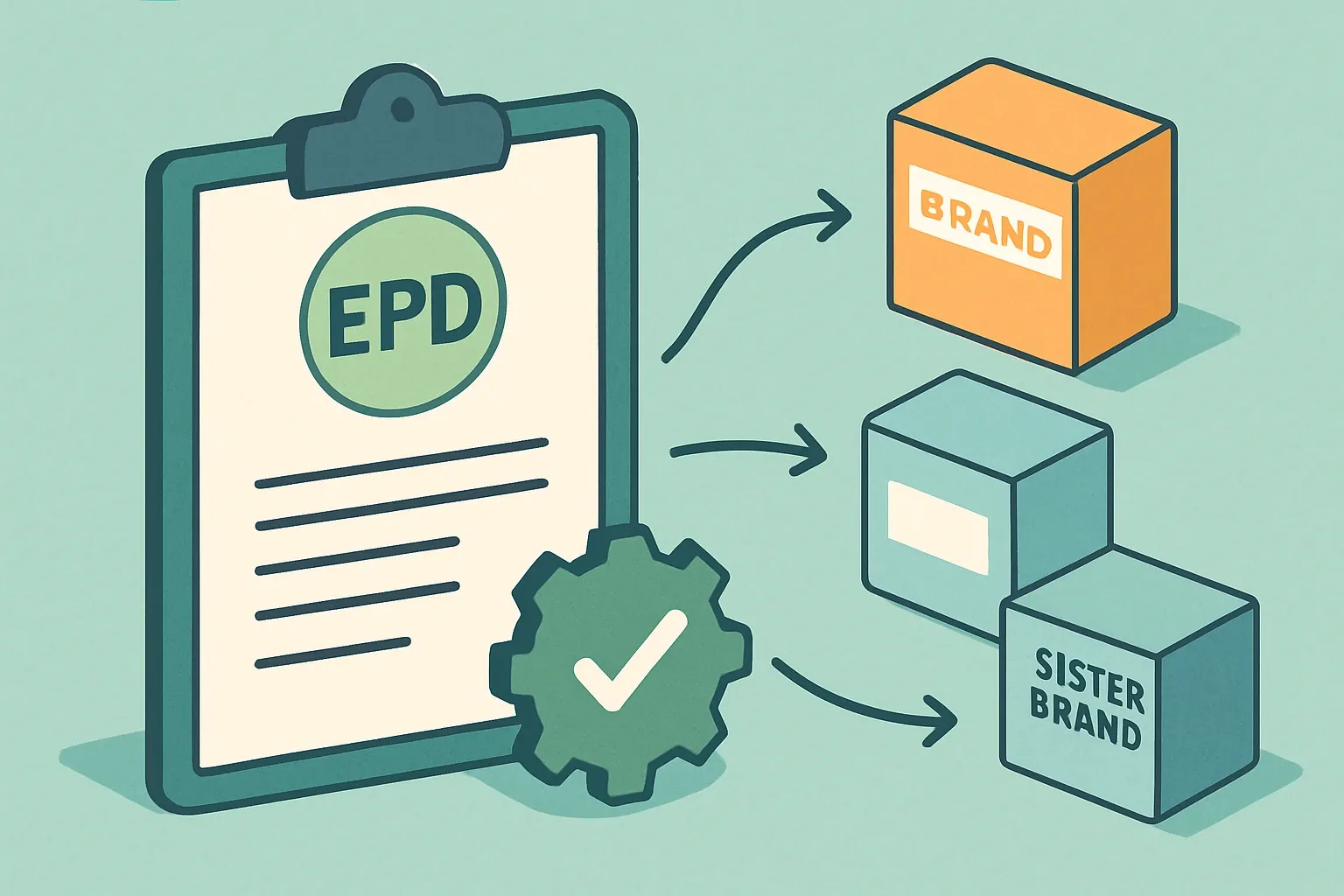
A master declaration is the source EPD built on the primary LCA and verified by a third party. Think of it as the studio cut. Sister-brand EPDs are the trailers that reuse the same footage, as long as the scenes and sequence do not change.
The master sets the declared unit, system boundary, manufacturing sites, and data sources. If white-labels copy only brand identifiers and catalog details while preserving those fundamentals, most programs allow linkage under the same PCR and verification setup.
When sister-brand EPDs are typically allowed
Manufacturers commonly qualify when the product is materially identical across brands. That means the same recipe, the same plants and processes, the same declared unit and life cycle modules, the same transport assumptions, and the same PCR. If packaging or SKUs differ in ways that do not alter impacts, operators usually accept brand-specific front matter that points back to the master LCA record.
Programs often require that all covered trade names are listed in the document or cross-referenced in the operator’s registry. This keeps procurement and specifiers from wondering which label is in scope.
The bright lines where white-labels are not allowed
White-labeling breaks once the product diverges. A new plant with a different electricity mix, a formulation tweak that changes mass balance, a different density or curing profile, or a new performance rating that implies altered use-phase behavior can all trigger a fresh LCA and a separate EPD. If transport routes or markets change enough to shift A1–A3 or A4 materially, expect a rework rather than a quick brand copy.
Program rules to watch
Operators align to ISO 14025 and EN 15804 but apply house rules on format, trade-name listings, and cross-references. Some publish one EPD that lists multiple brand names. Others issue sibling EPDs that cite the same LCA report and verifier statement. Most require the same PCR version as the master, or a documented migration plan if a new PCR releases during the cycle.
EPD validity is commonly five years, after which renewal uses the then-current PCR unless an operator grants an administrative extension for limited updates (EPD International General Programme Instructions, 2024) (EPD International, 2024) and (UL EPD Program Manual, 2024) (UL Solutions, 2024).
Verification mechanics without the mystery
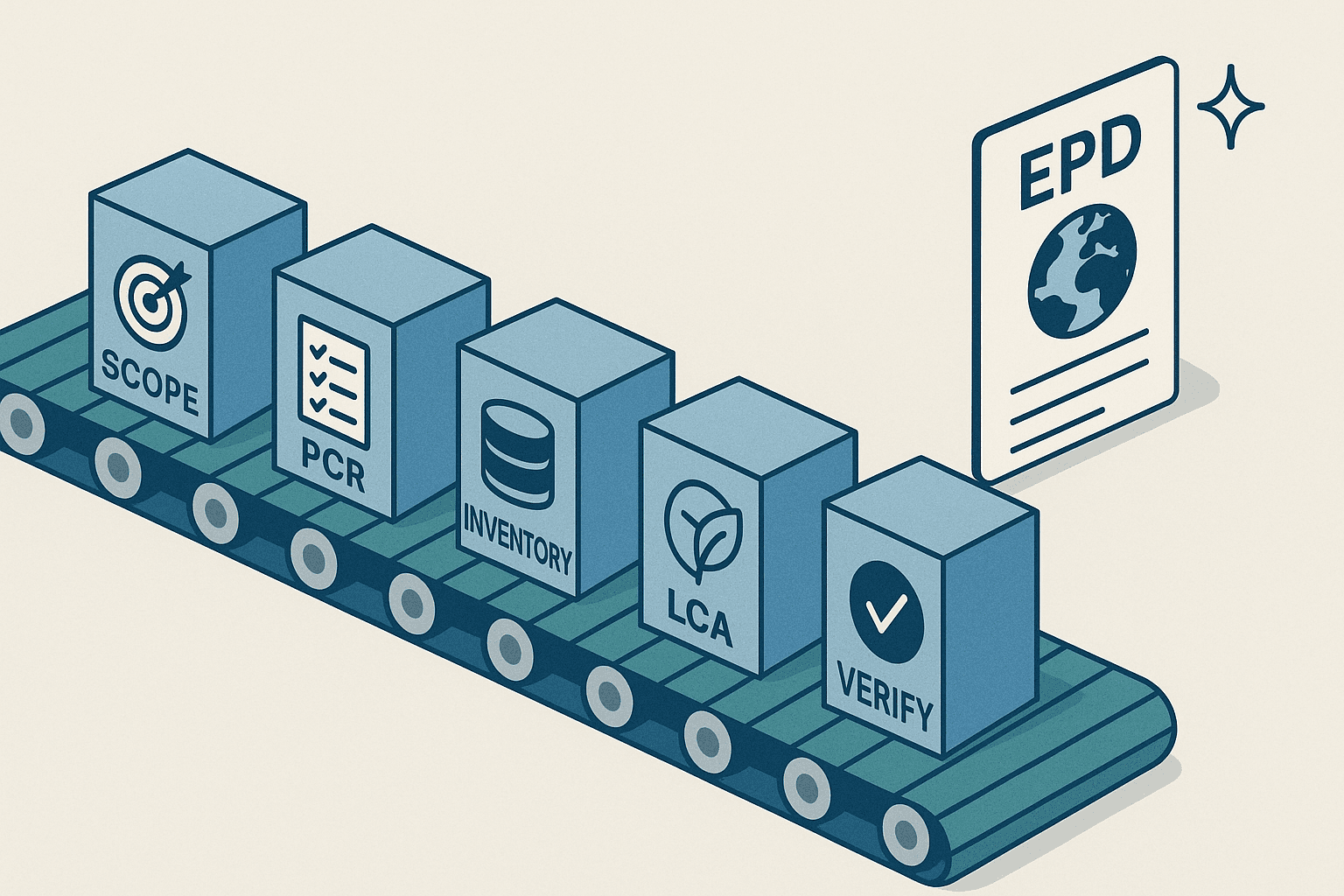
Third-party verification does not disappear for white-labels. The verifier confirms that only brand elements change, checks the product identity against the bill of materials, site list, and declared unit, and ensures no edits touch the LCA model or inventory. If anything beyond branding shifts, the review escalates from an administrative check to a targeted or full technical verification.
Manufacturers should keep a single evidence pack covering the master and every sister label. That pack includes plant data, supplier attestations, allocation logic, and version control on any edits to front matter.
Fees and contracts in real life
Publishing and verification fees vary by operator and reviewer. Many programs offer reduced administrative pricing for additional trade names that only duplicate the master content. Exact amounts depend on scope and timing, so reliable averages are scarce and quoting numbers here would be misleading. Contractually, brand owners and private-label partners should define who is the EPD holder, who funds renewals, and who manages change control.
Data hygiene for multi-brand portfolios
White-label success hinges on consistent identifiers. Align model names, SKUs, GTINs, plant codes, and declared units across the master and sisters. If machine-readable files are required, make sure the same impact tables and metadata propagate to digital formats so buyers do not see mismatched values in public portals. A single typo can haunt sales pipelines for months. Ironically, we just wrote one above, definately.
Commercial upside without the corner-cutting
White-label extensions let teams cover multiple channels and private brands quickly while staying verifiable. Sales avoids dead-ends where buyers demand a product-specific EPD and will not accept a different label. Operations avoids duplicate data chases. Portfolio managers keep renewal calendars tight instead of juggling separate LCAs for identical goods.
A simple readiness checklist
- Confirm identical formulation, plants, and process controls for every brand.
- Match PCR, declared unit, and life cycle modules to the master.
- Lock transport, packaging, and markets or document why changes do not affect impacts.
- Prepare a single evidence pack and verifier memo that maps brand fields to the master.
- Decide governance for renewals and change management before publishing.
Tie it together
Treat the master EPD as the one source of truth and make every sister label a faithful mirror. That mindset keeps verification fast, program-compliant, and commercially useful. White-labels are not shortcuts. They are distribution strategy, translated into declarations that stand up to scrutiny.