Start with an overlap map
Pull the exact scope from your statements of work, not the slideware. Highlight tasks the consultant must perform to meet ISO 14025 and EN 15804, then flag everything the contract does not explicitly reserve. Think of it like moving a couch without waking the cat. If modeling and verification are tied down, do not move them. Shift the rugs first, meaning data flows and handoffs.
What is usually locked vs open
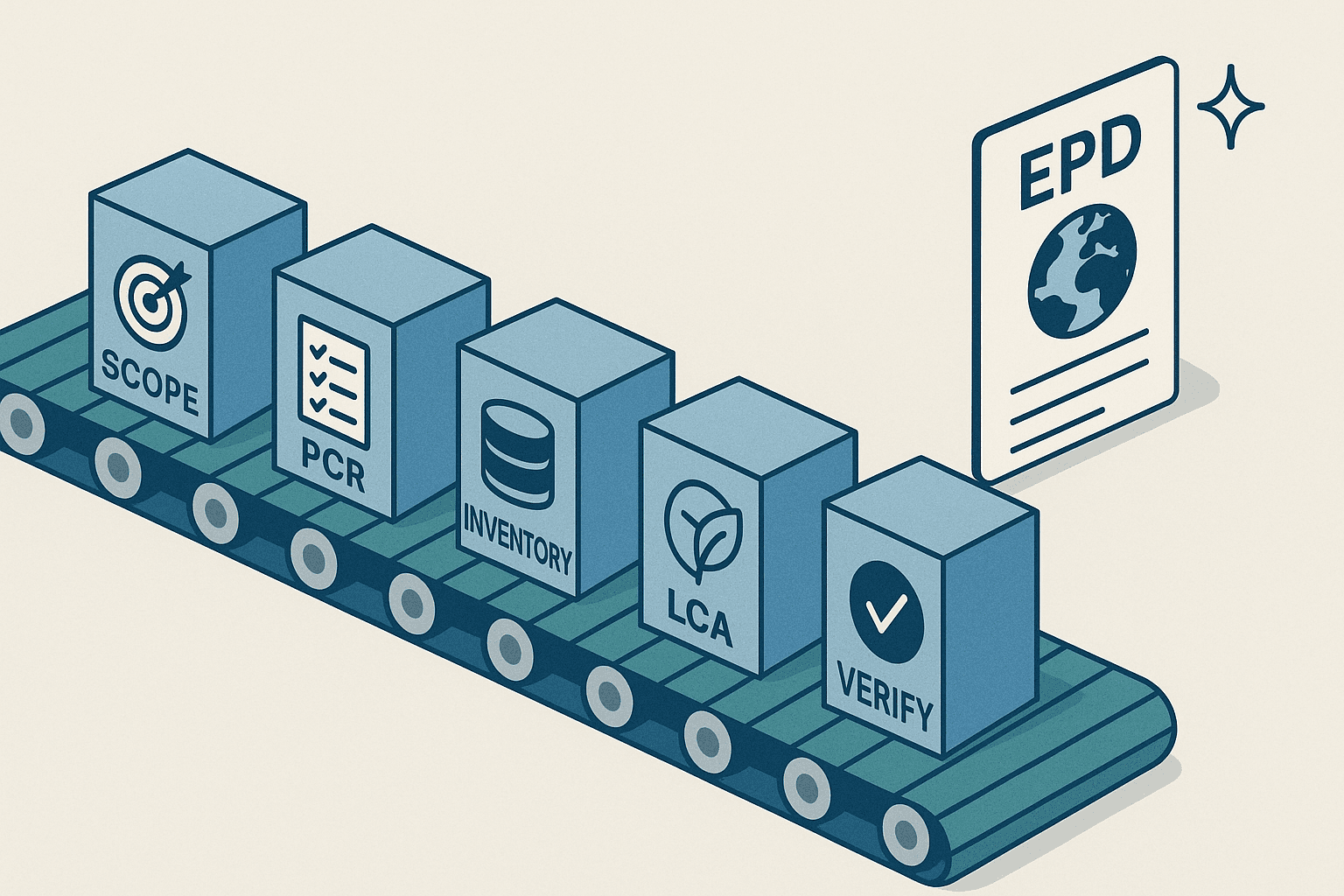
Locked items often include the LCA model build, EPD report drafting, and third‑party verification with a program operator. Those are core to the declaration and are commonly specified in retainers. Open items usually include supplier data collection, audit trails, internal KPIs, product hierarchy management, sales collateral tied to EPD data, and integrations to customer portals. These are adjacent to the EPD, not the declaration itself.
Phase where contracts allow progress
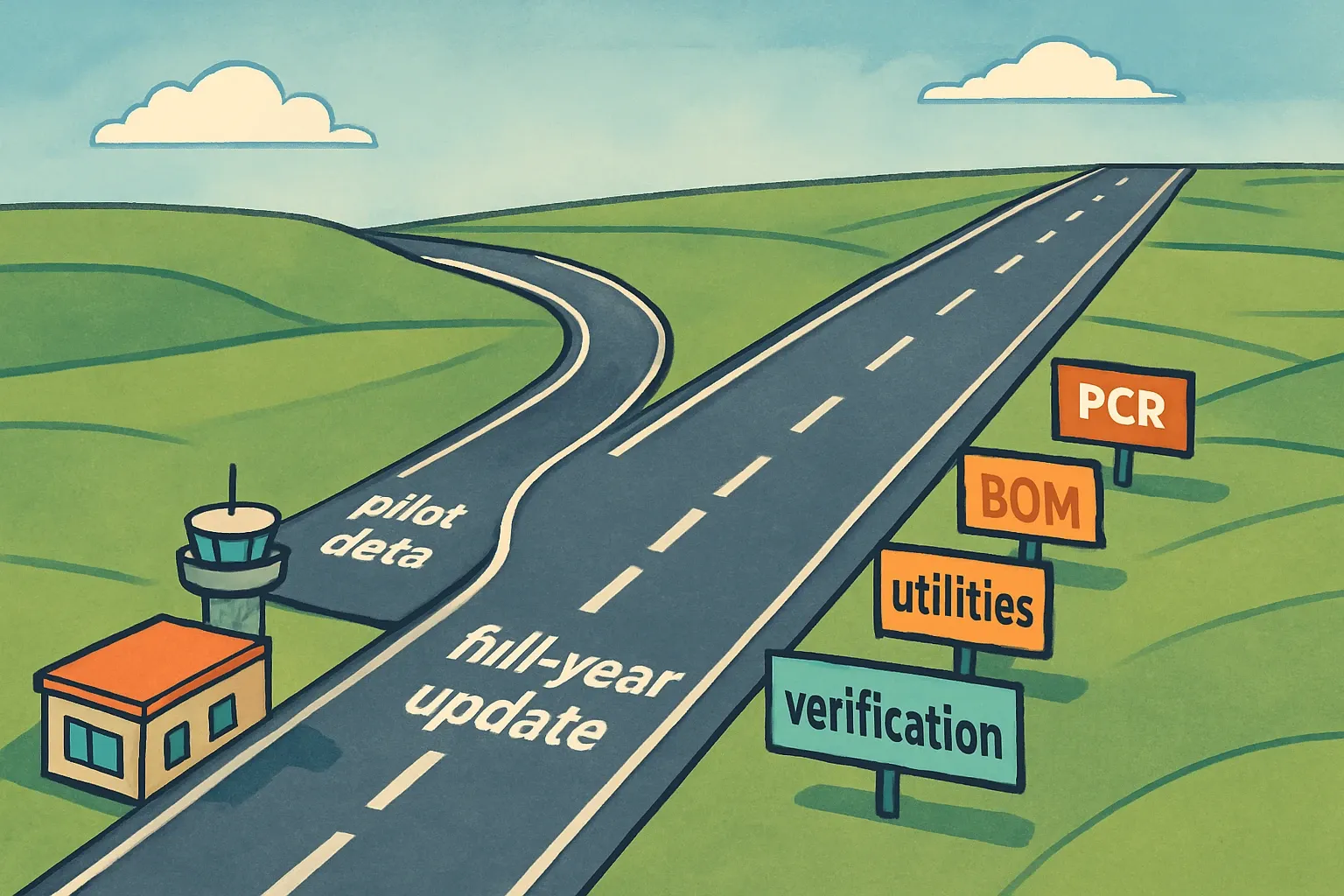
Start with capabilities that do not alter the verified model. Centralize data pulls, create plant‑level dashboards, and automate recurring requests from sales. This removes spreadsheet churn without touching the consultant’s remit. Time your heavier changes to the natural refresh window, since most program operators set EPD validity at five years, which creates a predictable upgrade cycle (EPD International General Programme Instructions, 2024) (EPD International, 2024).
Budget optics that avoid the double pay label
Use clear framing when seeking budget approval. Position overlapping services as out of scope for the new platform, and net new capabilities as the reason to invest.
- Overlap to avoid: re‑modeling the same product for the same period.
- Net new to pursue: supplier portals, sales enablement sites, executive dashboards.
- Guardrail to enforce: the consultant remains the verification interface until renewal.
Build a provable business case while you wait
Track hours removed from data collection, the number of unanswered EPD requests from customers that now get a response, and cycle time from data request to submission. If you sell into Europe, remind leaders that CSRD expands comparable disclosures across roughly 50,000 companies, which increases downstream data pulls from buyers who standardize supplier requests (European Commission, 2024) (European Commission, 2024). Reliable cost averages are hard to pin down because each scope differs, so measure internal time saved and spec wins instead of guessing.
Coordinate incumbents and new tools
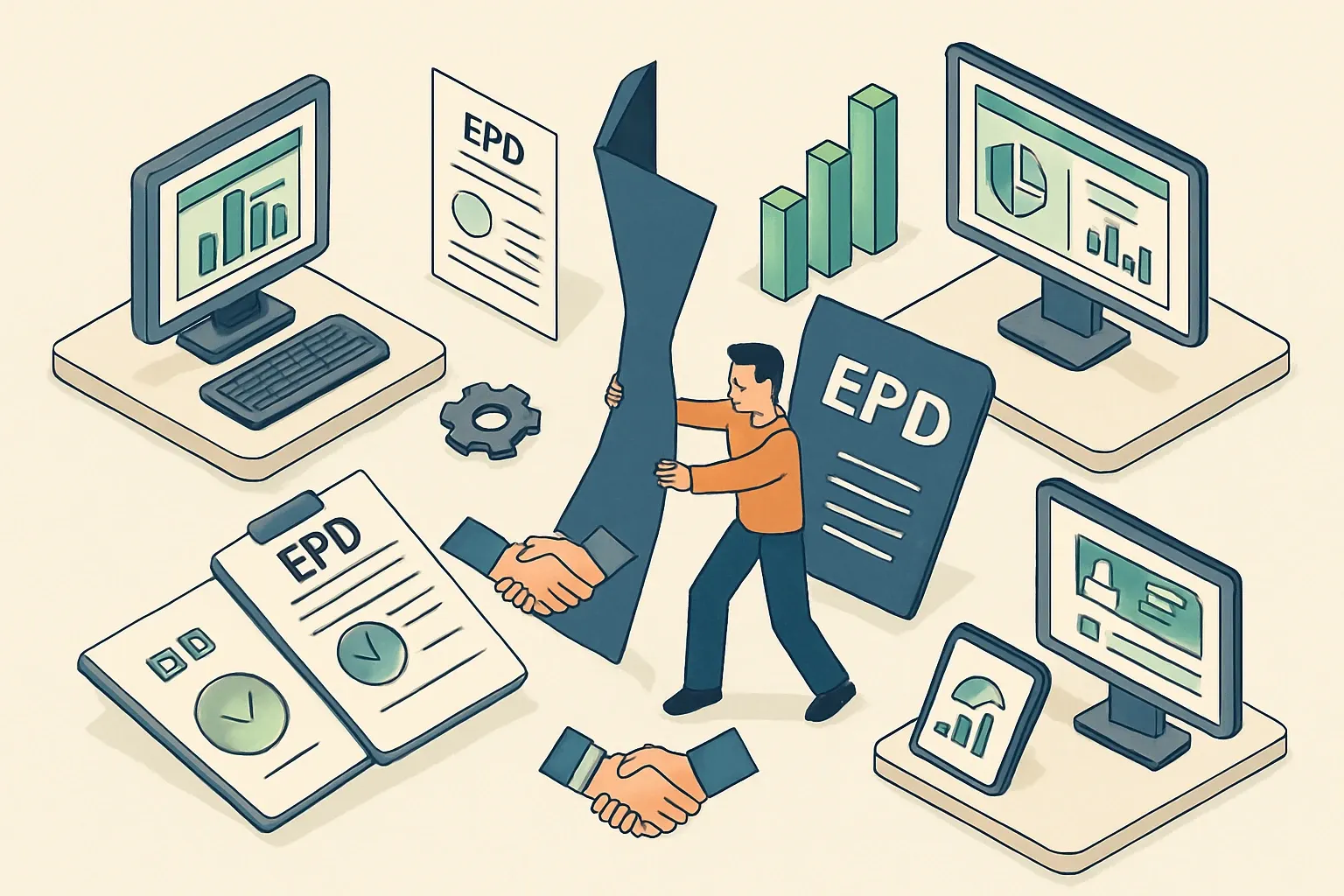
Loop in the consultant early. Agree on the division of labor in writing, including who owns the LCA model, who curates raw data, and who interfaces with the program operator for changes. Many operators, including Smart EPD in the US and IBU in Europe, accept externally prepared models so long as verification rules are met, which means clean boundaries are possible. Data and models is ultimately owned by the manufacturer, keep custody clear.
Use renewals and PCR updates as pivots
Plan your renegotiation six to nine months before renewal. That window lets you swap modeling ownership, expand scope to new product lines, or update to a newer PCR without rush. If the current PCR has evolved, fold that into the refresh plan so the next declaration carries the latest impact categories. The refresh moment is also the time to simplify the tech stack that feeds the LCA.
Red flags that create real double paying
Paying twice for third‑party verification of the same declaration period. Duplicating LCA models for identical products with no scope change. Buying a new system that promises verification yet your contract reserves that role to the consultant. If any of these appear, pause and reset responsibilities before spend.
A practical path forward
Treat modernization as a relay, not a scrum. Win quick gains where your contract is open, prove value with cleaner data and faster responses, then shift the baton at renewal when the verification step naturally returns to the table. That sequence keeps legal calm, budgets tidy, and the commercial engine moving. It definately helps to write the boundaries as three lines: what stays with the consultant today, what your team standardizes now, and what moves at renewal.