Pick the right PCR on day one
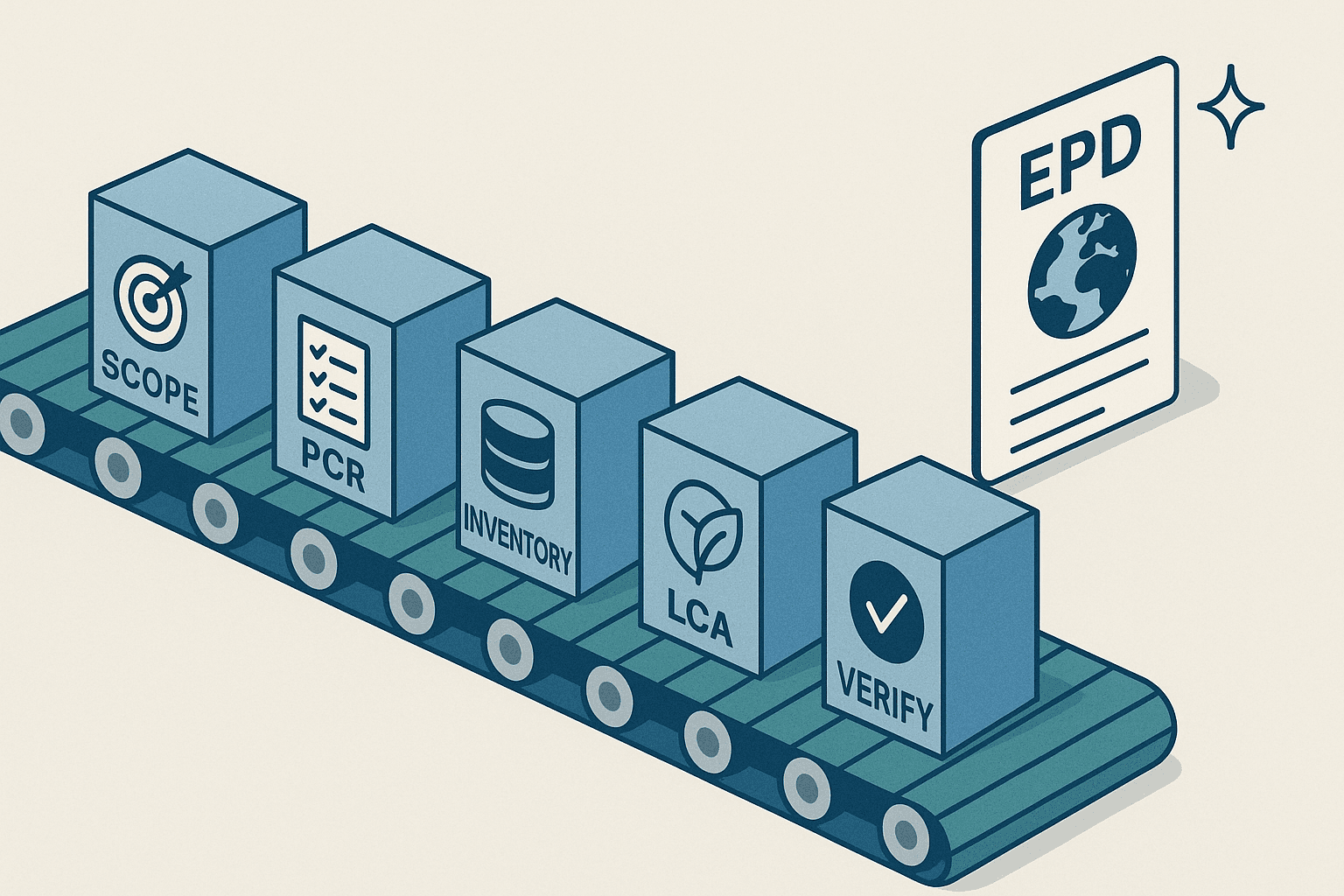
A PCR is the rulebook of Monopoly. Ignore it and the game falls apart. Select the PCR your competitors already use, then check its remaining validity so you do not switch horses mid‑stream. Most programmes set EPD validity at five years, while many PCRs renew on a three to five year cycle (EPD International GPI FAQ, 2024, EPD International GPI FAQ, 2024).
Limit scope to what buyers actually specify
Do not model the entire catalog. Start with the one product or small family that appears most in specs. If variants are materially similar, use one declaration that covers ranges rather than twelve one‑offs. That is allowed when rules for similar products are met in the PCR and programme instructions.
Lock the reference year and system boundaries
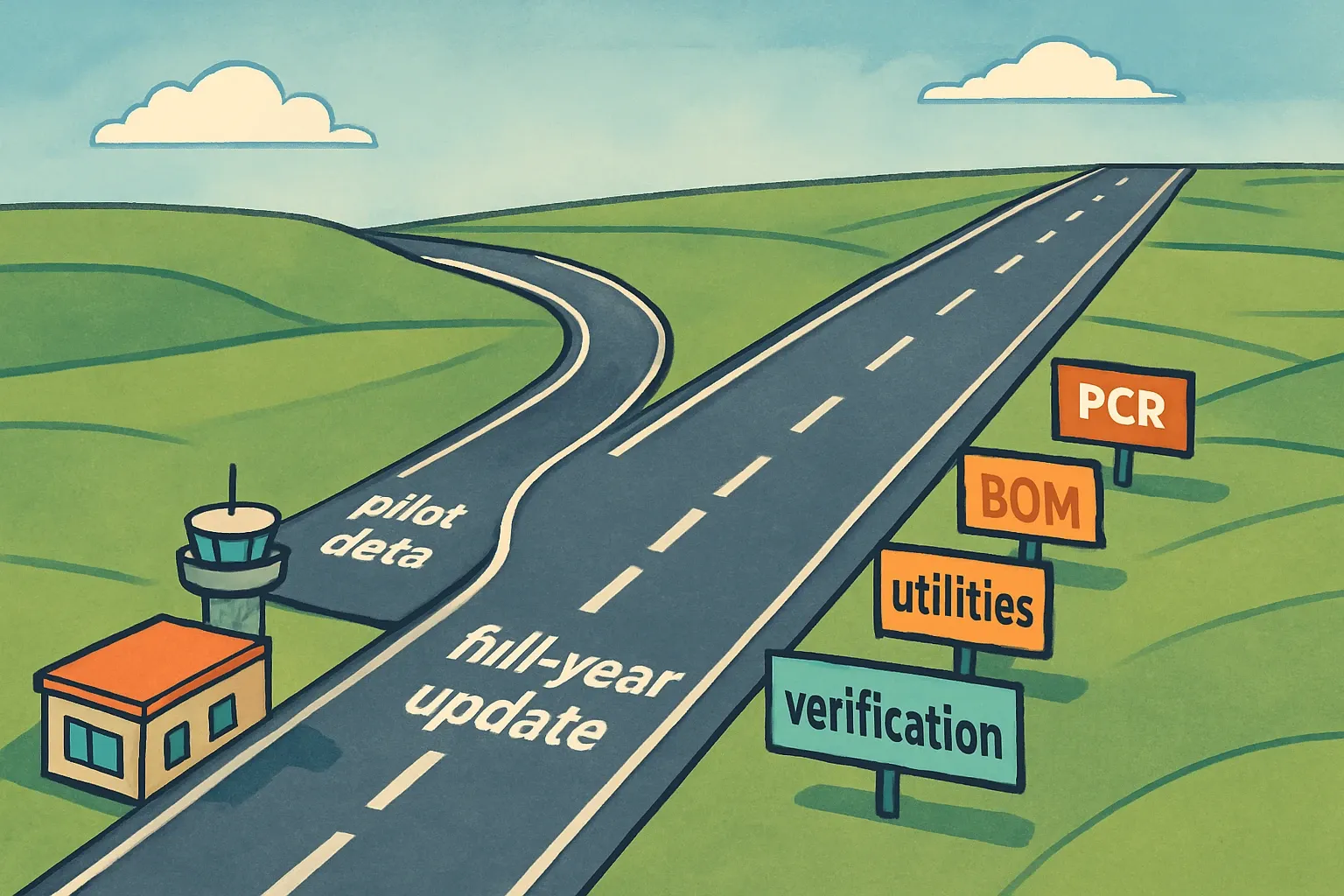
Pick the data year now and stick to it. Representative production data typically covers 12 consecutive months for the declared plant and process, with clear system boundaries and cut‑offs (EN 15804+A2, 2019). For brand‑new lines, a shorter prospective period can work if justified, then refreshed once a full year is available.
Assemble a minimum viable data pack in one pull
Treat data like a kitted order, not a scavenger hunt. Ask plant, procurement, EHS and finance for the same template and the same week. The fast pack usually includes:
- Utility invoices and meters for the reference year by energy type
- Monthly production volumes, yield, scrap and rework
- Bills of materials with supplier locations and weights
- Inbound and outbound transport modes, lanes and typical loads
- Waste streams, treatment routes and recycling rates
Dont wait on IT if spreadsheets get you 95 percent of the way.
Want to speed up your EPD process?
Follow us on LinkedIn for insights that help you launch compliant, brand-boosting EPDs faster and unlock new project opportunities.
Choose your program operator with calendar math
Publication happens after third‑party verification, so book the verifier window immediately. IBU reports that current verification queues can run about 6 months due to high demand and limited verifier capacity, which makes early scheduling decisive (IBU, 2025, IBU, 2025). In North America, Smart EPD is common, in Europe many teams use IBU, yet the best choice is the operator with capacity, the right PCR, and recognition where you sell.
Parallelize the work
Do not wait for every last supplier to respond. Start the LCA model with current bills of materials and utility data, then swap in supplier‑specific datasets as they arrive. Draft the EPD text while verification is being scheduled. Calendar beats effort, so overlapping tasks is your biggest speed lever.
Use one EPD for a family when the rules allow it
When the PCR and programme permit, group similar SKUs under one declaration and declare ranges. This removes duplicate verification cycles and shortens the path to a publishable document. The same approach simplifies annual surveillance updates later.
Budget time for verification and publication
Verification is independent and non‑negotiable. Plan time for questions and corrections. After approval, some programmes can publish within days, although temporary surges may extend publication to as much as 10 working days, as noted during the 2019:14 transition in 2025 (EPD International, 2025).
Keep your update plan simple
EPDs are typically valid for five years, and programmes require updates if indicators worsen beyond set thresholds during validity (EPD International GPI FAQ, 2024, EPD International GPI FAQ, 2024). Book a light annual data check so there are no surprises in year four.
Speed with integrity equals commercial leverage
LEED v5 was ratified by USGBC members on March 28, 2025, and continues to reward product transparency, including product‑specific EPDs, in its evolved materials framework (USGBC, 2025, USGBC, 2025). That means every month earlier with a credible EPD is a month where the product is easier to specify. Pick a partner who handles the heavy lifting of data wrangling and project management so engineering can keep building, while the paperwork moves at pace.
Common slowdowns to avoid
Chasing perfect supplier data when averages meet PCR rules. Changing PCRs mid‑project. Modeling low‑volume SKUs first. Skipping a verifier pre‑check. Each adds weeks. Keep the focus on one PCR, one plant, one reference year, and one clean data pack. Speed follows simplicity.