What an EPD actually buys you in bids
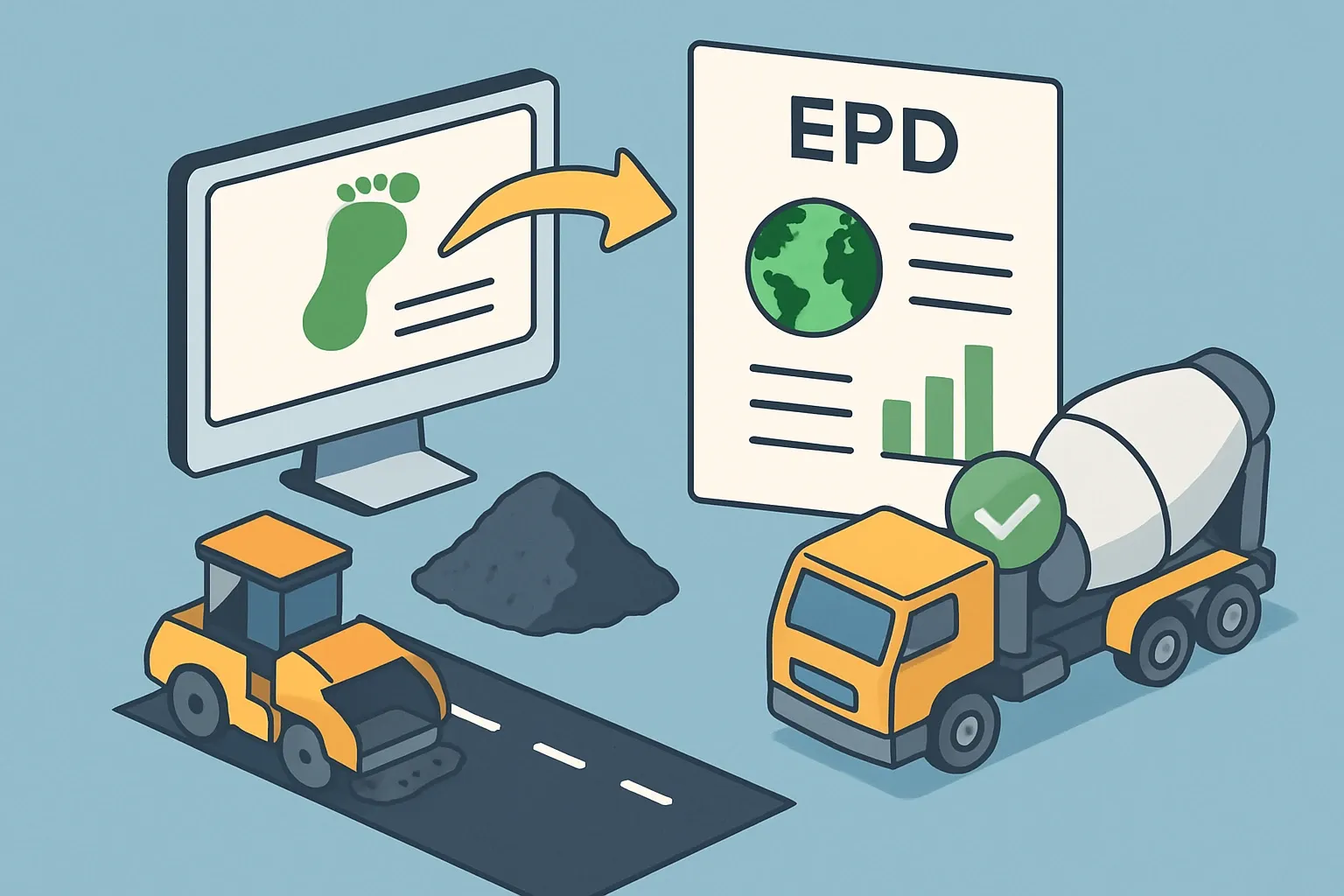
An EPD is a third party verified snapshot of a product’s life cycle impacts. It turns carbon into comparable numbers that specifiers can defend. LEED v5 was ratified on March 28, 2025 and keeps embodied carbon and verified disclosures in focus for project teams (USGBC, 2025). Most programs print a clear validity date, so buyers can check at a glance rather than debate methodology.
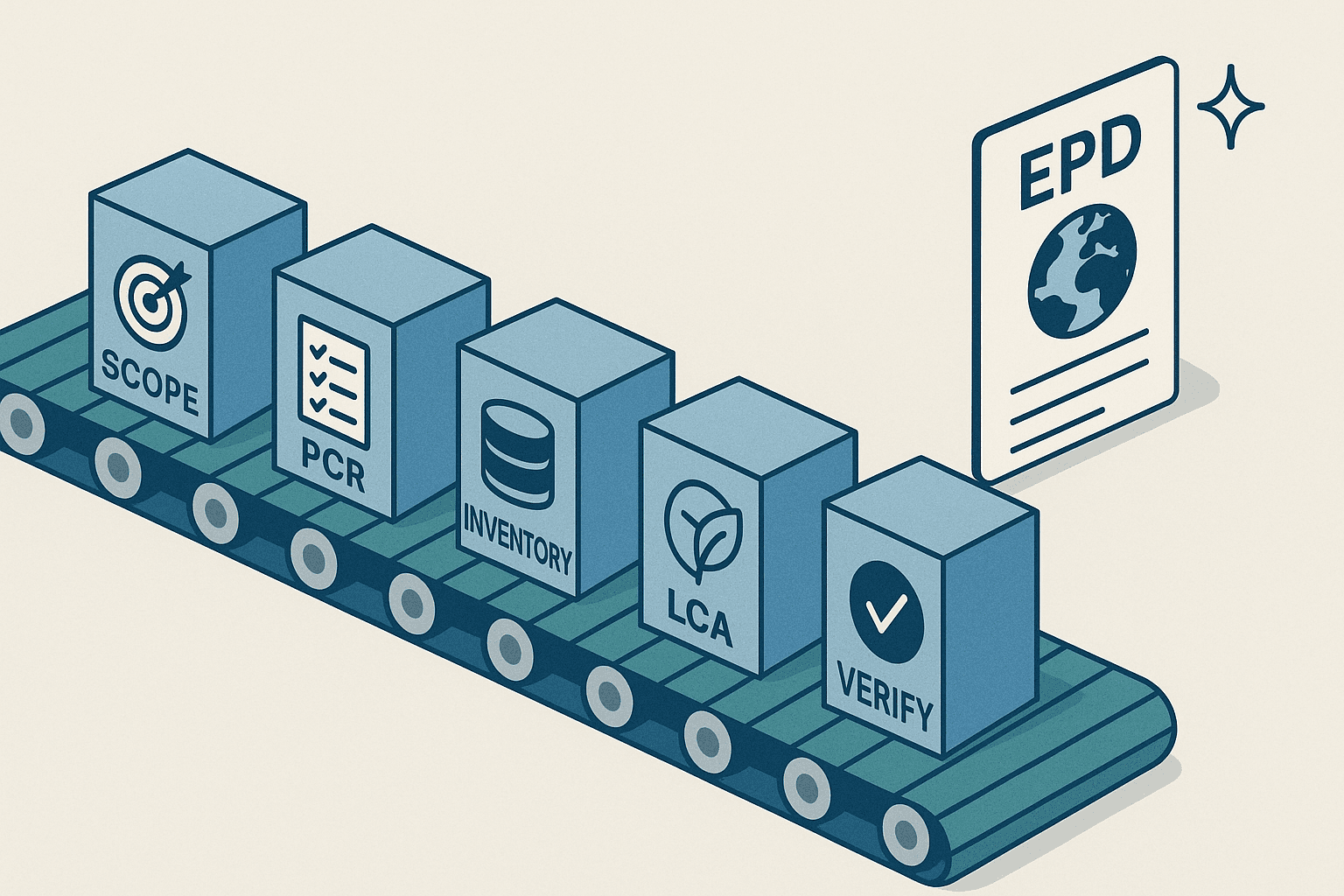
The six step map
- Define goal and scope, pick the reference year, set system boundaries.
- Select the correct PCR and program operator.
- Collect primary data from plants and suppliers, add secondary datasets only where allowed.
- Model the LCA to the PCR methods and required indicators.
- Draft the EPD in the operator template with all mandatory fields.
- Secure independent verification, then register and publish.
Keep it simple. This is Monopoly with a rulebook. Ignore the rulebook and the game falls apart.
Pick the right PCR, fast
A PCR is the rulebook. Start by scanning competitor EPDs and use the same PCR when appropriate, which improves comparability in submittals. If more than one PCR fits, weigh time to verification, operator backlog, and any nearing PCR sunset so you do not ship a fresh EPD on rules that change next quarter. When no PCR exists, creating one is possible, but plan months, not weeks, and most firms choose existing rules.
Data collection that speeds everything else
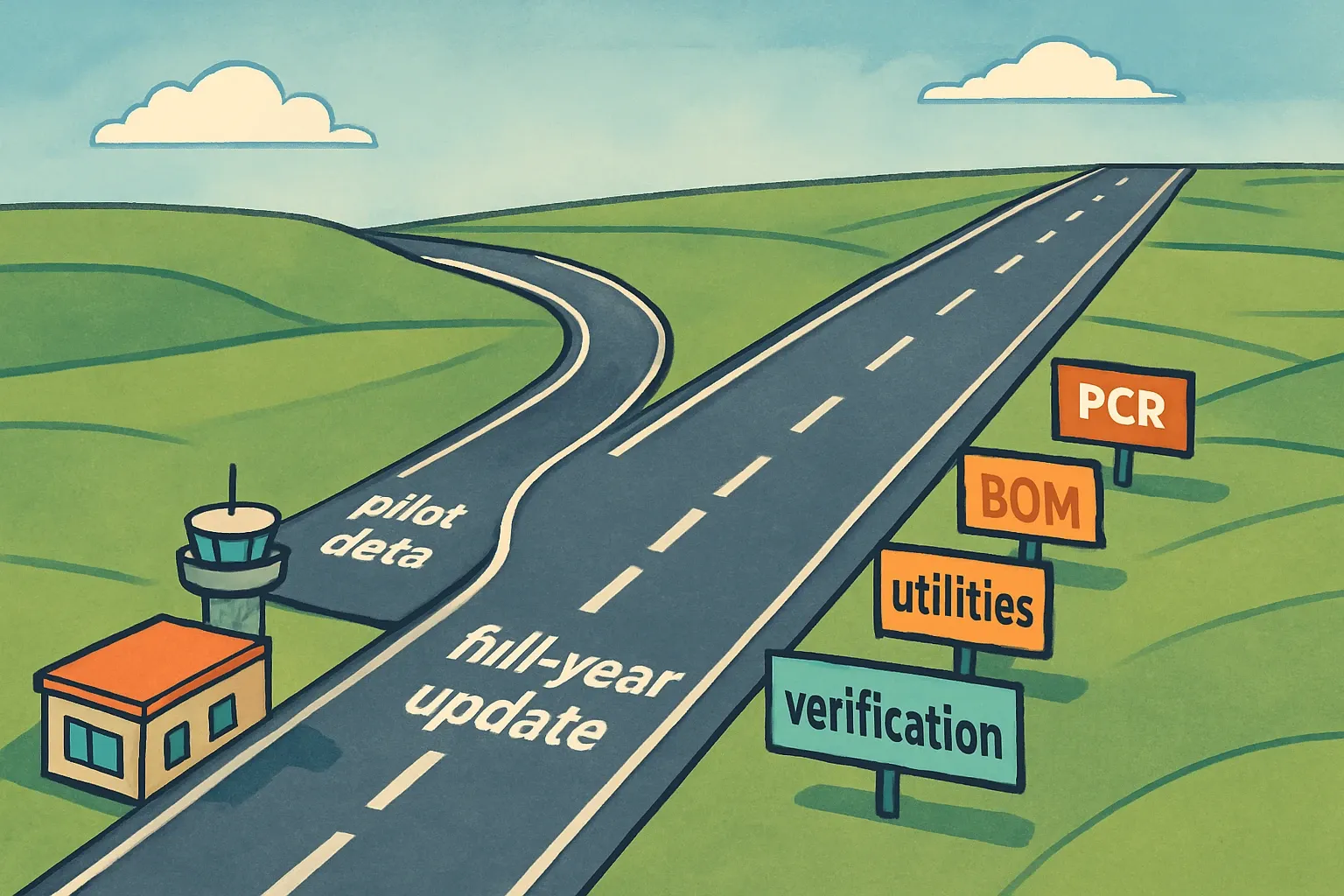
Choose a recent twelve month reference year and lock it. For new lines, a prospective EPD can start with a shorter production period, then be replaced once a full year is available. Gather energy by fuel type, purchased materials by mass, scrap and waste, water, packaging, and transport legs with mode and distance. Map plant specific electricity mixes and note any renewable contracts. Ask suppliers for their product specific EPDs when they exist. Small misses at this stage become big errors when scaled to annual output.
Build the LCA to current methods
Model only what the PCR requires, nothing less and nothing extra that muddies the story. Since September 1, 2024, characterisation factors based on EF 3.1 have replaced EF 3.0 for new EPDs in the International EPD System, already published EPDs kept their validity during the change (EPD International, 2024). Document every assumption in the background report so the verifier can retrace your math without guesswork.
Verification and publication without drama
Independent verification checks that your data and calculations follow the PCR and ISO 14025 principles. In the International EPD System, EPD validity is normally five years from verification and publication, and updates are expected if indicators worsen beyond defined thresholds (International EPD System, 2024). Choose a program operator that fits your market access plan. In the United States, many teams publish with Smart EPD, in Europe IBU is common, yet the best choice is the operator your customers already read.
What actually compresses timelines
Speed comes from ruthless data wrangling and clear roles. A strong partner will do white glove collection across plants, vendors, and ERP exports, not push spreadsheets back at your engineers. They will be operator agnostic, will preflight templates against the PCR, and will anticipate verifier questions with clean inventories and allocation notes. Data are solid and it reads clean, you’re ready to verify. The commercial payback is real since an EPD often removes penalty factors in carbon accounting that otherwise sideline products at equal price.
Proof that the market is moving
The International EPD System reported more than 10,000 valid EPDs by late September 2024 and about 80 percent were construction products, which signals continued demand from building projects (EPD International, 2024). California’s transportation agency now collects EPDs to quantify GWP for materials on its network and set practices around submittals and exemptions (Caltrans, 2025). Colorado’s policy includes A4 transport data for shipments over 100 miles, plus periodic GWP reviews starting January 1, 2026 in four year cycles (State of Colorado OSA, 2024). If you sell into public work, the enviromental paperwork is now part of the product.
Make it move, a 30 day plan
Week 1, confirm the PCR and operator, write the data request list, and name one accountable lead per plant. Week 2, pull energy, materials, and waste from the reference year, log supplier EPDs, and map transport. Week 3, build the LCA model and draft the background report with assumptions in plain language. Week 4, populate the EPD template, run a self audit against the PCR checklist, and book the verifier. Calibrate schedules to real dates, not wishes, and you will publish on time.