Architects search beyond your homepage
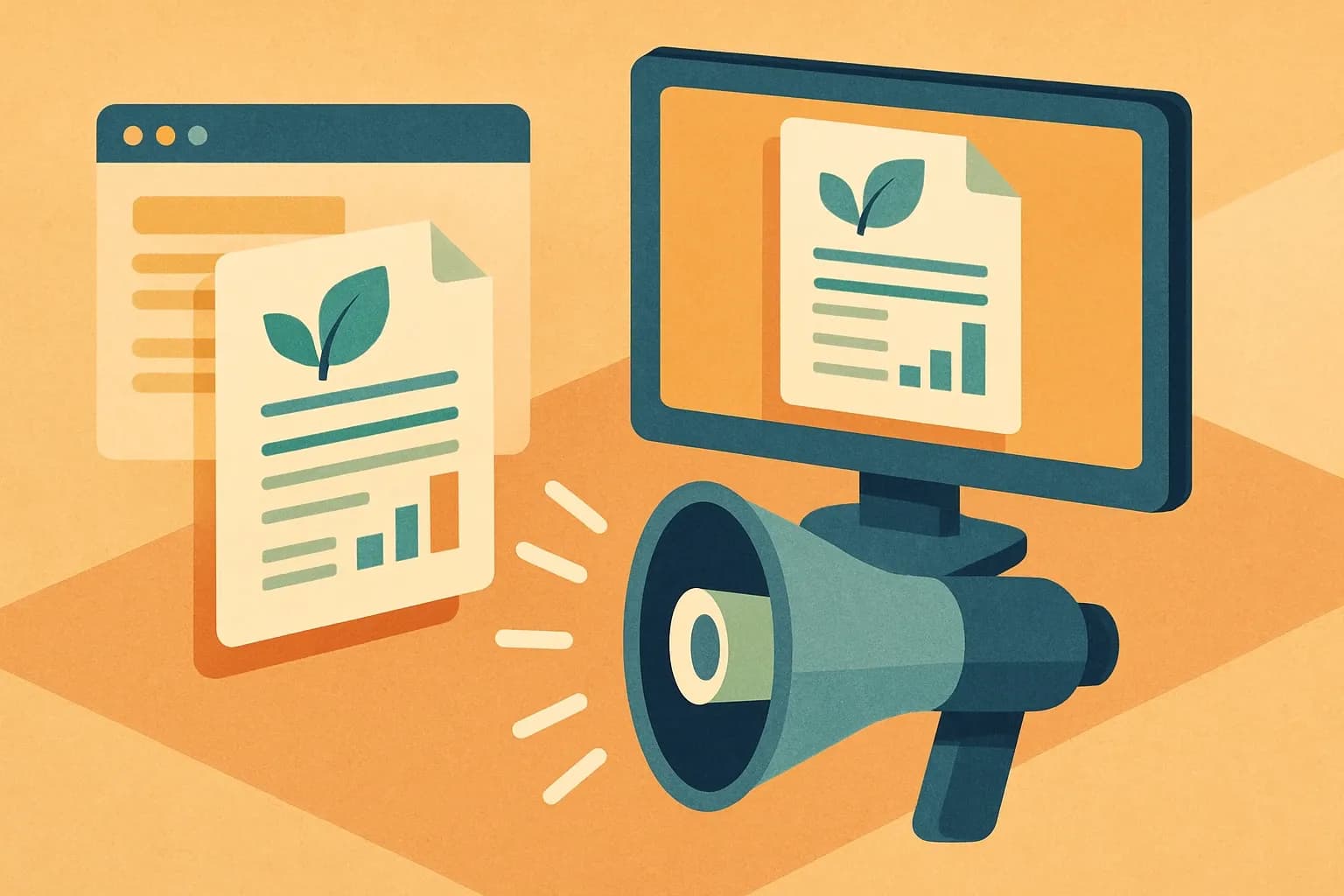
The PDF is clear. Distribute sustainability data where architects already search, not only on owned pages. Think BIM libraries, specification platforms, and program‑operator databases that feed day‑to‑day workflows. The commercial point is simple. Visibility turns your verified numbers into selection momentum when a project team is juggling options.
Architect demand is there. The share of architects who proactively recommend sustainability rose from 58% in 2020 to 79% in 2025 (AIA Architect’s Journey to Specification, 2026). If your EPD is trapped in a lonely “Resources” tab, that demand benefits a competitor.
Why site search betrays good content
Plenty of teams have the right PDFs, but internal search still misses. Common culprits include inconsistent file names, PDF text that is not actually text, and product pages that never mention “EPD” or “HPD” in plain language. Synonyms, typos, and model‑number formats also trip engines. The result feels like a “no results” wall even when the document exists.
Treat your site as one channel among many. If an architect starts in a BIM tool or spec library, they will not detour to your navbar.
The PDF’s three moves for distribution
- Place EPDs inside BIM content and libraries. Attach a stable EPD link and key fields to Revit families and publish through leading libraries used by specifiers. BIM adoption sits at roughly seven in ten professionals, and 73% of manufacturers now offer BIM or digital objects, up from 56% in 2023 (NBS Digital Construction Report, 2025). That is your cue to make carbon data travel with the object.
- Syndicate to professional research and specification platforms. Ensure EPDs and HPDs appear on MasterSpec notes, SpecLink references, ARCAT or comparable product directories, and product‑discovery platforms that architects check during early research. Include searchable product names, CSI numbers, and a live EPD URL.
- Publish with program operators and data hubs. Prioritize your operator page and recognized portals so third parties can verify fast. Examples include Smart EPD, IBU and the ECO Platform ECO Portal, plus national databases like ÖKOBAUDAT and INIES. Add EC3 and similar comparison tools to your distribution checklist so buyers running embodied‑carbon screens actually see you.
Join Parq Pulse!
Stay ahead with weekly insights on making your sustainability data discoverable and winning more projects.
What good syndication includes
Make the EPD carry its own breadcrumbs. Include product name and model in the PDF filename and document properties, add version date, plant or line detail when relevant, and an always‑on permalink. On each channel, pair the PDF with a short summary of declared unit, system boundary, and the EPD’s program operator so teams can triage fast.
For BIM objects, add parameters for GWP A1 to A3, a full EPD link, declared unit, and data year. That lets specifiers compare without digging.
Search channel hygiene that prevents dead ends
- Put “Environmental Product Declaration (EPD)” and “Health Product Declaration (HPD)” in plain words on product pages, not only in PDFs.
- Use structured data for Product and environmental claims so crawlers can index facts, not just files.
- Keep EPDs public, not gated. If a login is required, the file is effectively missing.
- Fix duplicate or expired URLs with redirects that preserve the canonical link.
- Ensure PDFs are text‑based and accessible so internal and external search can read them.
Prioritize the right channels first
Start where architects already work every day. BIM libraries and specification platforms deliver repeat impressions because they live inside design and documentation time. Program operator pages and national databases reinforce trust at the moment of due diligence. Your own site then becomes the authoritative source that everything points back to, not the only place anything lives.
If resources are tight, ship in sprints. Begin with high‑volume SKUs and the two channels your sales team hears named most in pre‑construction. Then expand.
Measure the findability, not just the download
Track referral traffic from each library or portal to product pages. Add unique query parameters to EPD links in BIM objects and directory listings. Watch spec mentions, RFIs that cite EPDs, and win rates on projects that required disclosure. If numbers are flat, your content might be correct but still invisible.
Keep EPDs, HPDs, and LCAs in lockstep
The PDF tells us to prioritize accessibility across all search channels. That means aligning release timing and filenames for EPDs and HPDs, keeping model numbers identical across BIM, spec libraries, and operator pages, and updating every channel when values change. Do not let a refreshed EPD live only in one place for months. That gap causes confusion in the field.
The takeaway for manufacturers
Syndication is not decoration. It is the distribution system that turns verified data into real‑world preference. With architects pushing sustainability harder, the winners make their EPDs easy to find in every channel where work happens, not just on a beautfiul website page. Choose partners and processes that deliver complete, machine‑readable outputs and plan distribution as a core project task, not an afterthought.
Optional links to referenced data: AIA Architect’s Journey to Specification, 2026 and NBS Digital Construction Report, 2025.