What people usually mean by EPD software
People use the label for three different things. First are LCA platforms that calculate impacts and export EPD content. Second are templated EPD generators that compile results into operator‑ready files. Third are submission portals and verifier workflows used by program operators. If you need speed, scrutinize which parts are software and which parts still rely on your team to chase data.
The real workflow behind an EPD
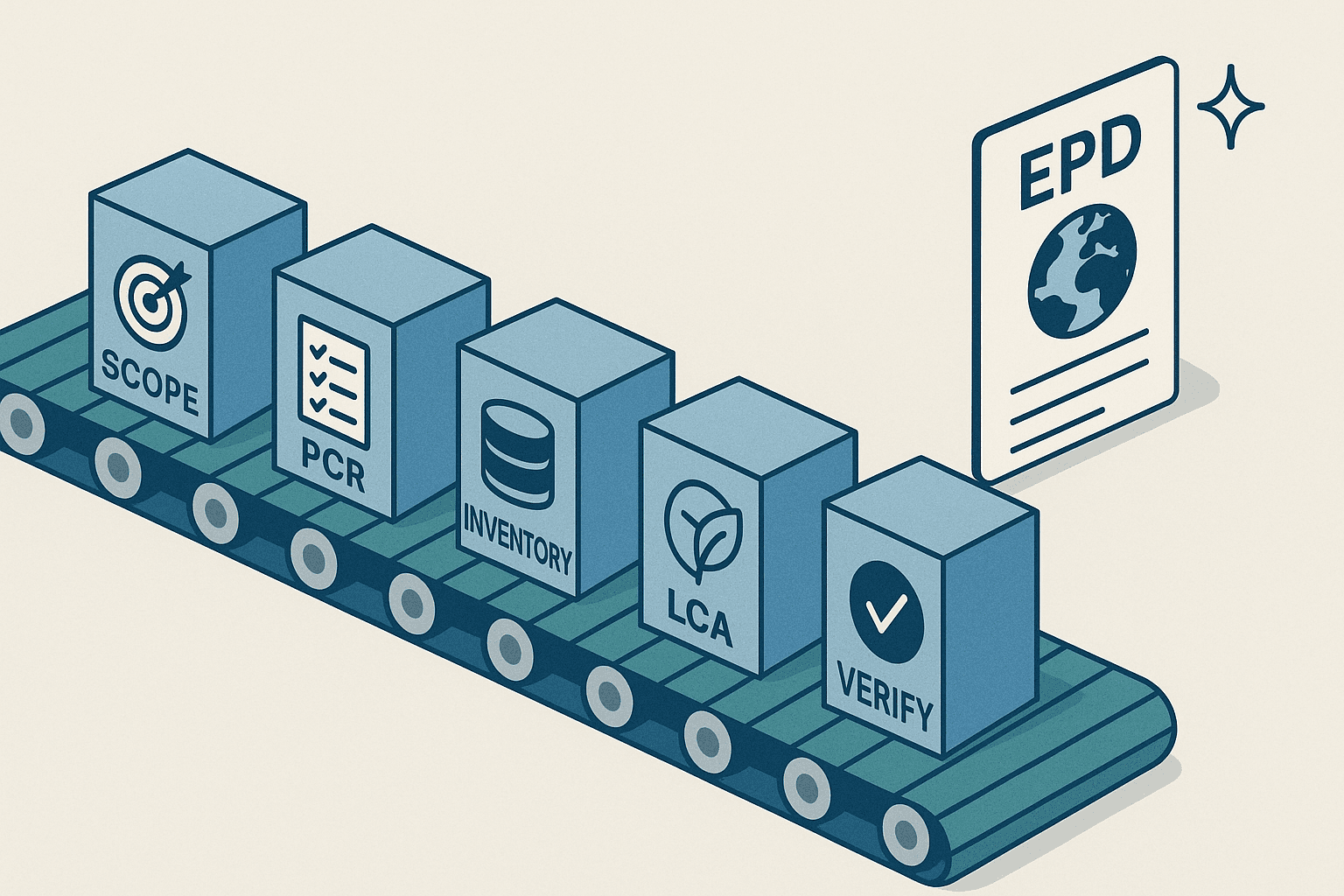
Every path follows the same arc. Pick the right PCR, collect one reference year of site data, model cradle‑to‑gate or beyond, write and verify, then publish with a program operator. In construction, LEED v5 keeps product‑specific, third‑party verified EPDs as a key pathway, and LEED v5 was ratified on March 28, 2025 (USGBC, 2025). citeturn0search1
PCRs and program operators set the rules
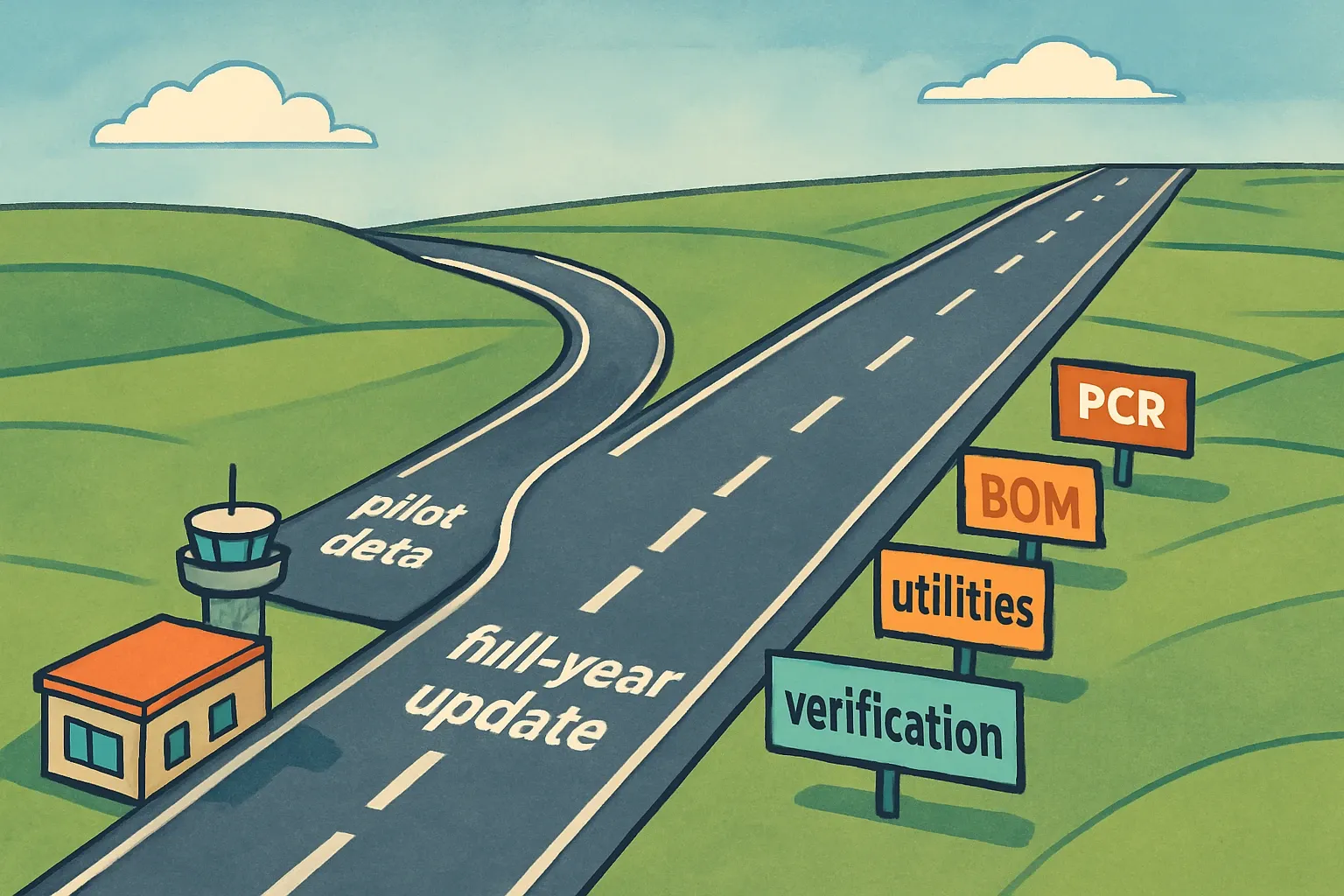
A PCR is the rulebook of Monopoly. Ignore it and the game falls apart. Construction PCRs are revised on multi‑year cycles, often four to five years, with defined transition periods. For example, the widely used construction products PCR had its validity extended to June 20, 2025 while version 2.0.0 rolled out, with a planned lifespan of another four or five years (EPD International, 2024). citeturn1search5
Where software helps and where service still wins
Great tools speed modeling, enforce data formats, and cut errors. The bottleneck is almost always data wrangling across plants, utilities, purchasing, and QA. Most teams dont have spare hours to chase meter IDs or scrap logs. If a vendor leaves that work to you, time slips. If a vendor takes it on and orchestrates stakeholders, timelines stay predictable.
The big types in today’s landscape
- LCA modeling platforms that export EN 15804 or ISO 21930 datasets ready for an EPD template.
- Pre‑verified EPD generators that constrain choices so outputs pass verification faster.
- Operator portals that manage submissions, reviews, and XML or digital EPDs.
- Integrations that sync ERP, MES, and energy data so updates are less painful.
Want to maximize your EPD ROI?
Follow us on LinkedIn for insights that help you streamline processes, get specified, and unlock new business opportunities.
Integrations that actually matter
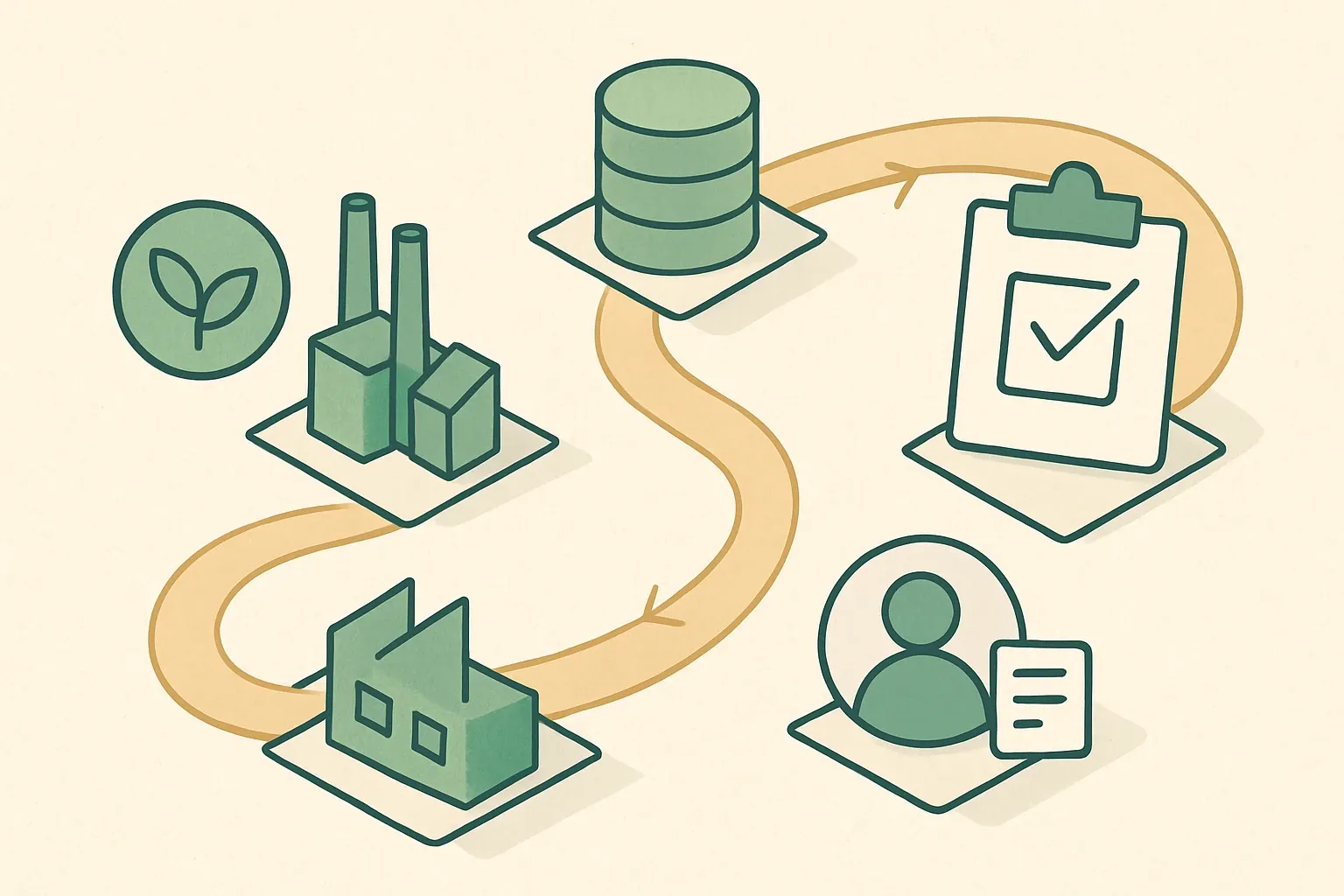
Start with what already holds truth in your company. ERP for purchased materials, MES for yields and scrap, energy meters for scopes at plant level, and QA for product recipes. Good “epd software” maps to these sources without custom IT projects. Even better if it flags gaps early so the plant team knows what will block verification next week, not next quarter.
Verification and validity in practice
Expect an external verifier to review your background report, check plausibility, and ask for clarifications. Program operators state that an EPD is valid for five years, after which an update and re‑verification is required (IBU, 2024; EPD International, 2025). citeturn2search1turn2search6 The review itself usually takes several weeks depending on data quality and product complexity (IBU, 2025). citeturn2search1
Scope choices that change workload
Cradle‑to‑gate EPDs are common because they match how many buyers evaluate materials during design. Add A4 transport, installation, or end‑of‑life only if those stages are decisive for your product. More stages mean more data and review to defend. Software helps calculate, yet the data traceability still needs hands and judgment.
Data quality beats data quantity
Auditors do not reward giant spreadsheets. They reward completeness, representativeness, and conservative choices when uncertainty is high. A strong workflow logs assumptions, versions the model, and tracks what changed between draft and final. The best tools make that paper trail native rather than an afterthought.
Buying questions to cut through the noise
- Which parts of data collection does your team handle, and which does the vendor take on end‑to‑end?
- How will plant data be validated before it reaches the LCA model?
- What is the path to publish with our chosen operator, such as Smart EPD in the U.S. or IBU in Europe, and who presses submit?
- When PCRs update, who owns the rework plan and timeline, and what re‑use of data is possible?
Timelines, budgets, and ROI framing
Exact prices vary by scope and operator policies. What consistently moves ROI is getting specified more often on projects that require third‑party verified EPDs. That shifts conversations from discounts to compliance and performance. Teams that streamline data collection and verification cycles publish faster, refresh on time, and keep sales eligible for projects instead of waiting on paperwork.
How to move now without regrets later
Pick software that bends to your data reality, not the other way around. Pair it with a partner willing to do the unglamorous work of collection and coordination. Insist on a plan for PCR changes and five‑year renewals from day one. Do that and the term “EPD automation” stops being a buzzword and starts being a calendar you can trust.