First, what an EPD actually is
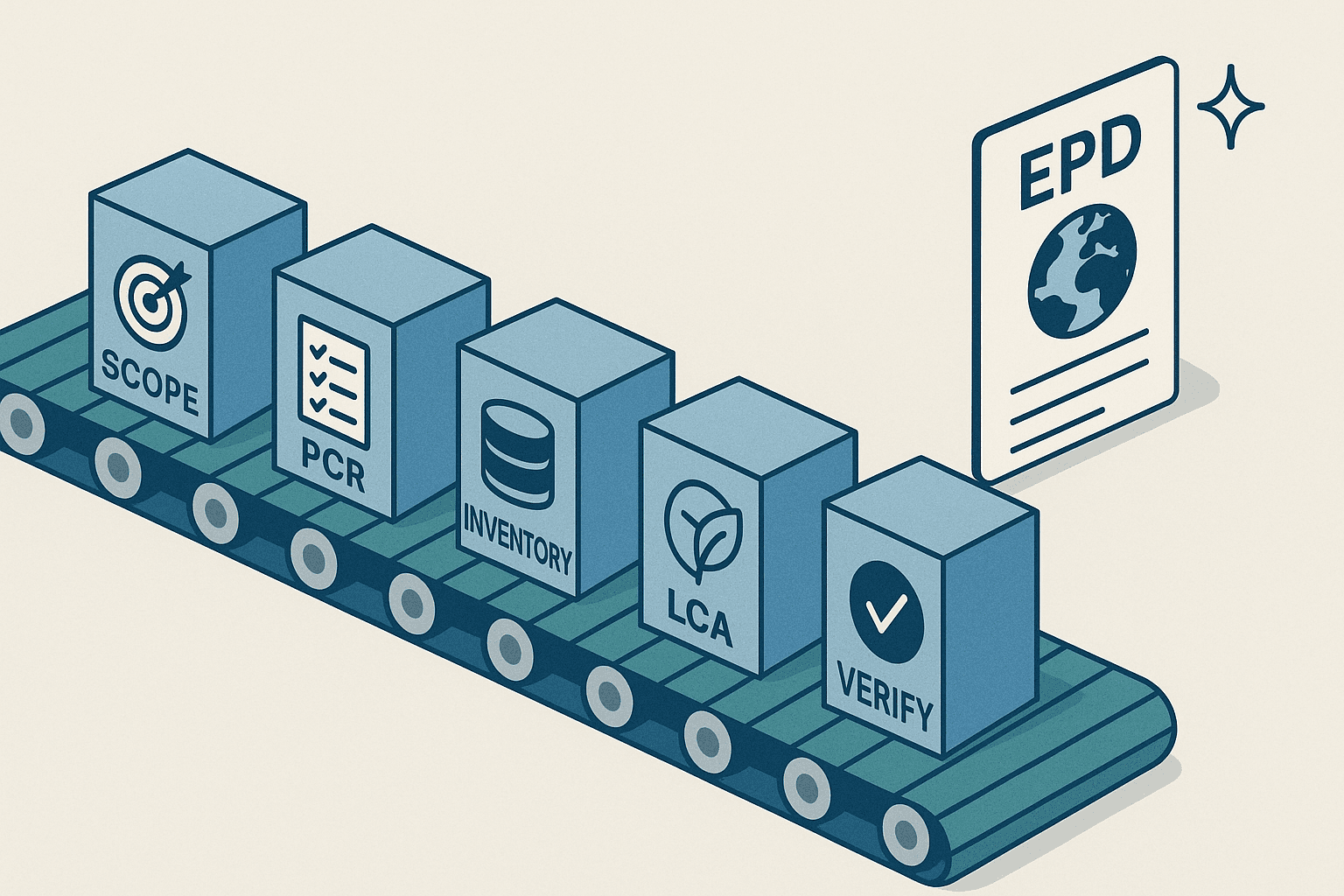
An Environmental Product Declaration is a Type III label that reports life cycle impacts using a common rulebook. It is built on an LCA, verified by an independent expert, and published by a program operator. Think of it as a nutrition facts label for embodied impacts.
Do you really need one
Public owners, many private developers, and rating systems now expect product specific EPDs for common materials. California’s Buy Clean sets maximum Global Warming Potential limits for certain materials. For example, concrete reinforcing steel must be at or below 755 kg CO2e per metric ton starting January 1, 2025 (DGS Buy Clean California, 2025). LEED v5, ratified by USGBC members on March 28, 2025, continues to recognize product specific EPDs in its material decarbonization focus (USGBC, 2025).
The rulebook you must follow
Every EPD must follow a Product Category Rule. For many construction products, a widely used construction products PCR exists and is kept current by program operators. The practical move is to align with the PCR competitors use, unless there is a better fit due to scope, geography, or near term expiries.
Program operator choice
EPDs can be published under several credible operators in the United States and Europe. Selection affects templates, verification routes, and where buyers expect to find your declaration. Most owners care that the document is product specific, current, and third party verified, not which logo sits on the cover.
What data you will actually gather
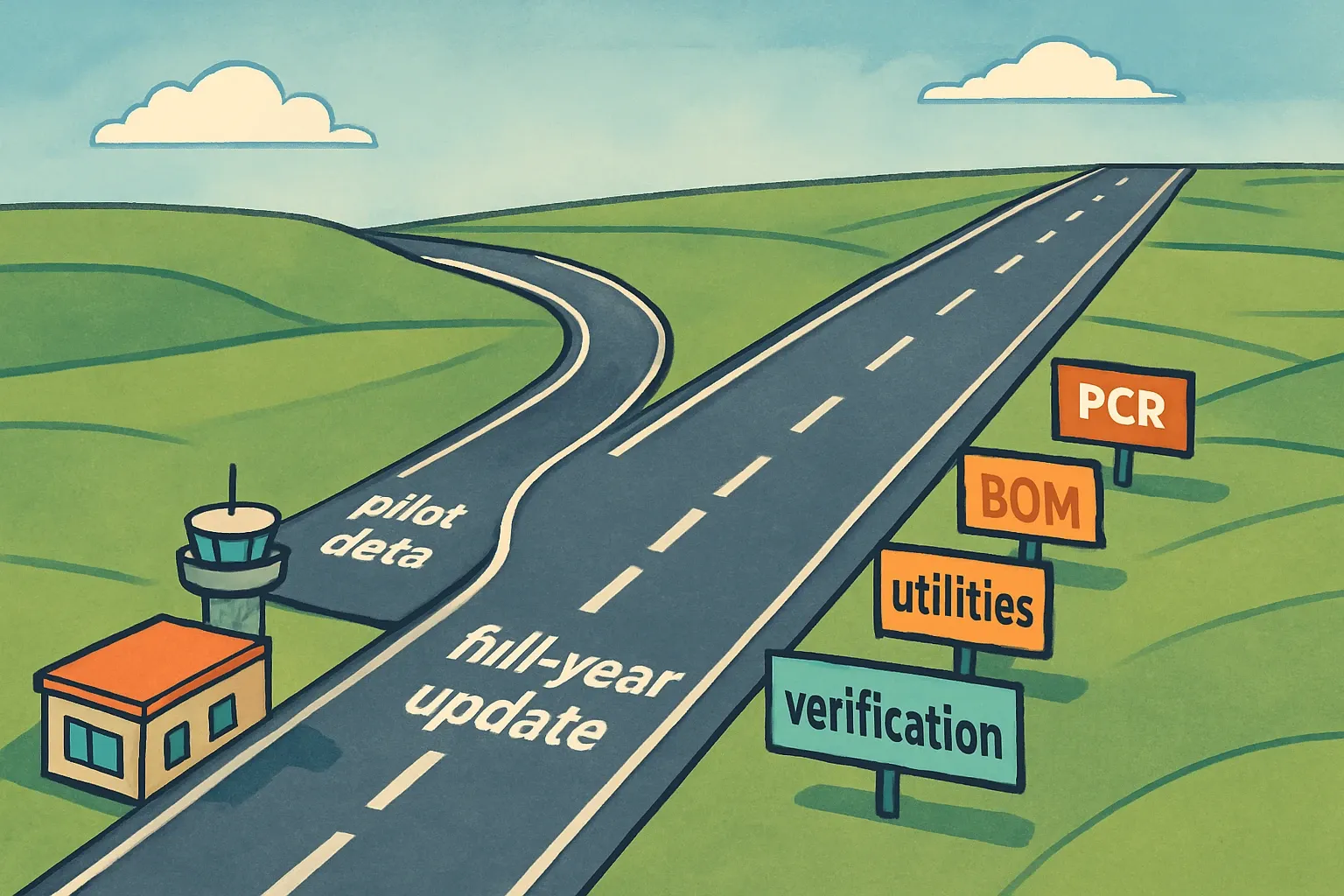
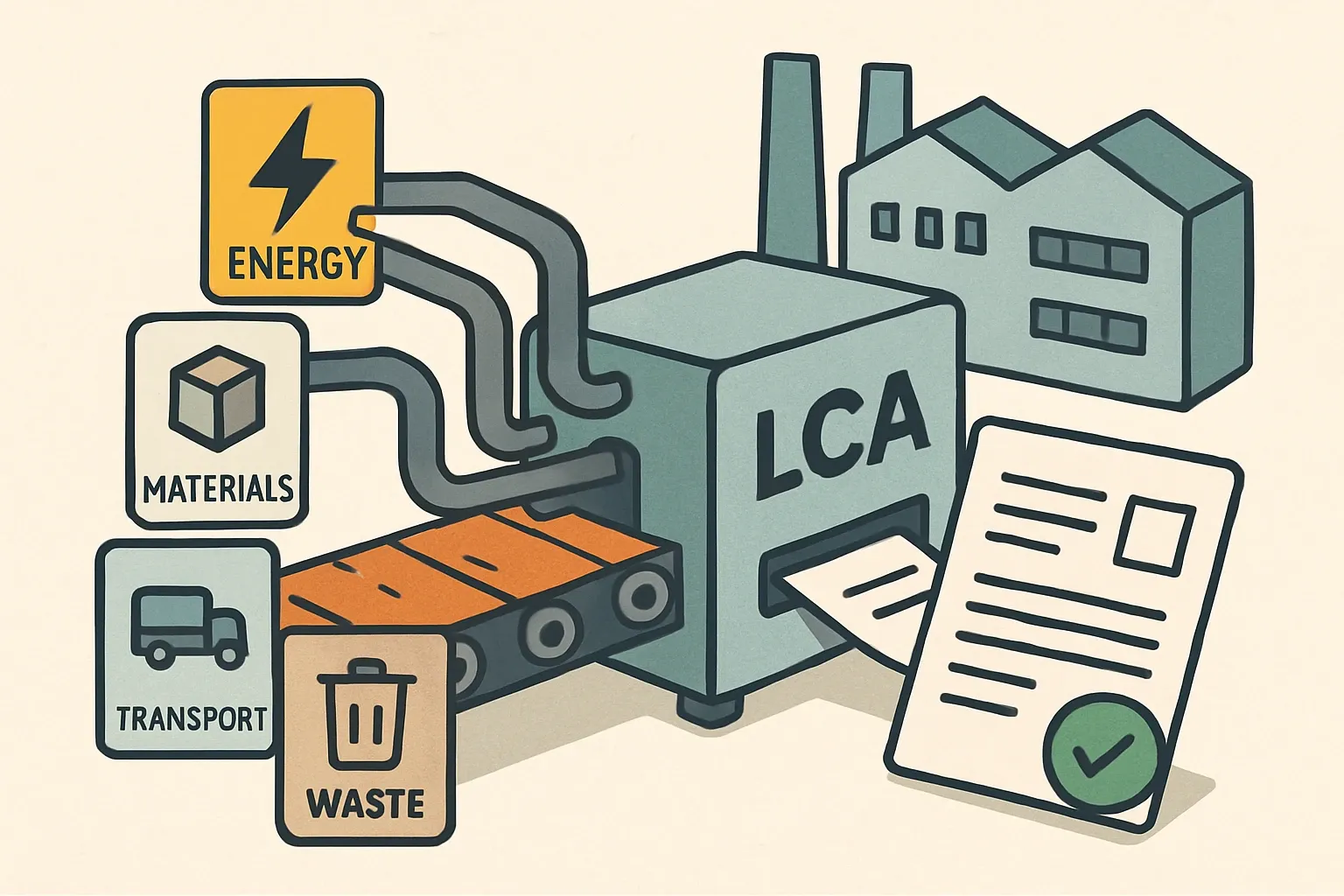
Expect bills of materials, recipes, scrap and yield, energy and fuel by month, water, packaging, on site processes, inbound and outbound transport, and production volumes. The reference period is usually a recent production year that reflects typical operations. If a product is new, some operators allow a prospective declaration based on limited operating history, then require a refresh once a full year is available.
How long this takes in real life
Timing depends on how quickly operational data flows from plants and suppliers and how smooth verification is. The fastest path is ruthless data collection inside your organization and early alignment on PCR and system boundaries, then efficient back and forth with a verifier.
Want to secure more projects with EPDs?
Follow us on LinkedIn for insights that help you navigate EPD creation and unlock new business opportunities.
Quality control that avoids rework
A clear system diagram, auditable spreadsheets or exports from MES and ERP, and named assumptions win time. Small errors snowball. Unit conversions, allocation rules for co products, and electricity market mixes are classic traps that slow reviews.
EN 15804 plus A2 if you sell in Europe
Most European construction EPDs must follow EN 15804 with the A2 update. A2 expands the indicator set and splits the carbon metric into fossil, biogenic, land use change, and total. It also requires declaring end of life and Module D. If you already work to A2 discipline, North American reviews tend to go smoother.
Validity and when to update
Most EPDs are valid for five years, set at verification. If any declared indicator worsens by more than ten percent, it must be updated during that period (EPD International, 2025) (EPD International FAQ, 2025). PCRs themselves evolve, which is normal. An existing EPD remains valid until its listed date, then it must renew under the current rules.
Family coverage without losing accuracy
One declaration can cover a family of similar SKUs when the PCR allows grouping and variation rules are respected. The trick is choosing the representative or worst case in a way that stays competitive yet honest. Over grouping saves fees but can backfire if the declared impacts no longer match how customers actually buy.
Where ROI shows up
EPDs remove penalties in carbon accounting on projects, which keeps your product in the conversation instead of being swapped for a rival that has one. On many bids a single mid sized win can pay back the whole effort. The bigger payoff is speed. Sales teams stop avoiding prospects that ask for EPDs because the wait is no longer a deal killer.
Choosing help that will not eat your time
Look for partners that take on plant data wrangling, supplier outreach, and verification project management. Ask specifically who will chase meters and bills, who will pre flight check your LCA before a verifier sees it, and how progress is tracked for multi site portfolios. We prefer white glove over homework.
Quick start checklist
- Confirm the right PCR and goal and scope for one flagship product.
- Pull a clean export for a recent production year with volumes and utilities.
- Map suppliers for top contributors and get transport and recycled content ready.
- Align with a verifier early on assumptions and cut off criteria.
- Plan renewal timing so you are never within a few months of expiry.
One watch out on policy shifts
Federal incentives based on earlier climate legislation changed in early 2025, and many Buy Clean details at the federal level are in flux. State level policies like California’s remain active and specific, which is why anchoring to current state rules still matters for public work eligibility (DGS Buy Clean California, 2025). If numbers are missing for your region, say so plainly rather than guessing.
Bottom line for anyone typing “epd for my product”
Yes, your product almost certainly can get a credible EPD. The fastest route is disciplined data collection, a sensible PCR choice, and a verification path with few surprises. Do that and you replace carbon guesswork with a document that wins specs. It is definately worth it.