What “EPD certification services” actually cover
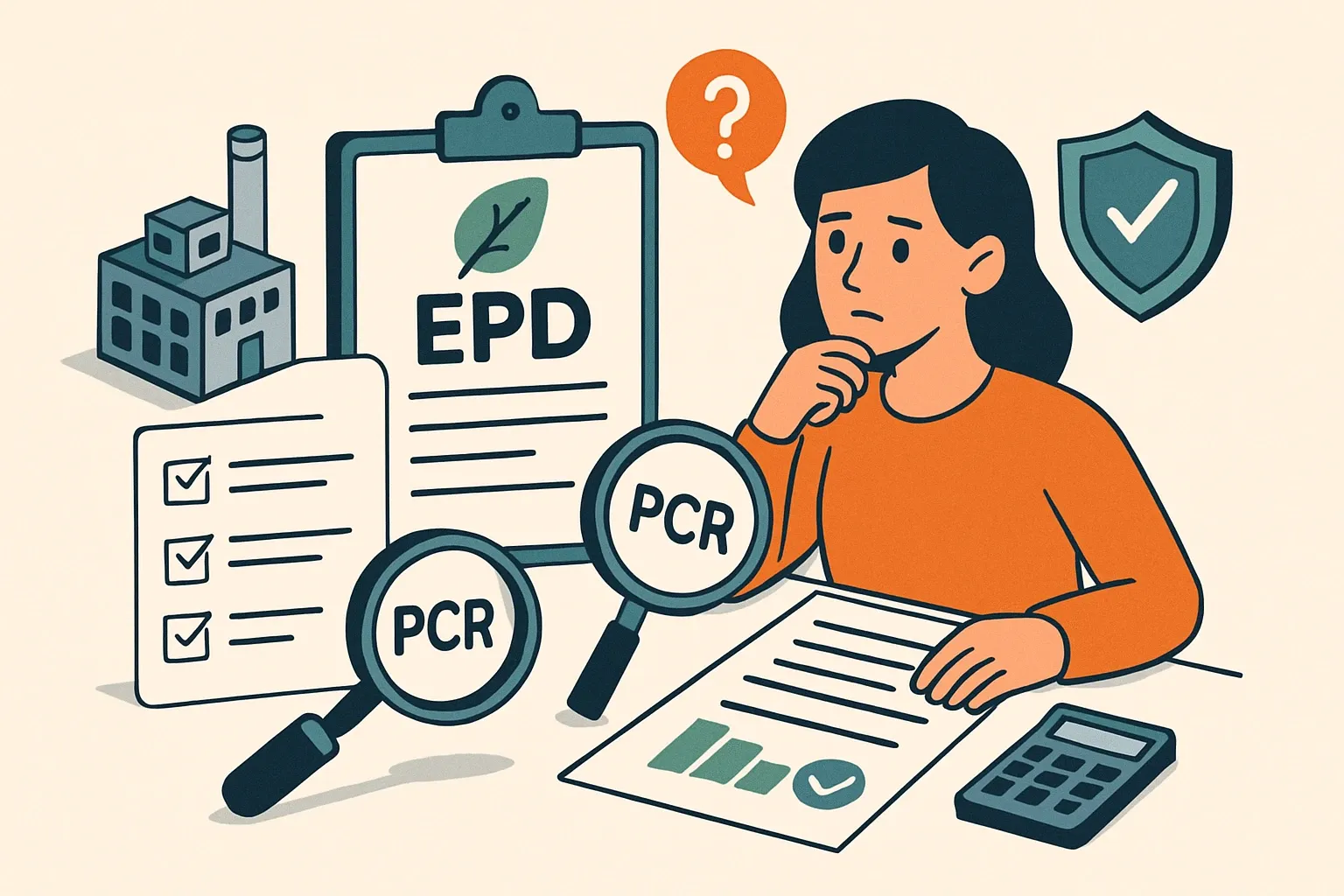
An Environmental Product Declaration is a Type III label that reports verified, product‑specific impacts from a Life Cycle Assessment. Certification services coordinate LCA modeling, data collection, third‑party verification, and publication with a program operator under ISO 14025 and EN 15804. Expect support across scope setting, PCR selection, verifier management, and the final posting in an operator registry.
Standards that keep you compliant
In construction, EN 15804+A2 is the rulebook most buyers expect. It expands the core impact indicators to 13 and separates climate change into fossil, biogenic, land‑use change, and total. Think of it like upgrading from a movie trailer to the full feature. Your numbers are clearer and easier to compare across suppliers (CEN EN 15804+A2, 2019).
Validity and renewal on a real timeline
Most operators set EPD validity to five years from verification, and they require an in‑period update if any declared indicator worsens beyond defined thresholds, often 10 percent. That is why renewal planning should start well before the date printed on the EPD pdf (EPD International FAQ, 2025) (EPD International FAQ, 2025).
Why EPDs matter commercially right now
LEED v5 was ratified on March 28, 2025, and continues to emphasize product‑specific, third‑party verified disclosures in its decarbonization focus. Project teams still ask for EPDs on submittals because they support embodied carbon tracking and credit paths in Materials and Resources (USGBC, 2025) (USGBC, 2025).
State policy adds urgency. California’s Buy Clean rules set maximum GWP limits for public works materials. For example, hot‑rolled structural steel has a 2025 limit of 1,010 kg CO₂e per metric ton at cradle‑to‑gate. Rebar, flat glass, and insulation are also covered, with published limits buyers can check against your EPD (California DGS, 2025) (California DGS, 2025).
The core steps an EPD service should run for you
- Scope and PCR selection. Pick the right Product Category Rules used by your competitors and target markets.
- Data collection. Pull plant‑level energy, materials, yields, transport, packaging, and waste for a defined reference year. Great services do white‑glove data wrangling so R&D and plant teams can stay on core work.
- LCA modeling. Build cradle‑to‑gate or cradle‑to‑grave results aligned to the chosen PCR and EN 15804+A2.
- Independent verification. Manage back‑and‑forth with an approved verifier and close comments quickly.
- Publication with a program operator. Post the EPD to the operator’s registry and deliver machine‑readable files when required.
Want to get your EPDs right the first time?
Follow us on LinkedIn for insights that help you unlock market opportunities and ensure your products get spec'd.
Picking a program operator, the practical way
Common operators for building products include those active in North America and Europe. Choose based on market access, verifier availability, and customer expectations. Many manufacturers publish with one operator for primary markets and mirror content in another registry for export. A good service provider stays operator‑agnostic and handles the paperwork.
Product‑specific vs. industry‑wide EPDs
Industry‑wide EPDs can open a door, yet they rarely remove carbon penalties in competitive bids. Product‑specific EPDs give you brand‑level numbers and comparability that specifiers trust, especially under EN 15804+A2’s expanded indicator set. If time is tight, some operators allow a prospective EPD for new products, then a refresh after a full reference year. Reliable timelines vary by product complexity, so quoting averages is risky.
Data you will actually need
Plan for bill of materials, process flows, utilities by meter, yields and scrap, inbound and outbound transport, packaging, and end‑of‑life assumptions. Great services bring templates and do the chasing. Data requests gets ignored when they are fuzzy, so insist on precise fields and example entries.
Digital EPDs are becoming the default
Procurement portals and building LCA tools increasingly require machine‑readable EPD data. Ask your provider to deliver the registry PDF and the digital file. This reduces rework later and helps teams hit LEED v5 documentation needs without copy‑paste chaos.
What to ask before you sign
- How will you handle multi‑plant or multi‑SKU coverage without losing competitiveness for our best seller?
- Which PCRs and operators fit our target bids, and why?
- What is your plan for verification comments and how fast do you typically close them?
- Can you run a quick competitor scan to sanity‑check PCR choice and scope?
- How will you prepare the renewal path so we do not lose months of validity at the end?
Renewal playbook that avoids scrambles
Start six to nine months before the validity date printed on your EPD. Confirm the current PCR version and operator templates. Re‑pull your reference‑year data, model to EN 15804+A2, and pre‑brief your verifier. EPD International also expects an annual internal follow‑up during the five‑year validity period, which keeps results aligned with reality and reduces surprise updates later (EPD International, 2025).
The quiet edge that speeds everything up
Service models differ. Traditional consultants often push data collection onto your team. Modern providers pair software with white‑glove project management so engineers and plant leads spend less time in spreadsheets and email. We prefer the latter because it consistently shortens calendars and produces cleaner, audit‑ready files that verifiers approve faster.
Bringing it all together
EPD certification services should make your next spec easier, not harder. If a partner maps the right PCR, wrangles your data, aligns to EN 15804+A2, manages verification, and publishes cleanly with your chosen operator, you win time and credibility. Keep an eye on the five‑year validity clock, plan renewals early, and use the EPD to stay in the purchase conversation instead of losing on a technicality.