SB 6005 in plain English
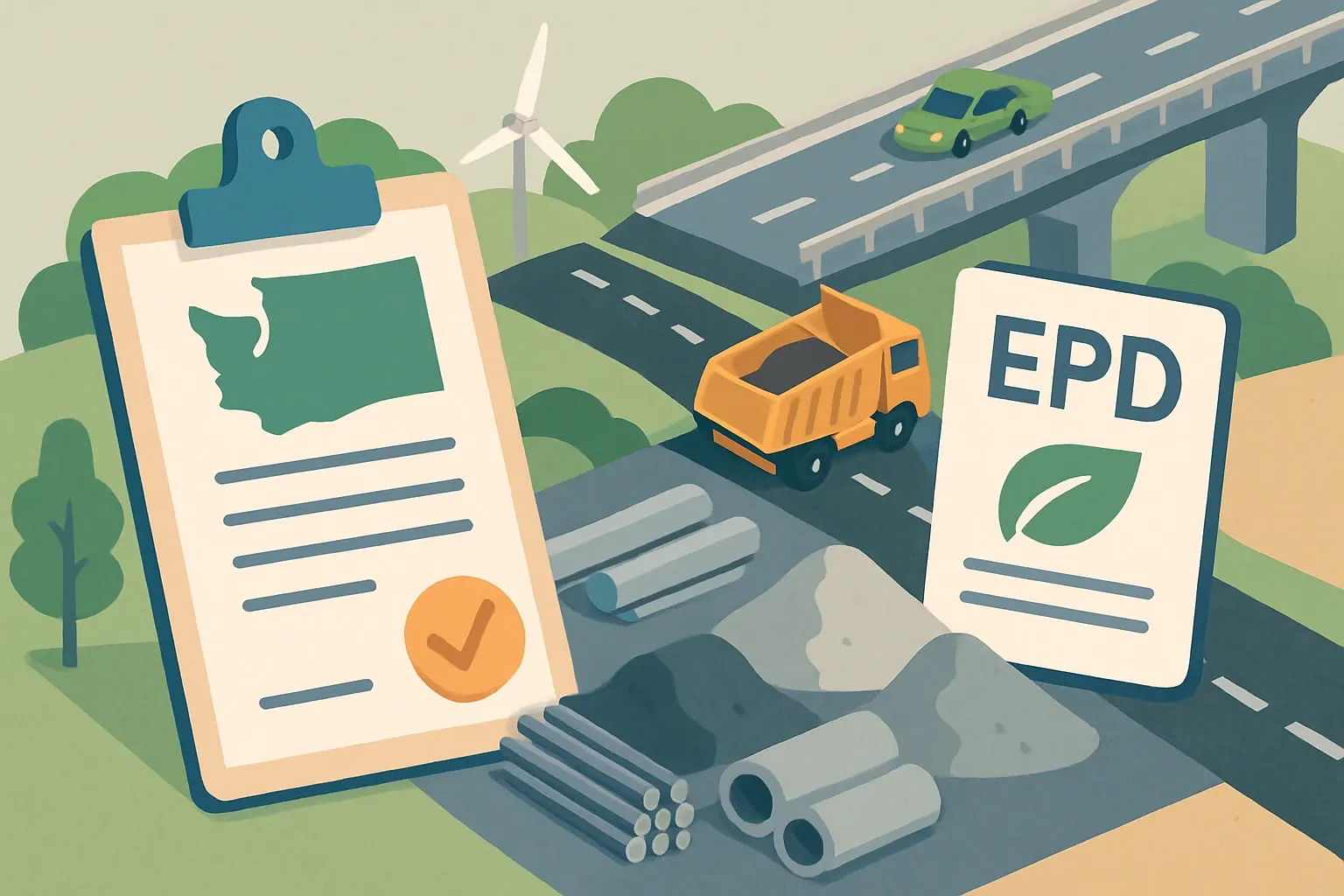
SB 6005 funds a Washington State Department of Transportation program focused on lowering embodied carbon in transportation construction materials. The bill sets aside 3,106,000 dollars from the Multimodal Transportation Account for a low‑carbon transportation materials program that targets embodied carbon in project delivery (ESSB 6005, 2026 (fiscal.wa.gov)). Think of it as seed capital to standardize requirements, pilot specifications, and scale practices that prefer verifiably lower‑carbon mixes and products.
How it fits with Washington’s wider rules
This transportation push sits alongside the state’s Buy Clean and Buy Fair framework for buildings, which established reporting on embodied carbon and labor for covered public projects and set up a Commerce‑run database. Road work is not the same as building work, yet the signal is consistent. Public dollars in Washington increasingly come with an expectation of transparent, product‑level environmental data.
What procurement will likely ask for
Owners and WSDOT specifiers will want apples‑to‑apples comparisons. That usually means EPDs with A1 to A3 cradle‑to‑gate results, facility specificity where practical, and clear mix or product identifiers. Treat the EPD as the product passport that gets your material through submittal review without drama.
Materials in the spotlight
If your portfolio touches concrete, cement, asphalt, aggregates, reinforcing steel, or structural steel, assume attention is coming. Slag, SCM blends, asphalt RAP and RAS strategies, and mill‑level electricity sourcing all influence numbers that EPDs surface. It is like tuning a race car one part at a time, then proving the lap time with a stopwatch.
Join Parq Pulse!
Stay ahead with weekly insights on environmental regulations and procurement trends to boost your project wins.
Your fast prep plan
Start with one reference year of data and work forward.
- Map the exact products and facilities tied to Washington projects, then lock the reference year for utilities, inputs, and throughput.
- Pull upstream material invoices with supplier names, transport modes, and distances. Do not guess, document.
- Confirm the right PCR for each product type, since it defines modeling choices and comparability.
- Publish with a reputable program operator, keep product naming aligned with what estimators see in bids.
Why speed matters now
When policy funding lands, pilot specs and RFP language tend to follow. Early movers who can attach current, product‑specific EPDs to submittals reduce review cycles and cut clarification emails. That saves margin in competitive bids where minutes and missteps cost money.
Quality beats averages
Industry‑average data can open the door, but facility‑specific EPDs keep you in the room when tie‑breakers hinge on actual performance. Clean metering, accurate fuel splits, and honest transport assumptions often reveal wins hiding in plain sight.
Common pitfalls to avoid
Submitting an EPD that does not match the actual mix or mill used will slow you down. So will missing plant IDs, outdated electricity factors, or inconsistent SCM naming. One sloppy submittal can erode trust, and then every future review gets harder. Dont let that be the reputation you carry.
What this means if you sell into WSDOT work
SB 6005’s funding is a green light to prepare. Finish any first‑time EPDs, refresh near‑term submittals, and line up data requests with suppliers so you are not waiting on a quarry ticket the week bids are due. Teams that make documentation feel easy for contractors will win more often, because risk‑averse buyers reward clarity.
The short take
SB 6005 brings transportation materials into Washington’s embodied‑carbon conversation with real dollars attached. If your documentation is tight and your products are ready to be compared, you just became easier to specify. The next spec could be yours.