Why the UK wrote a new playbook
The built environment pumps out roughly 25 % of the nation’s greenhouse gases, and almost two-thirds of that arrives before a building even opens its doors (UKGBC Roadmap, 2024). Industry bodies from RICS to CIBSE banded together in 2022 to harmonise a patchwork of schemes into one clear yardstick. Version 1 lands late 2025, but the pilot already shapes tenders today.
Pilot thresholds turn promises into numbers
For a new office completed in 2025 the draft cap sits at 85 kWh/m² yr for energy use and 500 kgCO₂e/m² for upfront A1–A5 carbon (RICS, 2025). Residential flats face 40 kWh/m² yr and 450 kgCO₂e/m². No on-site fossil fuels. A qualified verifier must sign off measured, not modelled, performance each year. Games are officially over.
EPDs become non-negotiable evidence
The standard leans on RICS Whole Life Carbon Assessment, which in turn leans on reliable product data. An EPD delivers cradle-to-gate impacts in the same EN 15804 format assessors expect. Without one, quantity surveyors fall back on conservative database averages that can kill your score. With one, your real footprint often comes in 5-20 % lower than defaults, securing vital headroom.
Are new carbon standards impacting your market access?
Follow us on LinkedIn for updates that help you navigate compliance and win more tenders.
How product data plugs into verification
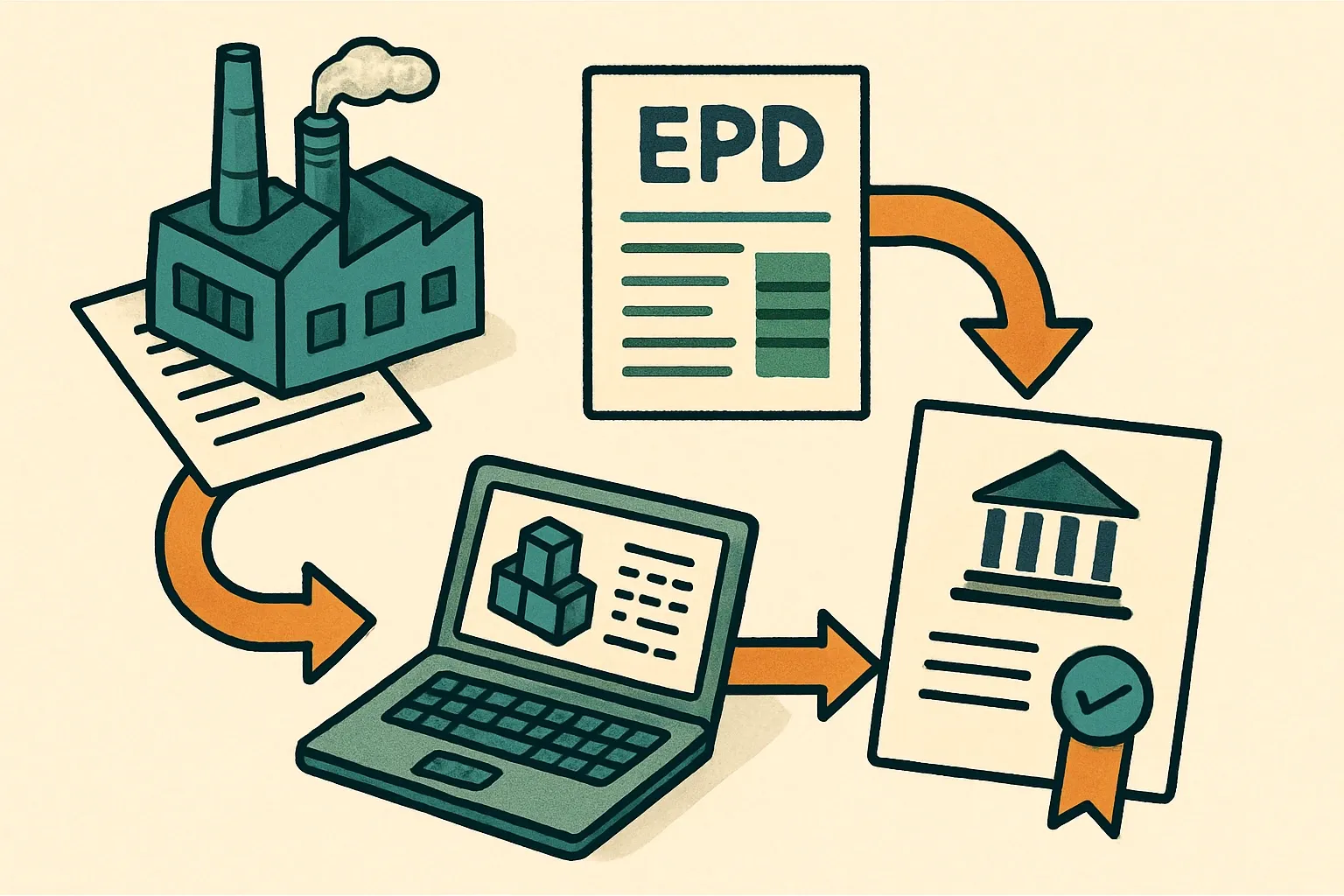
- EPD numbers feed the bill-of-quantities software used by carbon consultants.
- Consultants roll the totals into RICS WLCA worksheets.
- A third-party auditor cross-checks source documents before stamping the Standard certificate. Each missing EPD triggers extra paperwork, delays, and a worst-case substitution. Nobody loves that.
Commercial stakes: fail a threshold, lose the spec
Government clients already set a sliding scale from 600 kgCO₂e/m² in 2020 to 350 kgCO₂e/m² by 2030 for public offices (GPA Sustainability Annex, 2024). Private developers mirror the move. Bid teams tell us a non-compliant product can vanish from the shortlist within 48 hours, long before price enters the chat. The cost of preparing an EPD is tiny against a multi-storey supply contract, it’s basic risk insurance.
Action plan for manufacturers
- Audit your top-selling SKUs against current database averages.
- Prioritise EPDs for any product above 75 % of the draft caps.
- Pick an LCA partner who collects plant data with minimal shop-floor disruption and can publish through UK-recognised operators in under six months. A rushed, error-prone LCA will save no one.
Bottom line for 2025 tenders
When the full UK Net Zero Building Standard drops, specifiers will demand real numbers, not promises. An up-to-date, third-party EPD puts your carbon story in writing, ready for the verifier’s checklist. Start gathering the data now or watch the next wave of projects sail past. One weeks delay now may cost a years worth of bids.