What “federal” really means in Swiss construction
Switzerland sets the climate destination nationally, while procurement and building controls are shared with the cantons. For federal civil projects, the Federal Office for Buildings and Logistics treats the Swiss Sustainable Building Standard (SNBS) as the planning baseline and often targets certification where feasible. That framework quietly shapes what data and declarations earn points in tenders.
The legal anchors shaping demand
The Climate and Innovation Act is in force and locks net‑zero 2050 into law. It gives federal bodies a mandate to prefer climate‑compatible solutions, so tenders increasingly ask for life‑cycle carbon proof, not claims. Meanwhile, the revised CO₂ policy keeps pressure on building emissions and keeps public money flowing to upgrades that must document impact.
Procurement levers you will actually see
KBOB, the coordination body for public owners, publishes playbooks and templates that many federal and public buyers copy. Recent guidance even proposes tender specs for rebar with a greenhouse‑gas limit and recycled‑content floor, a clear signal for product‑specific evidence like EPDs: ≤ 0.6 kg CO₂e per kg and ≥ 99% recycled scrap for reinforcing steel (KBOB, 2024) (KBOB, 2024). Expect more product‑level thresholds to appear first in pilot lots, then scale.
The data spine behind decisions
Public clients in Switzerland rely on the KBOB eco-bau SIA LCA datasets to benchmark materials and assemblies. Versions were refreshed through 2024 and 2025, which means baselines shift and comparisons tighten. If your EPD aligns to EN 15804 and translates cleanly to KBOB’s structure, you remove friction for evaluators and reduce the chance your product is modeled with generic, more conservative data.
Navigating Swiss regulations for greater project wins?
Follow us on LinkedIn for clear insights that help you stay compliant and capture more tenders.
Follow the money to see the signal
The national Building Programme, financed from the CO₂ levy on fuels, supports energy renovations and equipment swaps administered by the cantons. Federal contributions are funded from up to one third of levy revenues, capped at CHF 450 million per year, which keeps performance‑based criteria front and center in public works (EFK, 2025) (EFK, 2025).
Switzerland’s headline numbers, and why they matter to specs
Switzerland reported 40.8 million tonnes CO₂e in 2023, 26% below 1990 levels, with building‑sector emissions down 46% since 1990. Buyers see that trajectory and expect materials choices to help keep it going, so they push for documented embodied impacts at the product level (FOEN, 2025) (FOEN, 2025). If an EPD is missing, your product risks being modeled with generic factors that can add a penalty to your bid’s carbon math.
Where EPDs fit in federal workflows
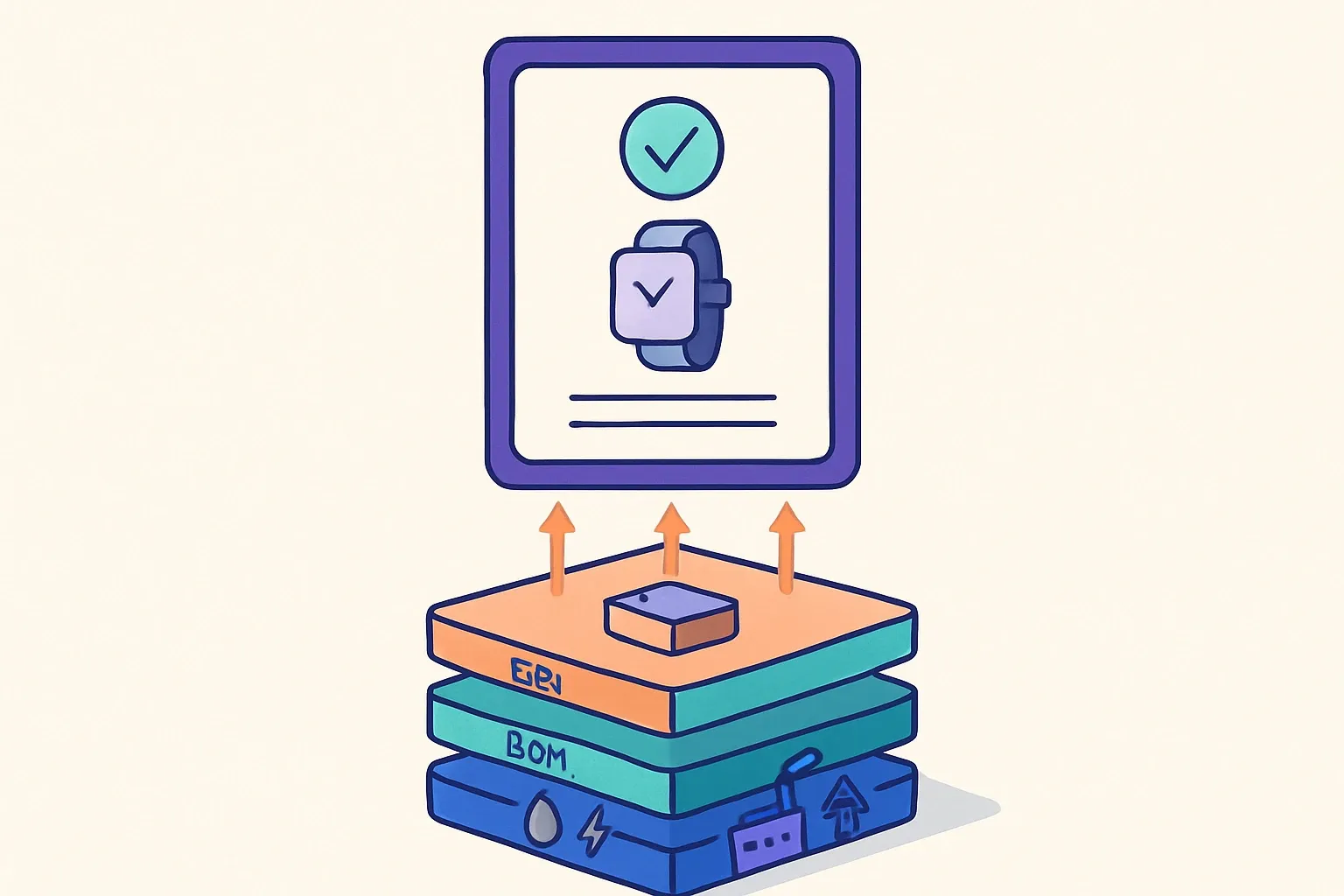
Think of an EPD as your passport into KBOB‑based modeling. It lets the buyer drop in verified module A1–A3 values and use consistent assumptions for transport and site works. That consistency shortens back‑and‑forth, helps your product survive value‑engineering, and prevents a last‑minute swap to a competitor that already supplied a clean dataset. Dont wait for the RFP to ask.
How to prepare your declarations for Swiss buyers
- Map your product system to KBOB categories so quantities and units align out of the box.
- Publish under an operator recognized in Europe and ensure EN 15804+A2 conformance with third‑party verification.
- Provide a machine‑readable dataset alongside the PDF so project teams can import without retyping.
- Track KBOB dataset updates and flag when your numbers beat the current generic baseline by a meaningful margin.
Federal vs. cantonal nuance you should anticipate
There is no single nationwide embodied‑carbon cap for all materials in every project today. Instead, federal guidance sets the tone, while cantons and cities trial limits in priority categories and feed results back into templates. Treat early Swiss pilots as the weather vane for tomorrow’s standard tender language.
Bottom‑line for manufacturers
Switzerland rewards clarity. EPDs that slot cleanly into KBOB‑driven models, plus readiness for emerging tender thresholds, convert into fewer delays and a higher chance of staying specified. Align to the data spine, prove performance with third‑party numbers, and you turn embodied carbon from a compliance chore into a competitive edge.