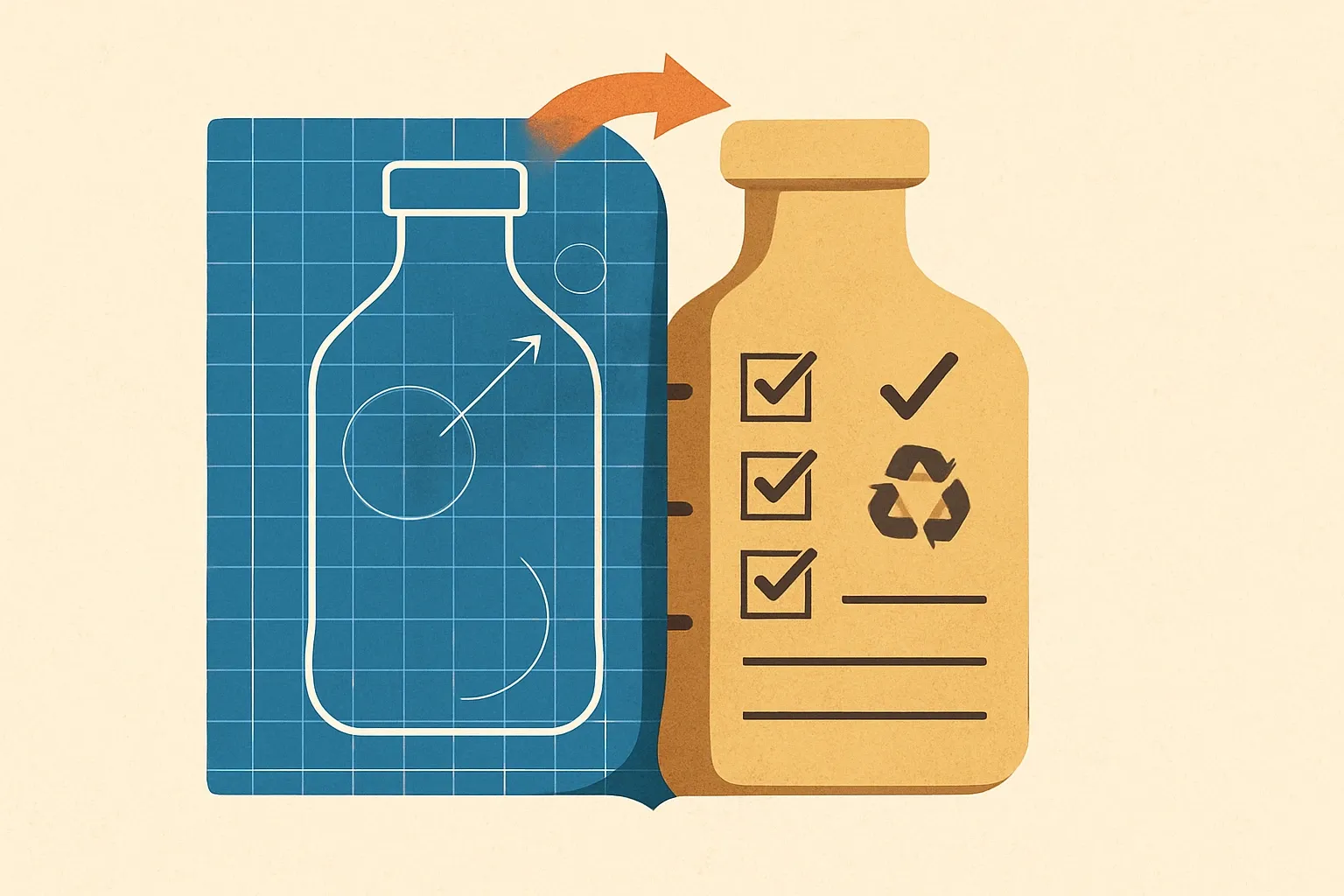
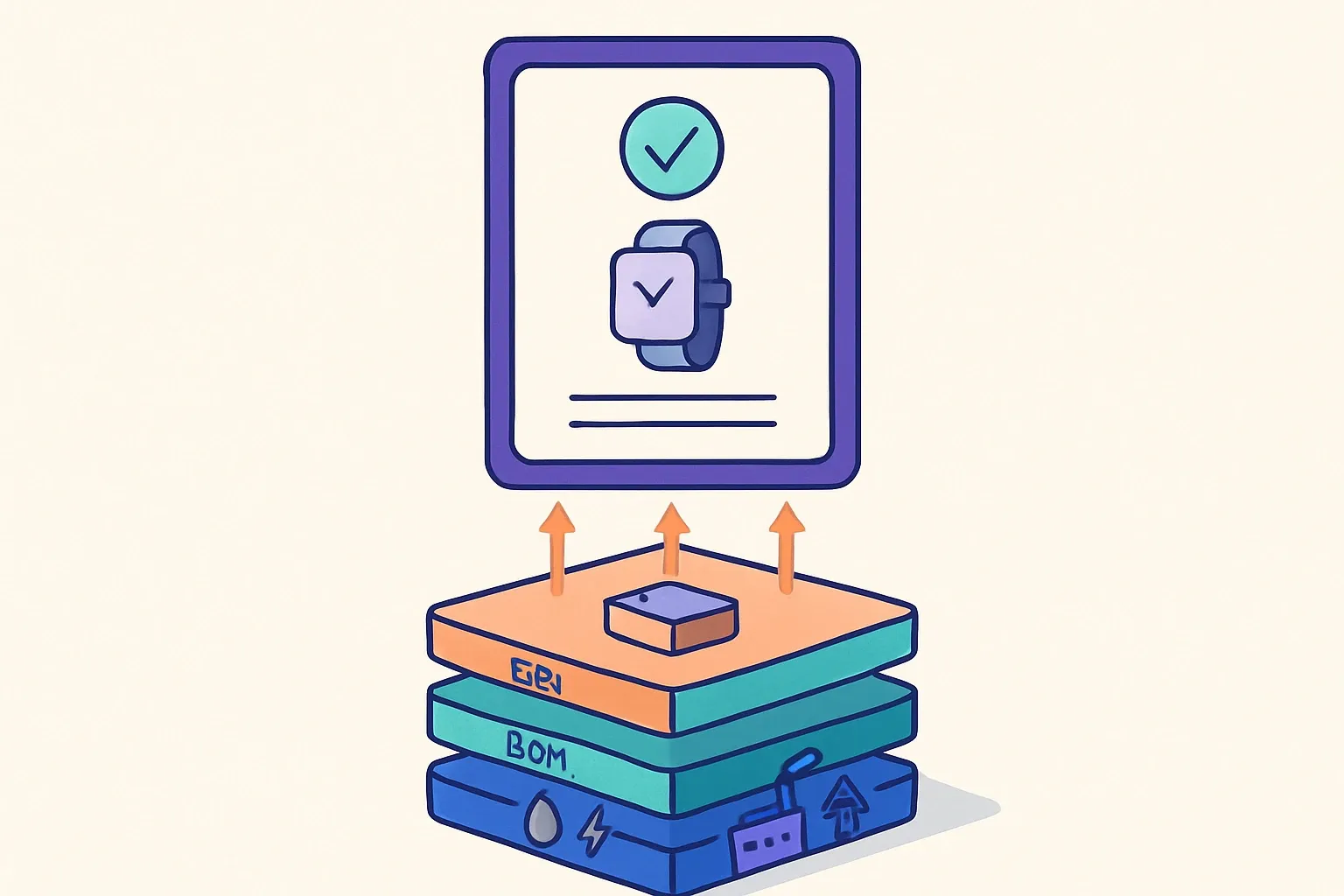
). Procurement teams that update vendor prequalification now will cut bid friction, avoid late submittal drama, and surface suppliers whose documentation maps cleanly to v5’s multi‑attribute product framework. Below is a practical set of questions owners and purchasing teams can use to screen suppliers in minutes, not months.
Ensure that you use no text, as this illustration will be used on international translations of the article..
Use an illustrative style (e.g. isometic) and don't generate in a photorealistic style.](/_next/image?url=%2Fapi%2Fmedia%2Ffile%2F6e5f29c92462.webp&w=3840&q=75)
The new buying context in one minute
LEED v5 reframes product selection around three impact areas that shape every credit: decarbonization, quality of life, and ecological conservation and restoration (USGBC Exploring LEED v5, 2024). The legacy v4 MR credits for EPDs, sourcing, and ingredients are consolidated into Building Product Selection & Procurement with a multi‑attribute product score that rolls up into project points (USGBC Summary of Changes to LEED v5, 2025).
Start with currency: is the paperwork still valid
Ask suppliers to confirm the exact “valid until” dates on EPDs and HPDs, plus the underlying PCR versions. EPDs are typically valid for five years under program operator rules like IBU (IBU, 2025). HPDs are generally valid for three years from screening, and should match the current HPD Open Standard version at the time of purchase (HPDC Support, 2020). Require that expiry buffers extend past expected install dates to avoid mid‑project rework.
Climate Health fit: do the EPDs actually score in v5
LEED v5 treats a product‑specific Type III EPD as the entry ticket for Climate Health Level 1 (valued at 1x). Documented reductions unlock higher credit scores. Over 20% GWP reduction qualifies for Level 2 and over 40% GWP reduction plus at least 10% improvement in three additional impact categories can reach Level 3 (up to a 5x multi‑attribute score) (USGBC BPSP Additional Guidance, 2025) (USGBC BPSP, 2025).
Supplier questions to copy into RFQs:
- Which of your product lines have product‑specific Type III EPDs and which are facility‑specific versus manufacturer‑average (USGBC BPSP Additional Guidance, 2025)?
- For each EPD, what is the declared unit, PCR reference, program operator, verification status, and expiry date?
- Can you document a 20% or 40%+ GWP reduction relative to the baseline used in the EPD and identify the baseline year and methods used (USGBC BPSP Additional Guidance, 2025)?
Human Health alignment: ingredient proof that counts
LEED v5 scores ingredient disclosures under the Human Health criteria area. An HPD that is “Pre‑Checked for LEED” at 1,000 ppm earns Level 1 value. Third‑party verified HPDs at 100 ppm with avoidance of chemicals of high concern earn a higher score (USGBC BPSP Additional Guidance, 2025).
What to ask:
- Do your HPDs meet HPD Open Standard v3.x formatting and are they third‑party verified at 100 ppm where feasible? What is each HPD’s expiry date (HPDC Support, 2020)?
- Are Declare labels third‑party verified and Red List Free or Approved to strengthen Level 2 value in Human Health (USGBC BPSP Additional Guidance, 2025)?
Join Parq Pulse!
Our weekly newsletter for manufacturers mobilizing product and environmental insights to remain competitive and win more projects.
Ecosystem, equity, and circular economy: round out the score
Beyond carbon and health, v5 recognizes recycled content, legal and responsible wood, take‑back and EPR, and material reuse. For example, materials reuse can score across Climate Health, Ecosystem Health, and Circular Economy, and recycled content can add limited points within Circular Economy. Wood legality with disclosure is recognized in Ecosystem Health (USGBC BPSP Additional Guidance, 2025).
Simple qualifiers:
- Which SKUs carry FSC or equivalent legality disclosures for wood, with chains of custody documented?
- Do you run an extended producer responsibility program we can reference in contracts? Which products qualify for verified take‑back?
- Can you quantify pre‑ and post‑consumer recycled content for each SKU and provide mill statements as evidence?
Proof of version support: v4 PDFs are not enough
Many v4 and v4.1 documents still help, but v5 uses a product calculator in Arc to score multi‑attribute claims. Ask if the supplier can deliver clean submittals that align with the v5 scoring logic and provide all IDs needed for Arc uploads, including product names, amounts, and documentation IDs (USGBC BPSP Additional Guidance, 2025).
Ask directly:
- Can you provide a product list with proposed v5 BPSP Levels per criteria area and the document IDs we will enter in Arc?
- Will you maintain documents so they remain valid through our forecasted purchase and install windows in 2026–2028?
Facility coverage and model matching
Mismatch is where submittals die. Confirm that EPDs actually match the product variant, formulation, and facility that will ship. Manufacturer‑average EPDs can qualify for Level 1 in v5, yet facility‑specific declarations typically improve credibility with reviewers. Require the shipping facility and EPD facility to align in purchase orders when facility‑specific claims are made (USGBC BPSP Additional Guidance, 2025).
Prequal packet: what good looks like from a supplier
For each product family in scope, request a one‑page snapshot containing: product‑specific Type III EPD PDF, program operator, PCR ID and date, declared unit, scope, GWP result, reduction claim if any, expiry date, and the proposed v5 BPSP Level per criteria area. Add HPD version, ppm threshold, verification status, and expiry. This single view lets procurement compare apples to apples.
Cut the late‑stage scramble with clear gates
Move these gates to the front of your process.
- Gate 1 at RFI: show a roster of SKUs with current EPDs and HPDs plus expiry dates through the planned install month. No roster, no invite.
- Gate 2 at RFQ: submit evidence to support proposed v5 BPSP Levels for each SKU, including baselines for any reduction claims and facility mapping.
- Gate 3 at award: commit to keeping documentation valid through substantial completion with replacements preapproved if any document will lapse within 120 days of install. EPDs are five‑year documents in most programs, but expirations can still collide with long procurement cycles (IBU, 2025).
Vendor‑readiness expectations that match v5
Shift from chasing single labels to managing a product portfolio score. Expect suppliers to:
- Track and report BPSP Levels across their catalog, not just flagship SKUs.
- Publish renewals on a rolling calendar and flag at least six months before expiry.
- Deliver machine‑readable data where available and keep file naming consistent with model numbers.
- Provide a single escalation contact who can answer PCR scope, allocation, and dataset questions within two business days.
For manufacturers responding to these asks
Repackage your evidence around v5. Create a lightweight matrix that lists each product line, its current BPSP Level per criteria area, document IDs, expiry dates, and the next planned renewal. Add a short workplan for gaps that shows which SKUs will reach Level 1 or 2 and when. This is how bids signal dependability. It’s definitly how you avoid being swapped late for a competitor with cleaner paperwork.
The sharp edge of LEED v5 procurement
LEED v5 does not just reward greener products. It rewards organized suppliers who prove claims with current, verifiable documents and who make it easy to compute a multi‑attribute product score. Owners that ask the questions above will see fewer change orders and faster reviews. Manufacturers that answer them crisply will sit higher on shortlists as July 2026 approaches (USGBC LEED certification deadlines, 2026) (USGBC, 2026).