HB 2 in plain English
HB 2 sets where New Mexico spends in FY 2027. It is large enough to steer market behavior without writing new procurement mandates. The governor’s office pegs the general fund at about 11.1 billion dollars with reserves at 26.4 percent (Governor’s Office, 2026) (Governor’s Office, 2026).
Follow the money that matters to factories
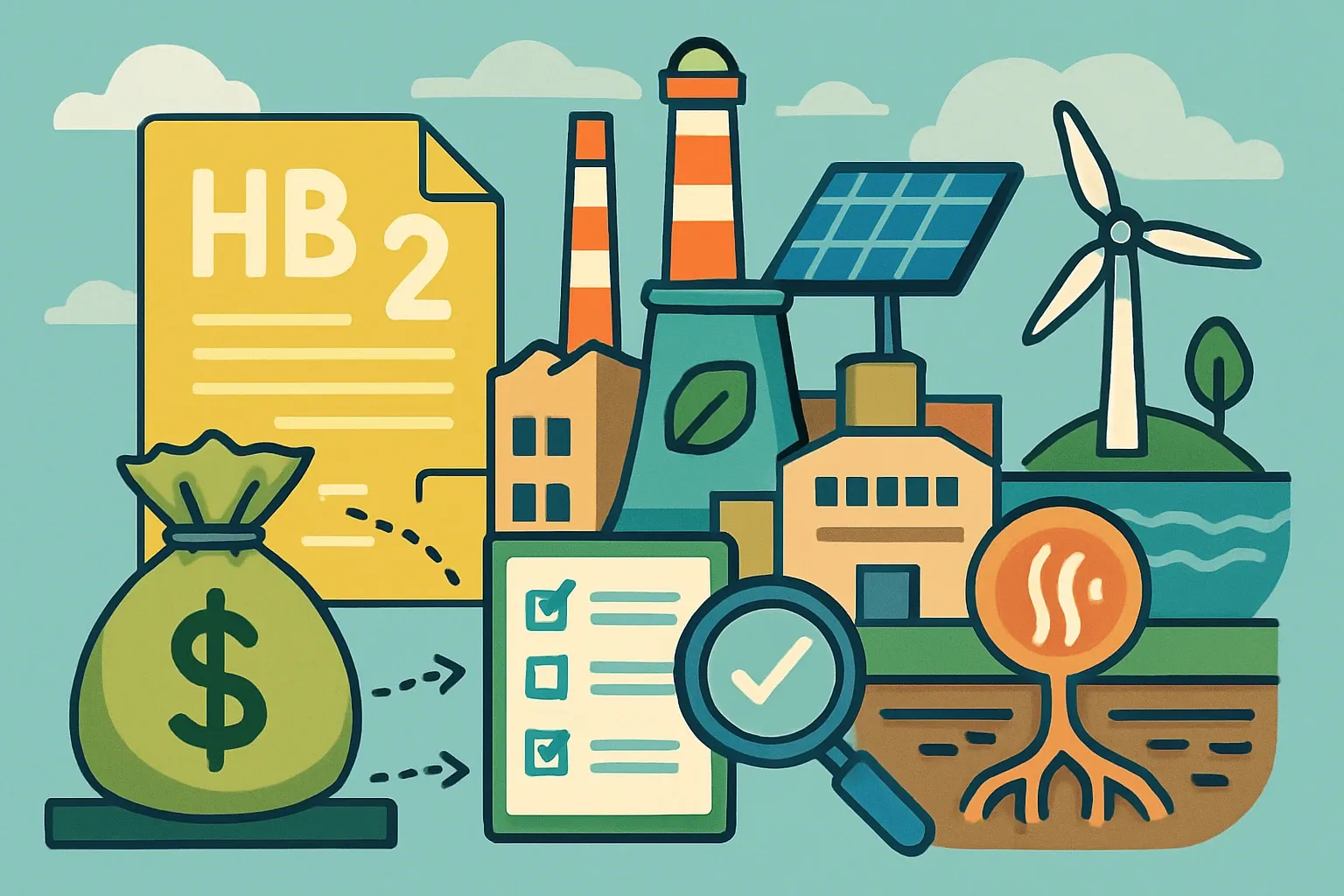
The budget directs 25 million dollars to circular economy and industrial decarbonization, plus 5.75 million dollars for the wastewater facility construction loan fund. It adds 20 million dollars for uranium mining reclamation, 5 million dollars for neglected and contaminated sites, and 130 thousand dollars for a statewide waste characterization study (HB 2, 2026) (HB 2, 2026). For manufacturers, that is a nudge toward cleaner inputs, cleaner byproducts, and cleaner data.
Power and resilience, the quiet EPD multiplier
Energy line items include 10 million dollars for a geothermal projects development fund and 5 million dollars for a grid modernization grant fund that includes microgrids (HB 2, 2026). More renewable and resilient electricity can drop Scope 2 intensity, which shows up directly in A1 to A3 results inside your EPD. Think of it like switching a video stream from 720p to 4K. Same content, visibly better picture.
Water dollars that speed permits and reduce downtime
HB 2 funds 35 million dollars for the strategic water supply program, 13 million dollars for the strategic water reserve, 10 million dollars for river stewardship, and 4 million dollars to support drinking water needs including private well testing and treatment (HB 2, 2026). Plants that manage intake, discharge, and watershed risk more proactively tend to avoid permit hiccups that derail capex schedules.
Join Parq Pulse!
Stay ahead with weekly insights on market shifts and environmental strategies to boost your project wins.
Cleanup and legacy liabilities
If a site has historic contamination, HB 2’s reclamation and neglected site funds can catalyze progress. Faster remediation often clears the path for modernization that lowers process emissions. That sequence can convert a balance sheet headache into an EPD‑ready upgrade plan with credible reductions baked in (HB 2, 2026).
What HB 2 does not change
This is a budget, not a new embodied‑carbon procurement law. It does not require low‑carbon concrete or asphalt on state jobs. Watch a separate policy track created in 2025 that directed the environment department to stand up an advance purchase commitments program for low‑emissions cement, concrete, and asphalt. That program architecture, if funded, could become a direct market signal for materials with verified low GWP EPDs (HB 524, 2025) (HB 524, 2025).
How to turn appropriations into EPD leverage
- Map your biggest drivers. If grid intensity or process heat dominate, target geothermal or microgrid opportunities where available, then reflect the change in your next EPD update.
- Pre‑qualify for grants early. Agencies often ask for metering plans, data governance, and baseline LCAs. Having enviromental data workflows ready cuts weeks.
- Link capital to claims. Tie each funded change to a specific EPD impact category, like GWP or POCP, so sales can explain the win in one sentence.
- Publish, then socialize. Once verified, put the EPD at your distributors’ fingertips and in submittal packages so project teams can stop guessing.
Timelines and expiries without the headache
Many HB 2 items allow spending through 2028 or 2029, which fits normal LCA reference‑year cycles. If a key PCR refresh is coming, plan the grant‑funded upgrade first, then schedule the EPD renewal so the cleaner data lands in the new declaration instead of living in a slide deck (HB 2, 2026).
Choosing help that keeps pace with the state
When funding windows open, the slowest part is usually internal data wrangling. Look for a partner who takes that off your team’s plate, manages cross‑plant collection with minimal disruption, and publishes with your preferred program operator in the US or EU. The goal is simple, get a trusted EPD out before the next RFP asks for it.
The takeaway for specs in New Mexico
HB 2 points money at decarbonization, grid stability, water security, and cleanup. None of that forces your hand, yet it rewards manufacturers who can document improvements with third‑party EPDs and HPDs. Move first on the data, apply for what fits, and let verified numbers do the heavy lifting in bids and submittals (HB 2, 2026).