Minergie‑ECO in a nutshell
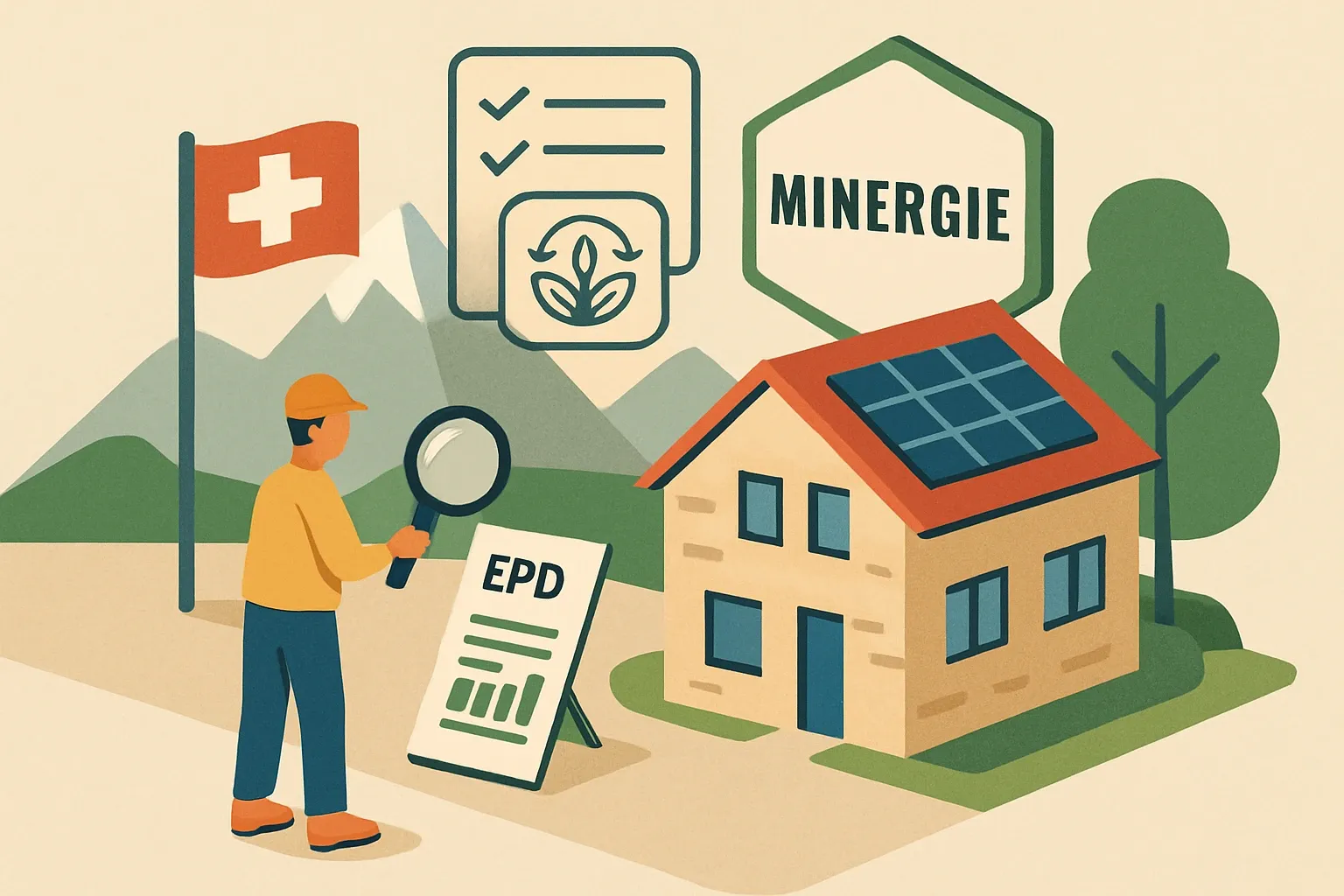
Minergie is Switzerland’s most used building standard, with 58,716 certified buildings recorded through 2024 (Minergie Annual Report, 2024). ECO is the add‑on that brings material health, circularity, and embodied‑carbon checks into the same workflow. The association behind it counts about 1,850 members and partners, including all 26 cantons and Liechtenstein (Minergie Strategy, 2024).
Where EPDs matter for ECO
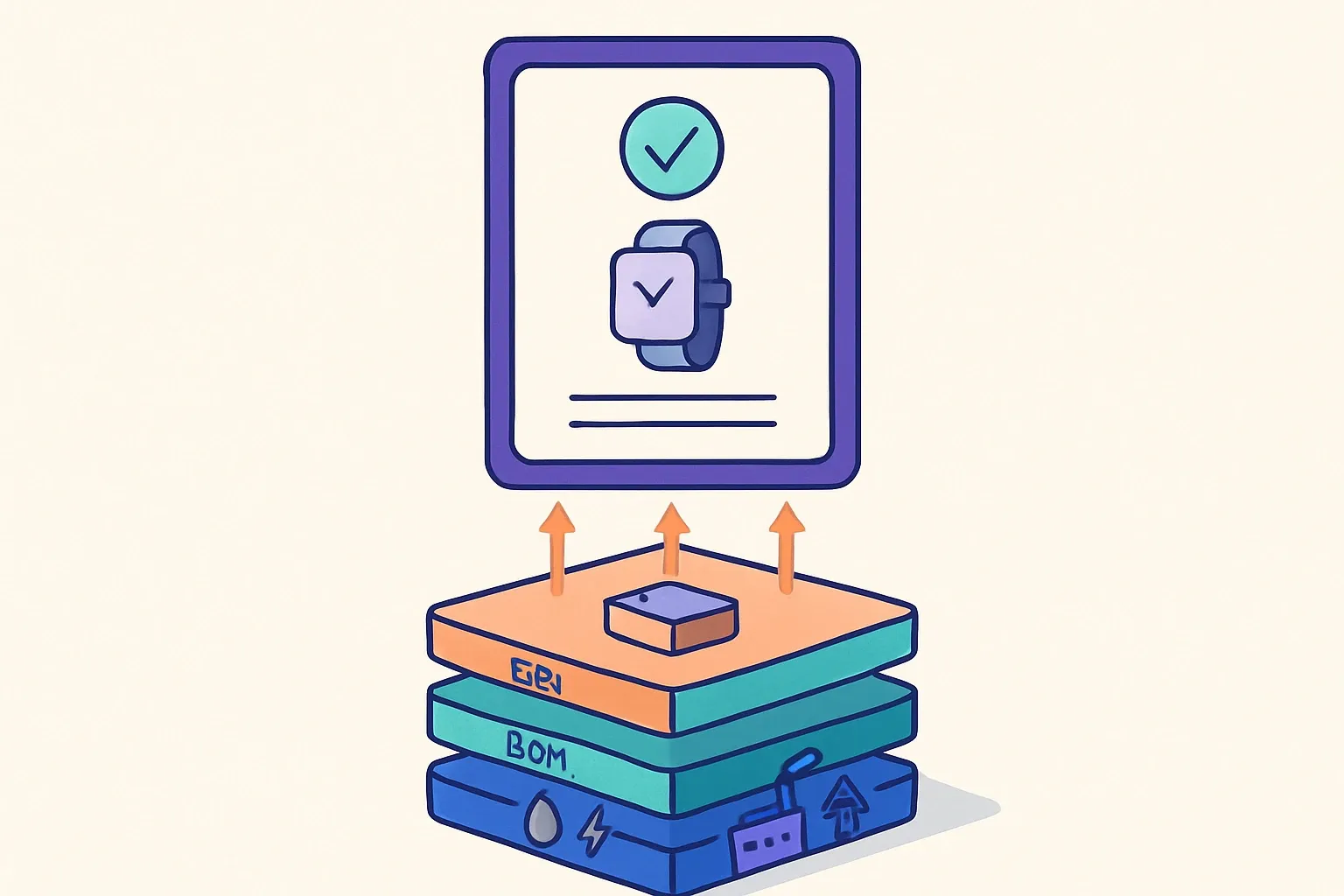
Think of ECO as the nutrition label for building materials. EPDs supply the verified life‑cycle data that planners use to hit ECO’s embodied‑carbon targets and to document low‑emission product choices. No single EPD wins a project alone, but a complete set across high‑mass and high‑quantity items removes uncertainty. That makes the spec team’s job easier when they balance ECO, cost, schedule and risk.
What changed recently
Since September 2023, Minergie requires greenhouse‑gas accounting for the construction phase across new builds, with defined limits in the submission workflow. The 2023 update also simplified ECO criteria and introduced a digital label platform for proofs. A transition period for older forms ended on September 13, 2024, so current projects must follow the 2023 or 2024 rules and submit on the platform.
Market reality that boosts ECO demand
Switzerland still heats a large share of buildings with fossil energy, while heat pumps are rising fast. In 2024, 35% of buildings used oil, 17% gas, and about 20% of households had a heat pump (FSO, 2025) (FSO, 2025). Labels that guarantee low operational and embodied emissions help owners lock in future‑proof assets, which filters back into product selection.
Need to navigate complex environmental regulations?
Follow us on LinkedIn for insights that help you stay compliant and win more tenders.
Program operators you will see on submittals
Most EPDs used in Swiss projects follow EN 15804 and carry an ECO Platform pedigree, often issued through IBU or Swiss operators like SÜGB. Verified EPDs typically carry a five‑year validity window, which is the planning cadence many design teams expect (Bau‑EPD, 2024) (Bau‑EPD, 2024). If your dataset is older, plan the refresh so it does not expire mid‑tender.
Money talks: public incentives and fees
Several cantons tie incentives to ECO performance or to Minergie’s embodied‑carbon limits. Luzern, for example, pays 20 CHF per m² EBF for meeting Grenzwert 1 and 10 CHF per m² for Grenzwert 2, with caps up to 60,000 CHF per project (Kanton Luzern, 2025) (Kanton Luzern, 2025). Minergie‑ECO certification fees for small buildings start around 2,300 CHF and scale with floor area and building category (Minergie, 2025).
How ECO shows up in product decisions
ECO steers specifiers toward low‑emission, low‑toxicity options and reusable assemblies. That raises the bar in categories like concrete, steel, insulation, membranes, and finishes. If your product competes in a commodity line, the presence of a current, third‑party verified EPD can keep you in the running when planners filter options to pre‑qualified ECO‑aligned choices. Skip the EPD and they often default to conservative values that hurt your odds.
A lean playbook to align your EPDs to ECO
Start with the heavy hitters by quantity and mass. Prioritize the top five items that dominate A1 to A3 impacts. Match them to the PCRs your competitors use, then publish with a program operator commonly accepted in Switzerland to reduce re‑work later. Map canton incentives that apply to your customer segments, and equip sales with two crisp talking points per product that tie EPD results to ECO or THGE limits. Avoid bloated binders; deliver clean PDFs and machine‑readable data. Sounds simple, but teh execution wins bids.
Timing and refresh cadence
Aim for a 4.5‑year refresh rhythm so validity never lapses during key procurement windows. Minergie’s annual statistics show steady certification volumes, which means tenders with ECO checks land year‑round (Minergie Annual Report, 2024) (Minergie Annual Report, 2024). Build that cadence into product roadmaps and price books.
The spec advantage
Minergie‑ECO changes the conversation from generic “green” claims to verifiable numbers. Manufacturers that show complete, current EPDs across core SKUs reduce friction for planners and earn trust faster. That is the quiet edge that turns shortlists into selections.