What HB 4139 actually does
Oregon’s HB 4139 directs ODOT to build a greenhouse‑gas reduction program for construction materials and to require EPDs for covered materials on eligible projects. The statute also set a program launch deadline of December 31, 2025, and it spells out when EPDs can and cannot be used in bid scoring (OLIS HB 4139, 2022) (OLIS HB 4139, 2022).
Covered materials and who is in scope
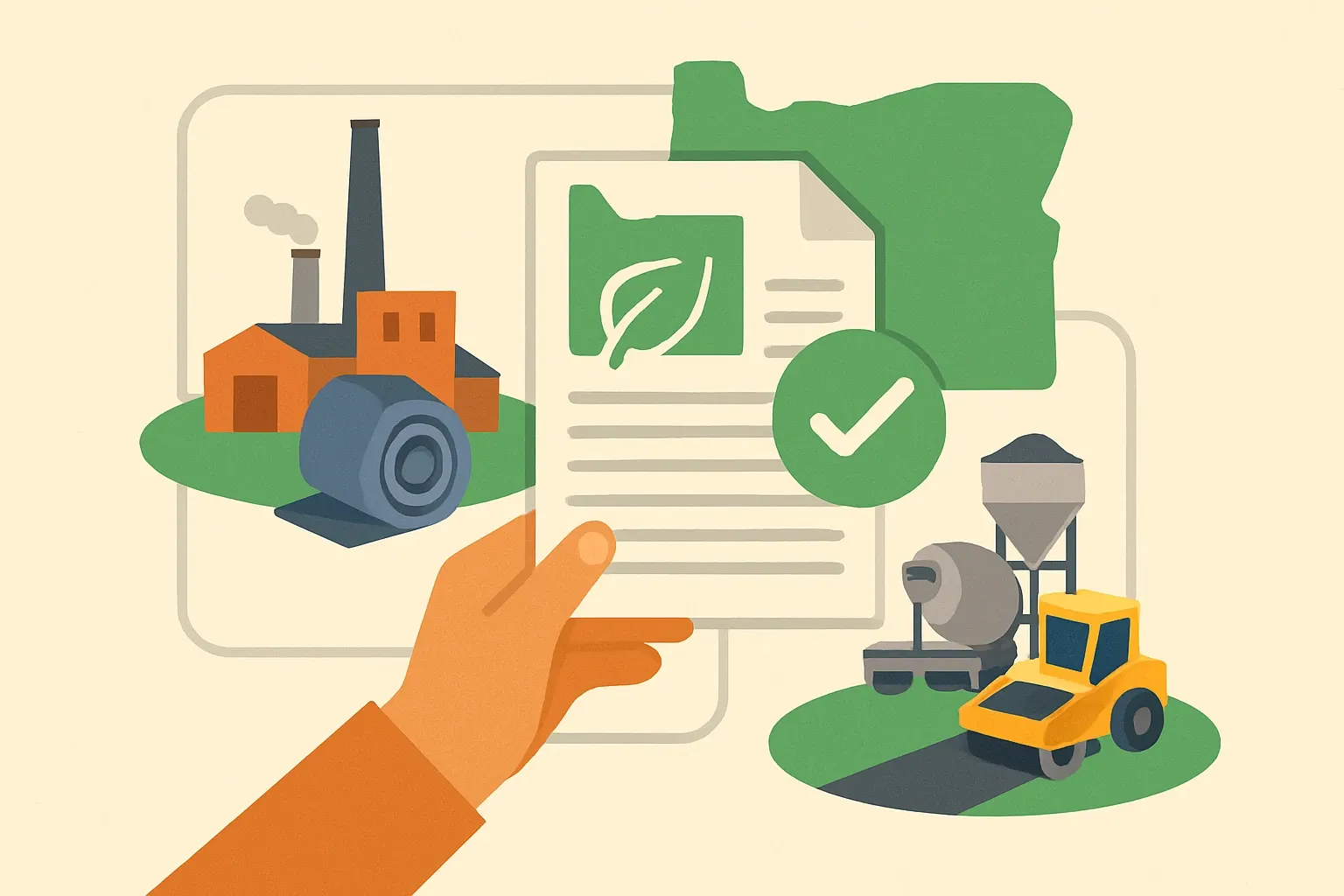
Today the rule targets three buckets suppliers know well: concrete, asphalt paving mixtures, and steel including rebar and structural shapes. ODOT can add more materials by rule over time, so the net can widen as the market matures. If your plant feeds bridge decks, pavements, barriers, or structural work, you are in the splash zone.
Which projects trigger EPD submittals
EPDs are required on ODOT highway construction contracts with an engineer’s estimate at or above 3 million dollars and on ODOT maintenance projects estimated at or above 3 million dollars. Material quantity thresholds also apply: at least 50 cubic yards of ready‑mix concrete, 2,500 tons of asphalt paving mixtures, 15,000 pounds of steel rebar, or 5,000 pounds of structural steel (Oregon Secretary of State OAR 731‑005‑0910, 2024) (Oregon Secretary of State OAR 731‑005‑0910, 2024).
What an acceptable EPD looks like
ODOT points to ISO 14025 and the ISO 14040 series. Translation for busy teams. Product‑specific, third‑party verified, plant‑tied EPDs are the safest bet. Keep your declared unit aligned with how the bid item is measured so estimators are not playing unit‑conversion Jenga at submittal time.
Join Parq Pulse!
Stay ahead with weekly insights on environmental laws and product compliance to win Oregon projects and boost your competitiveness.
Bid scoring timing you should not ignore
ODOT may not use EPDs to rank or score bids before January 1, 2027. After that date they can integrate EPD data into scoring if a fair method is adopted. Until then, the EPD is a gatekeeper that keeps you eligible and credible without changing the math on low bid yet (OLIS HB 4139, 2022) (OLIS HB 4139, 2022).
There is grant money, use it
Oregon set up an Environmental Product Declaration Support Fund. Reimbursement per applicant is capped at 7,000 dollars or 80 percent of eligible costs, whichever is lower. Modest on paper, but it can cover verification fees or analyst time for a first wave of declarations (OAR 734‑023‑0080, 2024) (Oregon Secretary of State OAR 734‑023‑0080, 2024).
What this means for operations and sales
Treat EPDs like mix designs or shop drawings. They are technical documents that unlock project access. Sales teams can pre‑qualify opportunities by checking project value and expected quantities against the ODOT thresholds, then pull the right EPDs without last‑minute fire drills. Ops teams should map which plants and mills supply ODOT corridors so the first EPDs match real delivery patterns.
Prioritize your Oregon EPD pipeline
- Start with products that cross the EPD quantity thresholds on ODOT work in the next two to three quarters.
- Focus on the facilities that actually ship to those jobs so the declarations are plant‑specific and credible.
- Align declared units with bid items to reduce submittal churn and RFIs.
Common pitfalls to sidestep
Do not wait for numeric GWP limits. Oregon is in a reporting phase first, scoring later. Do not publish a generic or association EPD when specifiers expect plant reality. And do not assume asphalt EPD timing is identical to concrete or steel. The rules allow asphalt submittals later in the contract timeline, which can trip coordination if teams are not aligned.
Our take on speed and effort
The heaviest lift is not the math. It is the data chase across utility bills, batching software, production logs, and supplier declarations. The teams that win Oregon work consistently are the ones that make that data pull painless for their plants and keep EPD renewals on a simple, yearly calendar. Doing this once is good. Doing it repeatable is definately better.
The play in Oregon right now
Get compliant EPDs in hand for mixes and steel that meet ODOT thresholds, tap the grant to offset part of the cost, and keep an eye on January 1, 2027 for potential scoring shifts. That combination keeps you eligible today and positions you to win tomorrow when low‑carbon performance starts carrying points.