What the pilot actually is
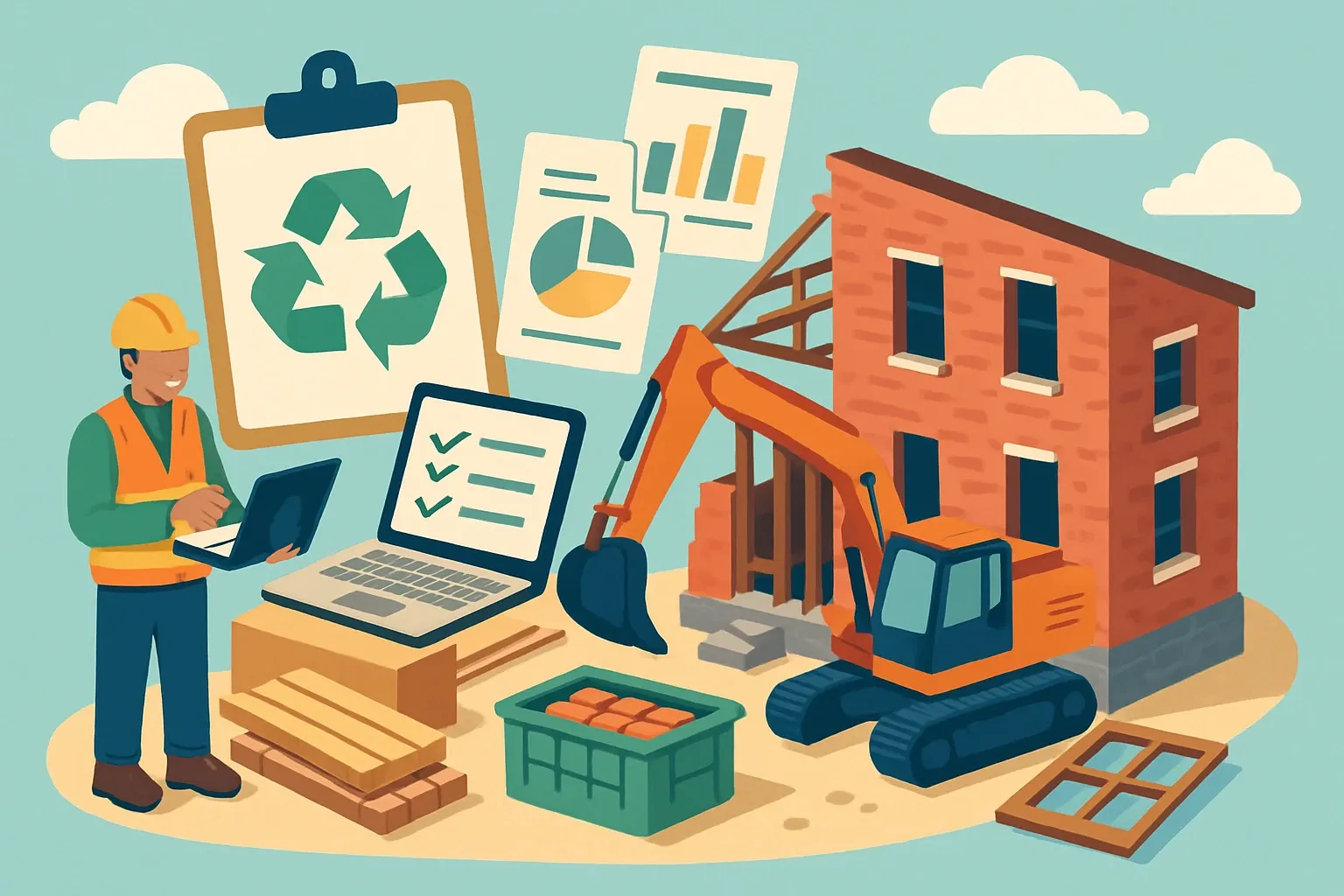
Boston’s Environment Department launched a Building Deconstruction Pilot to learn how to pull buildings apart for reuse and recycling instead of crushing everything into mixed C&D. Five pilot projects received technical assistance through RecyclingWorks to plan salvage and diversion routes (CLF Boston, 2025).
Think of it like restoring a vinyl record collection instead of dumping a box of scratched CDs. The parts matter, and the order you handle them matters too.
What’s live right now in 2025
The City issued a Building Material Reuse Assessment Program RFP to standardize site assessments, create material inventories, and share data with the Environment Department. It outlines tasks, dates, and submittals, with proposals due January 14, 2026, Supplier Portal ID EV00016807 (Boston.gov, 2025).
Translation for manufacturers. More projects will log what can be salvaged before demolition. That raises the value of products that are easy to remove, label, and re-use.
How this links to LCAs and EPDs in Boston
Starting July 1, 2025, Boston’s amended zoning requires net zero operational performance for most new large projects and adds embodied carbon reporting, with LCAs required for Large Projects over 50,000 square feet (Boston.gov, 2025).
When design teams must report embodied impacts, product-specific, third‑party verified EPDs become the fastest way to defend a material choice. If your EPD quantifies end‑of‑life scenarios and, where applicable, Module D benefits per your PCR, you give project teams a cleaner story for reuse and recycling.
Ready to navigate new environmental regulations in construction?
Follow us on LinkedIn for essential updates that help you stay compliant and win more projects.
Why policy tailwinds make this stick
Buildings drive nearly 71 percent of Boston’s community emissions, so the City is targeting both operations and materials to hit neutrality by 2050 (Boston.gov, 2025).
Massachusetts aims to cut solid waste disposal 30 percent by 2030 and 90 percent by 2050, which keeps pressure on C&D diversion and material reuse (MassDEP Solid Waste Master Plan, 2021) (MassDEP, 2021).
What deconstruction changes in product selection
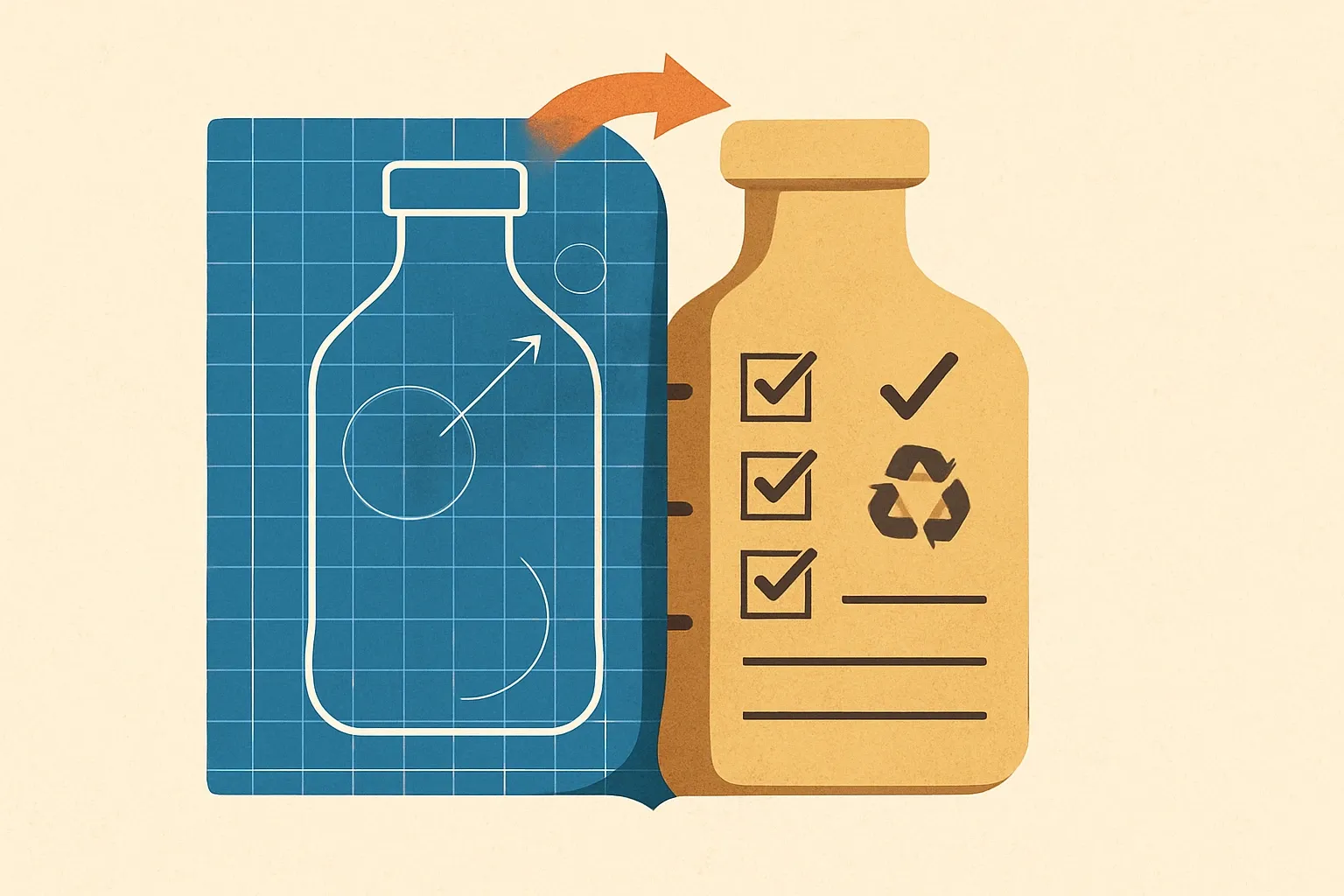
Deconstruction rewards products that come apart like smart luggage, not a glued-shut suitcase. Fasteners that back out without damage, clear component labeling, and replaceable subassemblies are now sales features, not footnotes.
In EPDs, document recyclability and realistic reuse pathways. Under many EN 15804‑aligned PCRs, downstream benefits can be reflected in Module D. In North America, check your PCR’s current rules on circularity claims and secondary material inputs before promising credits.
Commercial signals manufacturers should not ignore
• The pilot proved feasibility across five sites and built muscle memory in local teams who influence specs tomorrow, not someday (CLF Boston, 2025).
• Boston’s RFP sets up a repeatable intake of reuse data at project start, which nudges owners to ask for disassembly‑friendly products early (Boston.gov, 2025).
• Massachusetts’ waste bans make common C&D streams harder to throw away, from ABC to clean gypsum and wood, raising the value of reuse planning (MassDEP, 2022).
Prep in 60 days without boiling the ocean
- Map which SKUs are realistically salvageable. Identify fastener swaps, adhesives, or finishes that block reuse.
- Update installation guides with a one‑page disassembly sheet. Make it photo‑clear.
- Refresh EPDs for your Boston‑relevant lines. Verify end‑of‑life assumptions match likely local pathways and your PCR’s scope.
- Stand up a simple take‑back or buy‑back pilot on one product family. Prove the loop.
- Train your A&D reps to show how your EPD plus disassembly sheet reduces LCA uncertainty and schedule risk in Article 80 reviews.
Winning the spec, not just the argument
In a city asking for LCAs and cataloging reusable materials, the low‑friction option gets picked. Clear circular design, current EPDs, and no‑drama data collection let project teams move faster and document compliance without spreadsheet acrobatics. Do this well and you dont just look greener. You become the safe, default choice when time is tight and the zoning clock is ticking.