PCRs for aluminum, in plain English
A PCR is the rulebook of Monopoly. Ignore it and the game falls apart. For aluminum construction products, the PCR sets the system boundary, datasets, impact methods, and comparability limits so your EPD lands cleanly with designers and reviewers.
The aluminum PCR landscape you will encounter
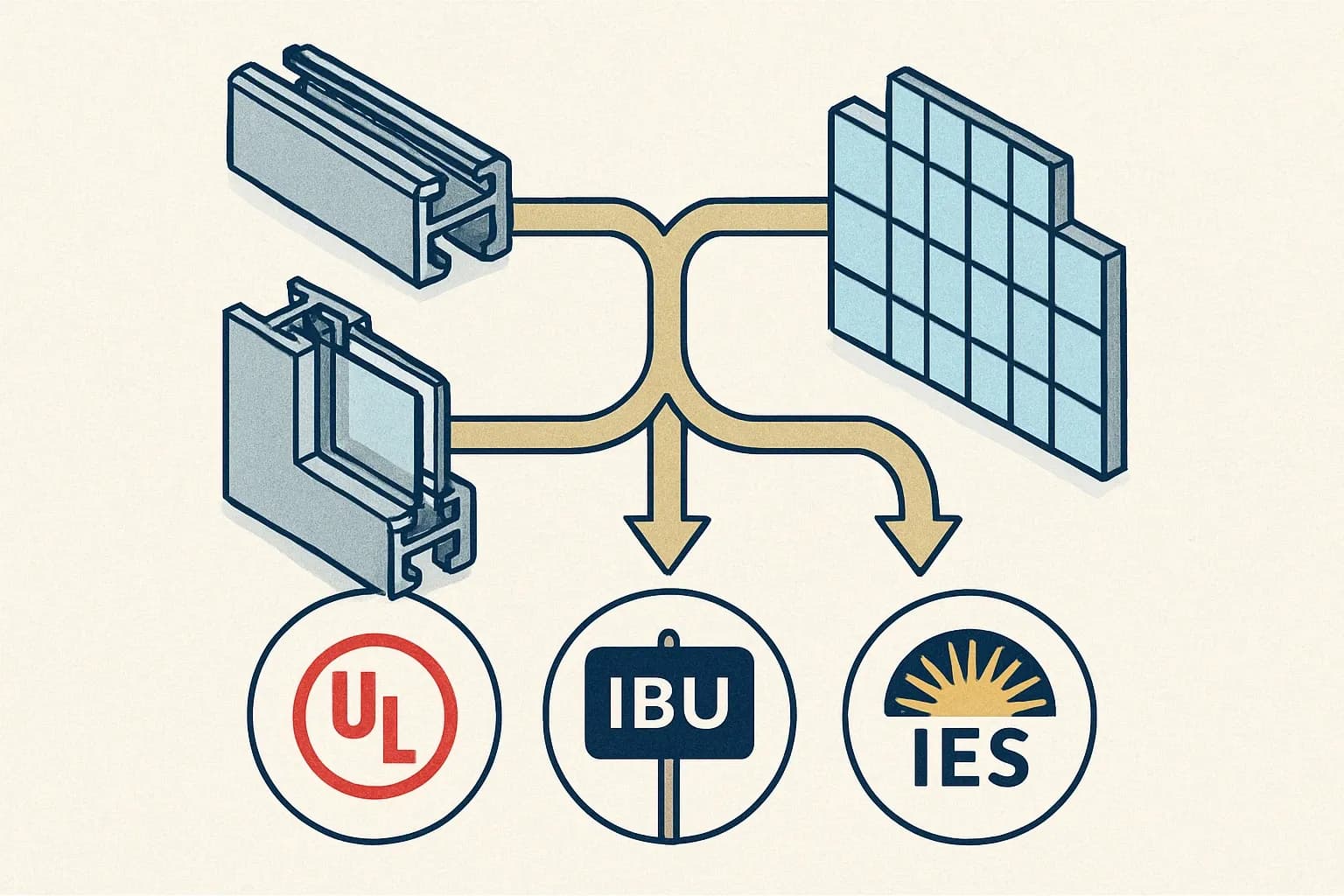
Think in two layers. A core standard such as ISO 21930 and EN 15804 defines the skeleton, then a Part B narrows rules for a product family. For aluminum, active Part B documents commonly appear at UL, IBU, and the International EPD System, plus regional families like NPCR 013 used in Scandinavia.
Examples of current Part B families used for aluminum
- Basic and semi‑fabricated aluminum, including billet, slab, sheet, and foil, typically under an aluminum alloys Part B from a major operator.
- Extrusions and profiles for building systems under aluminum products Part B, sometimes scoped to construction uses.
- Fenestration assemblies and curtain wall under fenestration or curtain wall Part B, often excluding glazing by design.
- Roofing and cladding systems under dedicated aluminum roofing and cladding Part B in some European programs. If a perfect match is missing, operators may route you to a generic construction products PCR with documented assumptions.
Curtain wall, window wall, storefront, or extrusions
If you sell complete facade systems, look for curtain wall or fenestration assemblies Part B. If you sell profiles or bars that feed another brand’s system, an aluminum products Part B is usually the right home. That split affects functional unit, reference service life, and the modules that are mandatory to model.
Working with aluminum construction products?
Follow us on LinkedIn for insights on picking the right PCR and strategies to boost your project specs.
What reviewers expect inside an aluminum PCR
Expect explicit scrap accounting rules, alloy family declarations, surface finishing options, and guidance on electricity disclosures. Reviewers also look for transport and packaging specifics because aluminum shapes are light, long, and sometimes nested. Small misses here lead to big recalcs later.
Carbon basics that shape your targets
Primary aluminum is carbon intensive by nature, driven by electricity and anode chemistry. Global average cradle to gate emissions are about 16 kg CO2e per kg metal, while recycled aluminum typically lands around 0.5 kg CO2e per kg, so recycling uses roughly 95 percent less energy than primary production (International Aluminium Institute, 2024) (IAI, 2024). This gap is why PCRs push for transparent electricity mixes and scrap rules.
Validity windows, renewals, and version shifts
PCRs have defined validity periods set by the operator, and EPDs produced under them remain valid until their own expiry, even if the PCR updates mid cycle. Many programs use five year EPD validity with renewal on the latest PCR version at the next update, which is stated in their program instructions (UL General Program Instructions, 2024) (UL, 2024). Time your projects so near term bids do not collide with a planned PCR revision.
Picking the right PCR for aluminum products
Start with the competitive set. If curtain wall leaders in your segment publish under a curtain wall Part B at the same operator, match that to keep comparability clean. Verify the PCR’s active status, its alignment to EN 15804 A2 or ISO 21930, and whether it dictates a specific LCA database. Confirm if glazing is in or out, since that flips your declared unit and the bill of materials.
When no tidy match exists
Two paths work. Use a generic construction products PCR with a crystal clear justification, or ask the operator about an adjacent aluminum Part B and document exclusions. A cross sector c‑PCR for steel and aluminum structural products is also progressing in Europe, which will tighten alignment across metal categories once published.
Data readiness for aluminum EPDs
Line up alloy recipes, billet sources, extrusion press energy by line, yield and scrap loops, thermal break and coating lines, and packing configurations. Electricity sourcing matters hugely, especially if you can document certified low carbon power or smelter specific mixes. Verified recycled content claims will be scrutinized.
How this choice affects sales
Specifiers want product specific EPDs that align to the rules they already use. Under LEED v5 development, product specific EPDs remain a credible path to contribution, and teams avoid modeling penalties that often hit products with no EPD at all. The commercial upside often arrives with the first mid sized project win, not after years.
A fast path that avoids rework
Pick the PCR that matches how the market buys your product, confirm status and operator expectations, and then lock the data plan. The right PCR keeps your story consistent from billet to building, avoids nasty change orders in review, and makes your sales team actually reach for the spec. We prefer ruthless data collection so your experts can focus on alloy and throughput, not wrangling spreadsheets. If any detail above feels sepcific to your portfolio, that is because it should be.