What just launched
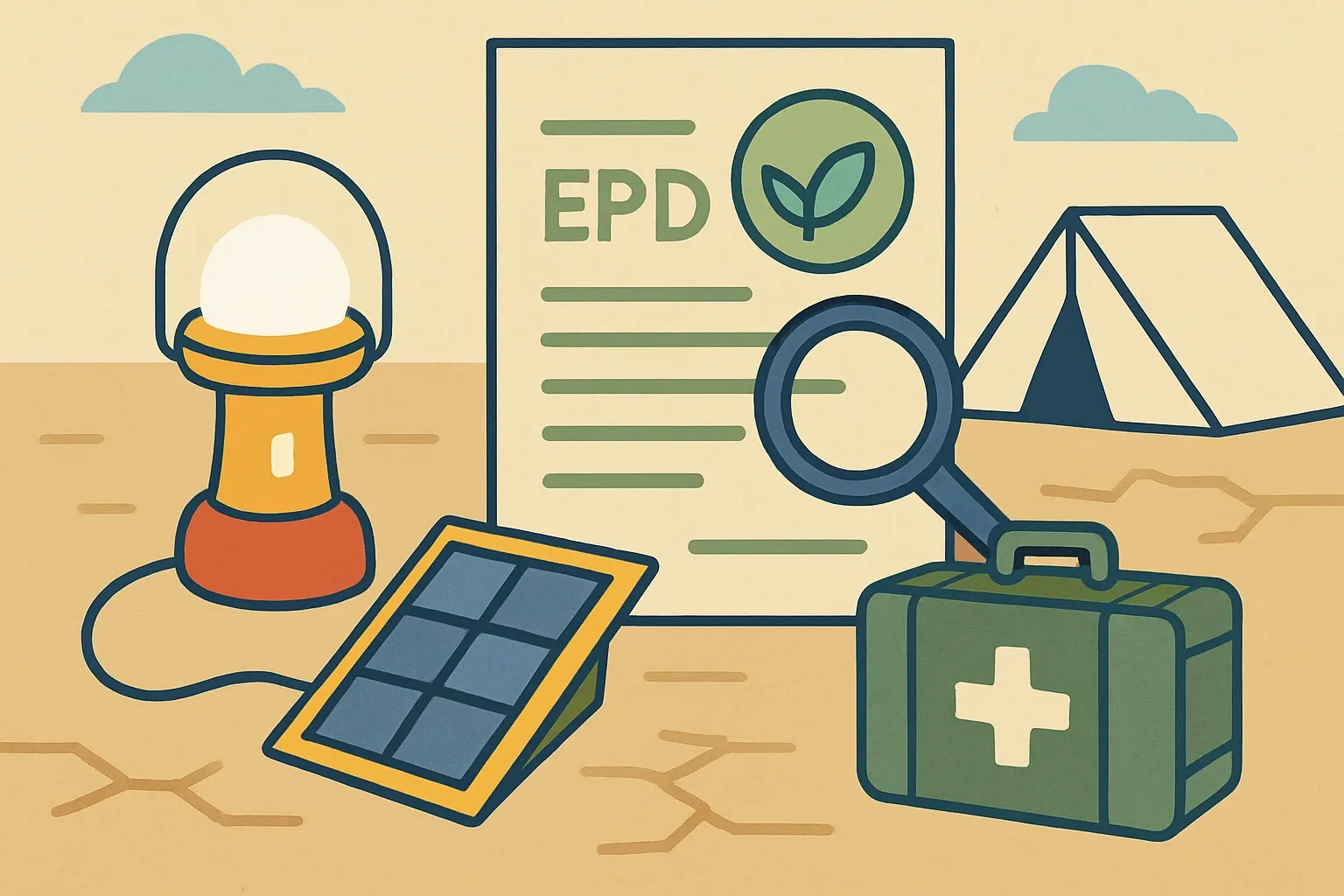
BRIGHT Products has published its first‑ever Environmental Product Declarations covering two portable solar lamps. The set includes SunBell 2.0 and Sol Mid Capacity, each as a product‑specific declaration rather than a broad family. The first release lands in April 2025, with a second entry following in May 2025.
The rulebook and scope
Both declarations sit under the EN 50693 rules for electrical and electronic products, the framework commonly used for luminaires, drivers, and smart accessories. Scope reads cradle‑to‑grave for single products, which keeps comparisons clean when buyers evaluate durability, batteries, and charging options in one go.
Who verified it
The program operator listed is EPD Hub. If you want a quick refresher on how that operator works and market acceptance today, here is an independent overview on EPD Guide that many teams find useful (EPD Hub overview). An external LCA developer or consultant is not stated on the public record for these two entries.
Work for BRIGHT Products or competing brands?
Follow us for a product-by-product EPD analysis that reveals which solar lamps get spec'd and where you can gain an edge against competitors like Signify.
Why this matters for buyers
Portable solar lighting shows up in tenders from NGOs, public safety, and emergency agencies. When a product carries an EPD, procurement can use verified data instead of conservative default factors that can quietly tilt choices toward competitors. That means BRIGHT can now join shortlists where a product‑specific EPD is a prequal box, not a nice‑to‑have.
Company in context
BRIGHT designs solar‑powered lamps for humanitarian aid and emergency preparedness. Their products are built for long runtimes, field repairability, and phone charging in off‑grid settings. EPDs fit this mission, because buyers of mission‑critical gear want both resilience on day one and transparent impact totals over the years that follow.
Competitive snapshot
Among large lighting players, Signify appears with broad EPD coverage across luminaires and components, including many entries under the same EN 50693 rules. That sets a high bar in mainstream lighting. In the portable solar niche, we did not find public EPDs for common peers often seen in humanitarian programs, such as d.light or Sun King, in the major spec directories as of February 9, 2026. If that remains true, BRIGHT gains a real edge where tenders call for third‑party numbers.
Visibility check on BRIGHT’s site
Good news. BRIGHT is already linking these EPDs on its website, including a dedicated announcement page and the SunBell product page where the EPD is downloadable (BRIGHT article, SunBell page). Keeping EPD links one click from product specs is the small web task that gets submittals moving, fast.
Timing matters
These EPDs were first released in April 2025. If you are seeing a lag before they appear in every global directory architects and procurement teams use, that is normal. Listings can take weeks or even months to propagate from a program operator to third‑party portals. If reducing that delay is critical for your next launch, reach out and we can share playbooks that get new EPDs discoverable within a day or two.
What to watch next
Two product‑specific EPDs are a strong start. The practical next step would be a small set of family‑level declarations to cover adjacent SKUs that ride the same bill of materials, plus a simple process to refresh data annually so nothing sneaks up near expiry. Keep the data pulls light, the governance tight, and the publishing cadence predictable. That is how transparency turns into speccability, and then into wins, definately.