What an EPD actually covers
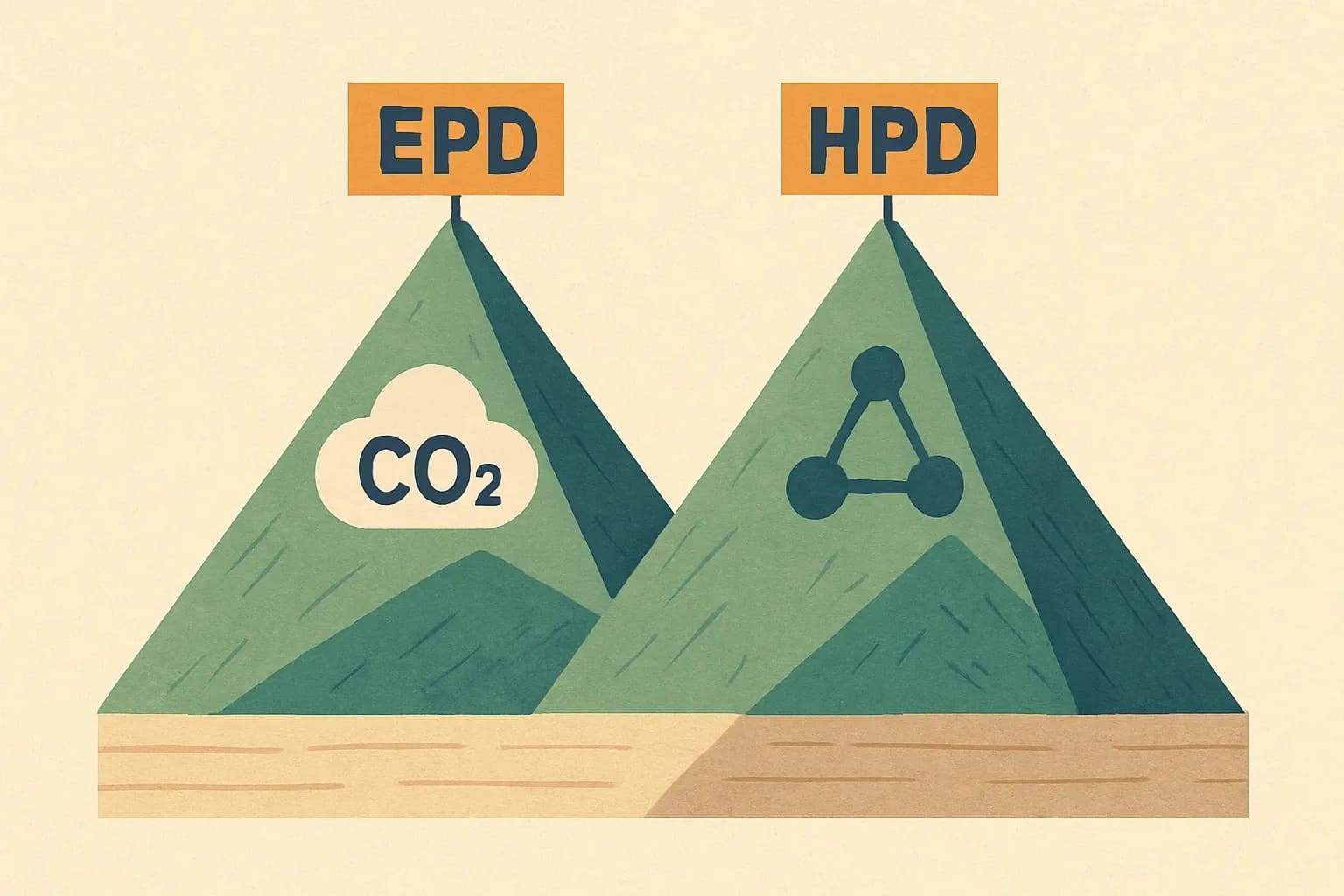
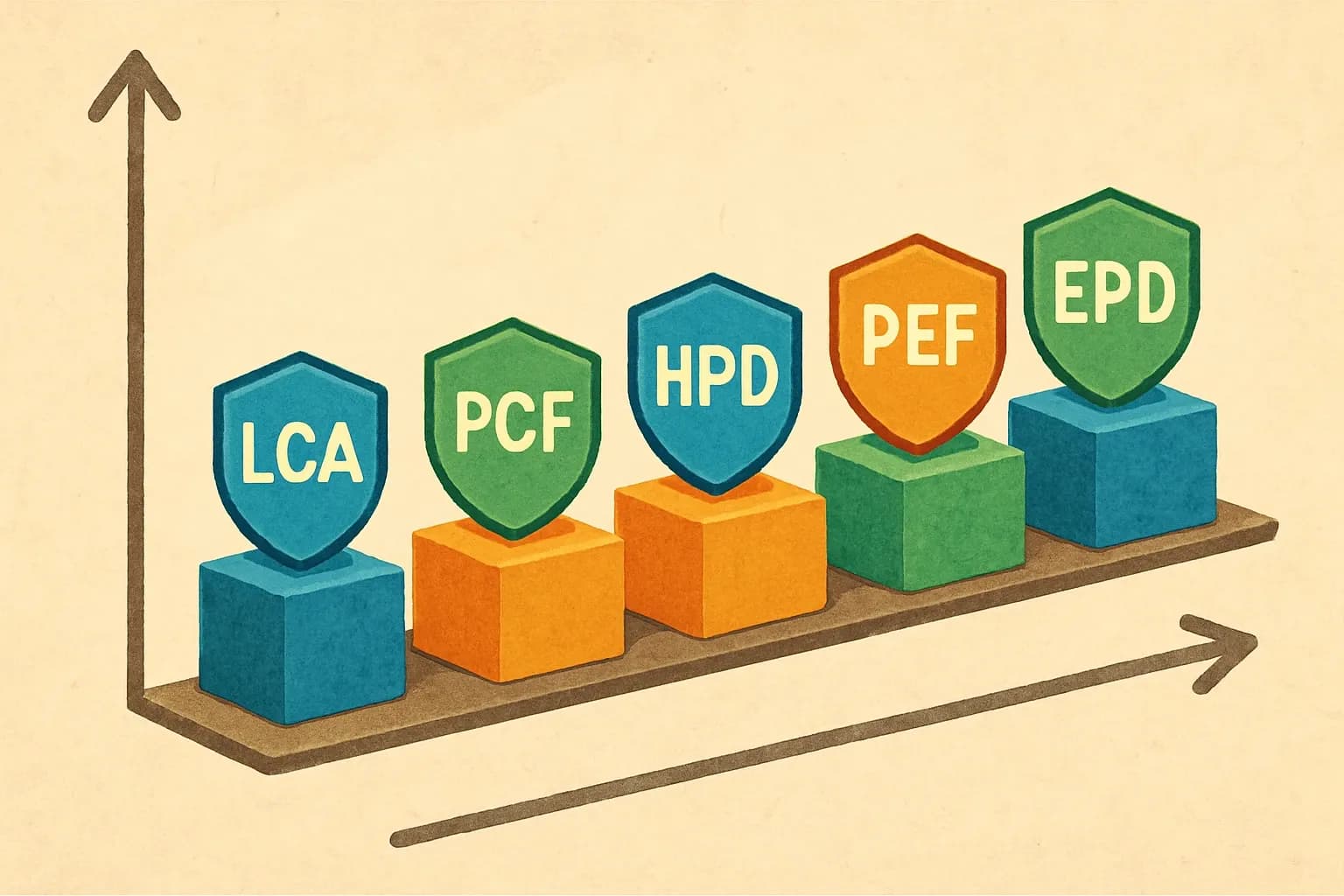
A Type III, product‑specific EPD is not a generic flyer. It is a snapshot of one product made at one or more named plants using the bill of materials, energy, and logistics modeled in the LCA. Think of the PCR as the Monopoly rulebook and the EPD as the scorecard. Change the board or the rules and last game’s score no longer counts.
Why location changes the math
Plant power matters. The EU’s 2023 grid averaged about 244 g CO2 per kWh, reflecting a cleaner mix than many regions in North America (Ember, 2024). In the United States, 2023 eGRID subregions span roughly 430 to 1,133 lb CO2e per MWh, which is about 195 to 514 g per kWh after unit conversion (EPA eGRID, 2025). Two plants making the same recipe can land in different impact ranges purely because their electricity is different.
Supply chains rewrite A1 to A4
Shifting from EU suppliers to U.S. inputs changes upstream processes and transport. Typical emission factors illustrate the swing: a diesel heavy goods vehicle is about 0.10 kg CO2e per tonne‑km, rail around 0.03, and a general cargo ship near 0.01, according to the UK government’s 2024 conversion factors (GOV.UK, 2024). A route that trades ocean shipping for long‑haul trucking will nudge results in a different direction.
What reviewers actually check on the PDF
Program operators expect the production site to be identified. Specifiers are learning to look. If the declared plant on the cover does not match the packing slip or submittal details, the EPD can get flagged in project reviews. That slows bids and drags teams into avoidable RFI ping‑pong.
Want to avoid costly EPD mismatches in your bids?
Follow us on LinkedIn for insights that keep your products spec'd and competitive in a carbon-conscious market.
Can a multi‑plant EPD solve it
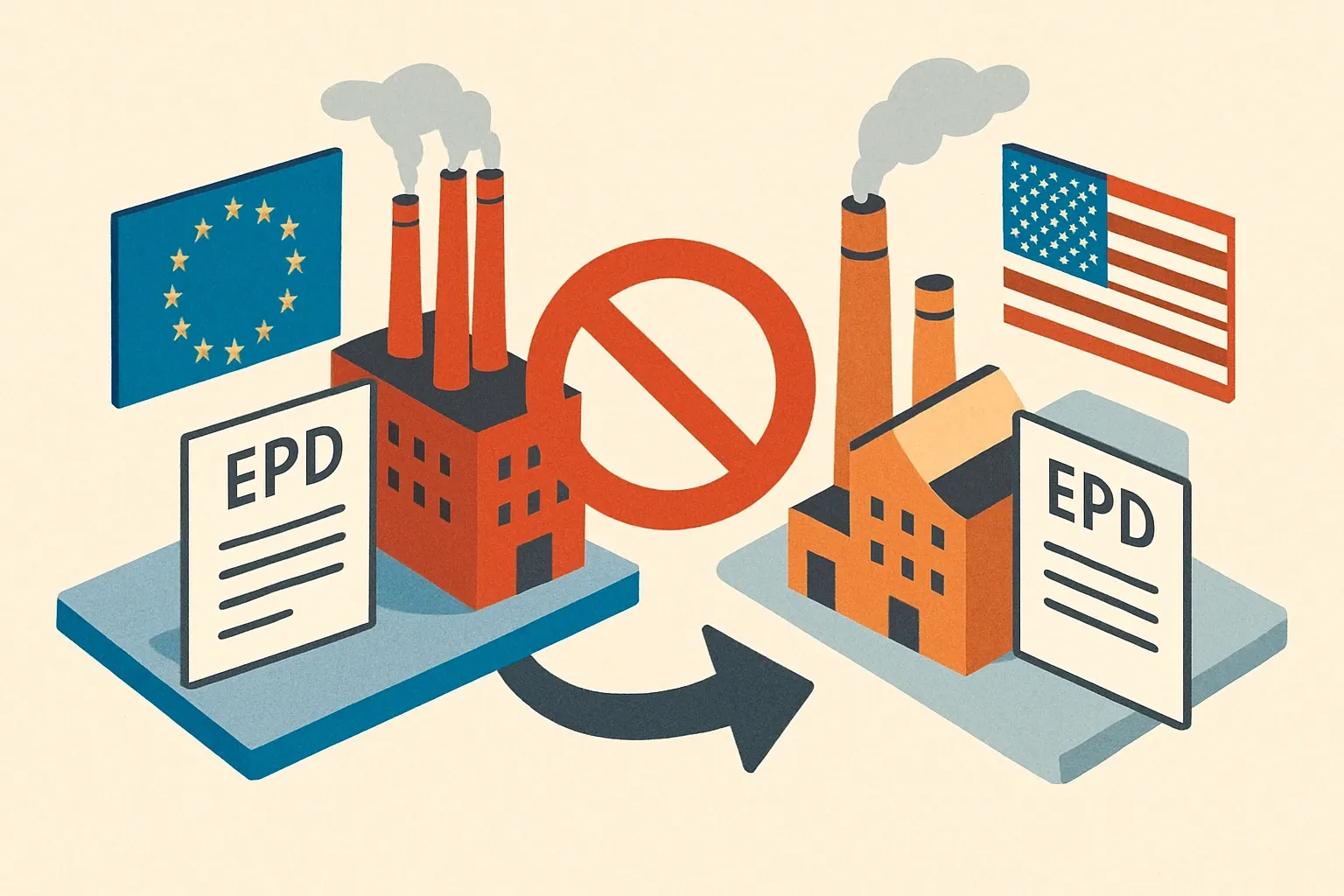
Sometimes. A properly prepared multi‑plant EPD can cover several facilities when the PCR and program operator allow it and when the modeled variability is documented and controlled. That means plants are named, differences are reflected in the LCA, and the verification report supports representativeness. Copy‑pasting an EU EPD onto a U.S. line is not that.
The fastest defensable path for U.S. production
Reuse what still fits. Keep the product recipe, packaging and process steps from the EU model where they truly match. Update the energy datasets to the U.S. grid region for the actual plant, refresh supplier footprints for U.S. vendors, and rebuild transport legs from gate to gate. Then verify and publish with the operator your market prefers. Speed comes from clean data handoff and tight project management, not shortcuts.
A crisp data checklist to move now
- The exact U.S. plant address and eGRID subregion, plus 12 months of electricity and fuels.
- Current bill of materials with supplier locations and annual volumes.
- All inbound and outbound transport legs by mode, distance, and load factors.
- Process yields, scrap, water, and waste handling for the reference year.
- Packaging specs and distribution splits by region.
Why this matters commercially
Many project teams now award points, bonuses, or eligibility based on product‑specific EPDs that match the actual plant named in submittals. When an EPD is mismatched, the buyer often must apply conservative default values, which quietly puts a product at a disadvantage in carbon‑managed bids. Getting the plant right keeps the product in play on merit, not discount.
Bottom line for global manufacturers
If the U.S. product is made in a different plant with different energy and logistics, publish a U.S. plant‑specific EPD. It is cleaner, quicker to defend in reviews, and better aligned with how owners and GCs are vetting low‑carbon materials today. Do the small extra work once, and avoid getting stuck in back‑and‑forth during a bid window when time is the only thing you do not have.