What ISO 21930 actually does
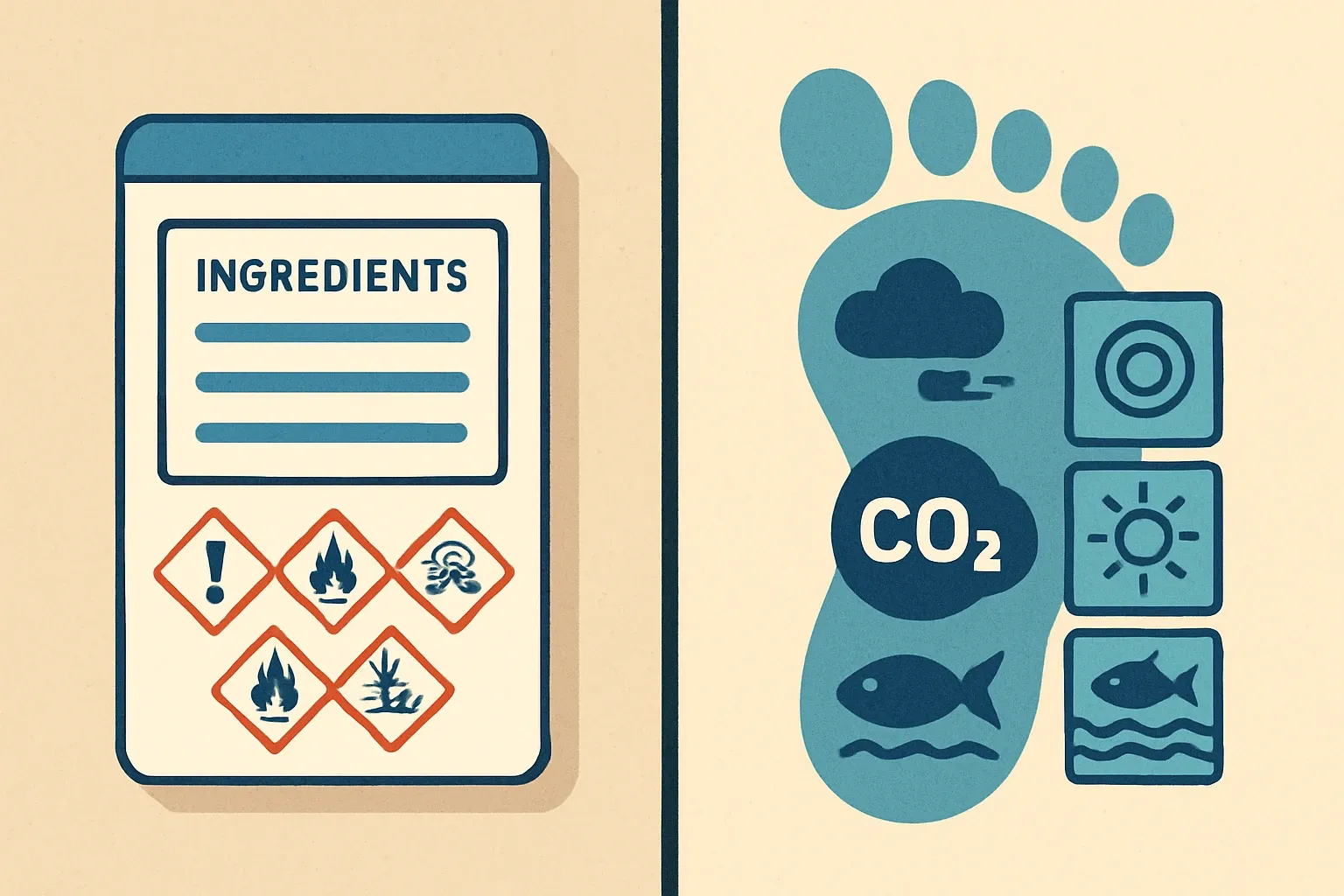
ISO 21930 sets the core rules for Environmental Product Declarations covering construction products under the Type III framework of ISO 14025. Think of it as the rulebook that tells the referee what to look for, while the Product Category Rule (PCR) is the playbook for your specific product.
ISO 21930, EN 15804, and ISO 14025, side by side
ISO 14025 defines what a Type III EPD is and that it requires independent verification. ISO 21930 adds construction specific rules that shape how life cycle assessment is modeled and reported. EN 15804 is Europe’s detailed implementation used by many program operators, and North American PCRs often align with ISO 21930 or reference EN 15804 language to stay interoperable.
When an ISO 21930 EPD is expected
In the United States, specifications and state Buy Clean style policies frequently call for product specific, third party verified EPDs that follow ISO 21930 or EN 15804. LEED v5 keeps EPDs as a recognized path for product transparency, so manufacturers working to stay on shortlists will want an EPD that maps to one of these standards.
The scope it covers
EPDs referencing ISO 21930 report across life cycle modules. A1 to A3 cover raw materials and manufacturing. A4 and A5 capture transport and installation. Use stage modules B1 to B7 may apply depending on the product. End of life is C1 to C4, with Module D reporting benefits and loads beyond the system boundary where applicable. The standard also sets tight rules for scenarios and assumptions so results are reproducible.
Need clarity on ISO 21930 for your EPDs?
Follow us on LinkedIn for insights that help you navigate standards and boost your project success.
PCRs, versioning, and why it matters
A PCR is the rulebook of Monopoly. Ignore it and the game falls apart. Your EPD must use a current PCR or a clearly referenced version, because comparability depends on it. PCRs are reviewed on a defined cycle, commonly within three to five years, which means your next renewal may need a newer version if the old one sunsets (EPD International GPI, 2024).
Validity and renewals
Most construction EPDs are valid for five years under widely used program instructions, after which they must be renewed or reissued to remain current (EPD International GPI, 2024). European operators such as IBU state the same five year validity for published EPDs, which keeps market expectations consistent across regions (IBU, 2024).
Comparability without the trap
Two EPDs are only meaningfully comparable when they share the same PCR or fully compatible rules, the same declared or functional unit, and similar system boundaries and scenarios. A gypsum board EPD built on an older PCR cannot be cleanly stacked against a new one unless the PCRs say they are compatible. If your sales team needs apples to apples, align your next renewal to the rules your competitors already use.
Picking a program operator and verifier
Program operators publish and maintain EPDs, while independent verifiers review the LCA and the declaration. In the US, operators commonly accept ISO 21930 or EN 15804 based EPDs. In Europe, EN 15804 is the norm with operators like IBU. The right choice is usually the one your target specifiers see in their market and databases, not the one with the flashiest portal.
Data collection that does not slow production
The hardest part is never the modeling. It is pulling invoices, utility data, production volumes, formulations, and waste logs from busy teams without disrupting output. A white glove approach that coordinates plants, purchasing, and R&D, and that cleans data before the LCA starts, is what turns a six month slog into a smooth sprint. That is where manufacturers win time back and keep shipping.
Practical next steps
Start with your current spec targets and the competitors that show up there. Confirm which standard their EPDs cite, then mirror that standard to stay comparable. Lock in your reference year for data, identify any formulation changes that could shift results, and plan verification early so publication timing aligns with bid cycles. Move with purpose and your EPD becomes a sales tool, not a paperwork chore.
Bring it into your spec strategy
Treat ISO 21930 as the frame, your PCR as the lens, and your data as the film. Get those three aligned and your EPD will do real work in the market. Skip alignment and you will be reprinting later, which nobody wants, definitley not your sales team.