EN 15804 A2 in one minute
A2 is the current rulebook for construction‑product EPDs in Europe and in many global programs that mirror it. It aligns with the EU Product Environmental Footprint methods, widens the set of reported indicators, and makes end‑of‑life disclosure standard practice. If you searched for an EN 15804 A2 update, this is the practical version.
What actually changed in the results
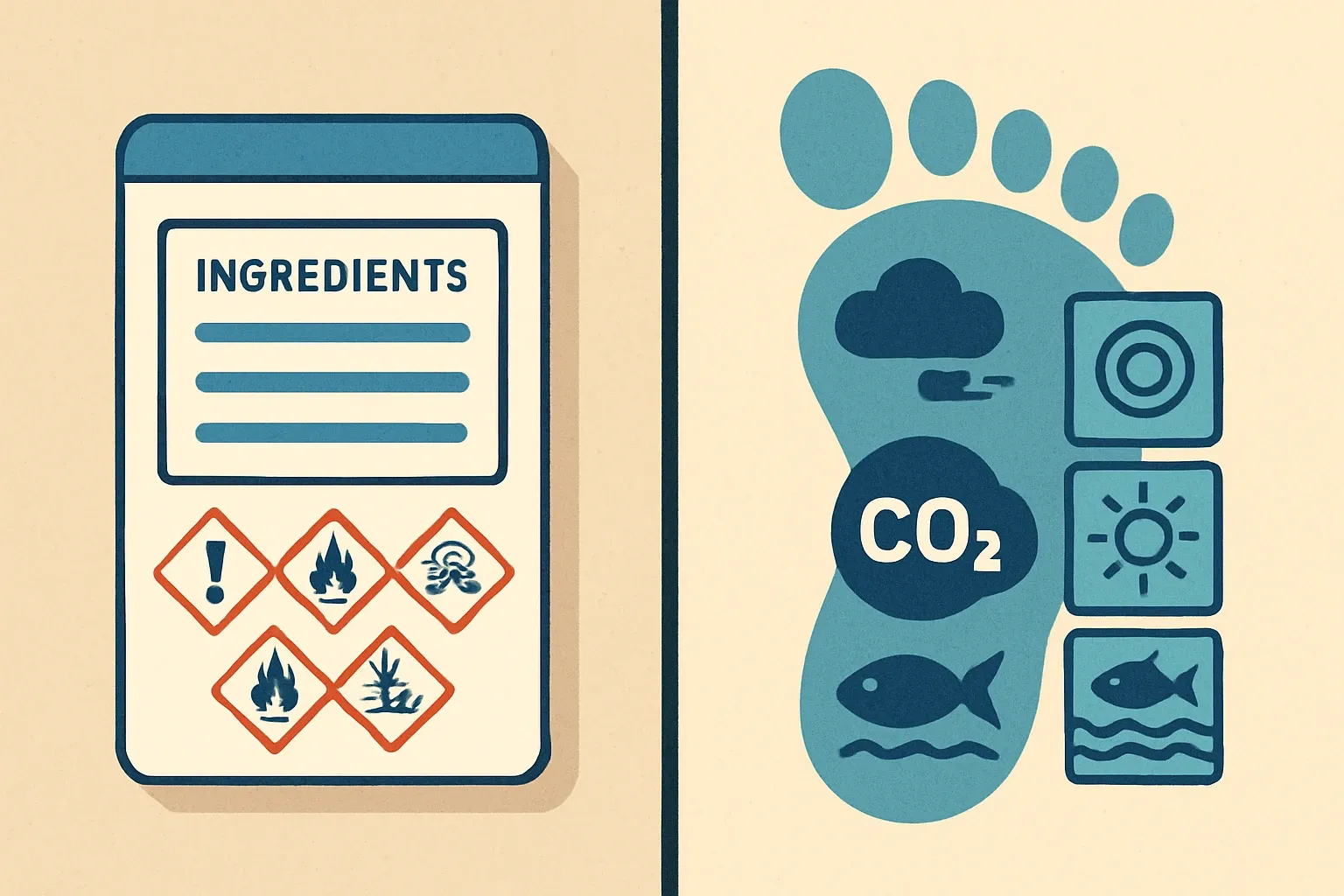
The single carbon number split into four views: fossil, biogenic, land use and land use change, and a total. Eutrophication is no longer one bucket. Water use is expressed as deprivation potential that reflects local scarcity. Optional health‑related indicators like particulate matter and human toxicity are now commonly requested by program operators. The outcome reads more like a detailed nutrition label than a single headline figure.
A1 vs A2 comparisons
Do not line up an A1 EPD next to an A2 EPD and subtract. Methods, indicators, and units differ, so direct numeric comparison is not valid. Specifiers know this. If a tender mixes vintages, provide both a short narrative and an A2‑compliant table to prevent apples to oranges claims.
Scope that is expected today
Modules A1 to A3 remain the manufacturing core. A2 expects C1 to C4 and Module D to be declared, even when end‑of‑life routes are based on reasonable scenarios. This makes circularity claims easier to evaluate across products in the same category.
Navigating EN 15804 A2 changes for better ROI?
Follow us on LinkedIn for updates that help you stay compliant and competitive in your tenders.
Biogenic carbon, spelled out simply
Wood, cork, natural fibers, and their packaging have to show biogenic removals and emissions separately. Storage that happens upfront is balanced later at end of life, which prevents double counting. For wood products this is good news, it rewards clean data discipline from day one.
The 2025 landscape you need to know
IBU stopped handling A1 templates after the October 2022 transition, so new German market EPDs are A2 only (IBU, 2025) (IBU, 2025). In the International EPD System, Construction PCR 2019:14 version 2.0.0 was published April 7, 2025 and runs in parallel with version 1.3.4 only until June 20, 2025. It also references EN 15941 published in 2024, which tightens data quality expectations (EPD International PCR 2019:14, 2025) (EPD International PCR 2019:14, 2025). EPD validity remains typically five years, and operators expect an update within that window if any published indicator worsens by more than 10 percent, which is a useful internal trigger for plant or formulation changes (EPD International FAQ, 2025) (EPD International FAQ, 2025).
Why this matters commercially
An A2‑compliant, third‑party verified EPD removes friction in specification. Without it, teams modeling whole‑building carbon often apply conservative defaults that can push a product out of contention. A current EPD keeps a product in scope for LEED v5 projects and national databases where A2 is the de‑facto language, which shortens bid cycles and protects margin. The price of one EPD is frequently earned back with a single mid‑sized project win, and that is not hype, it is just how specs filter risk.
Fast path for manufacturers this quarter
- Confirm your target program operator and PCR version before modeling, since PCR 2019:14 v2.0.x has active deadlines and slightly different templates.
- Lock your reference year and site list early. Collect utilities, fuels, inbound transport, scrap, and packaging in the same cut.
- Map end‑of‑life scenarios now. If markets diverge, document two scenarios and test sensitivity.
- For wood or bio‑based content, trace biogenic carbon across product and packaging. Do not leave it for the verifier.
- Build a brief for sales with the new A2 indicators. Help them answer the two or three questions they get the most.
Choosing the right help without headaches
Pick an LCA partner that handles the messy data pull, not one that tosses spreadsheets over the wall. Ask how they manage site‑level gaps, how they schedule verifier time, and how they publish with multiple operators if you sell in more than one region. Speed comes from ruthless coordination and from knowing program quirks, not from cutting corners. We care about both.
Staying update‑ready
Standards keep moving. That is normal. What matters is building an internal rhythm that treats A2 as the living baseline, checks for PCR sunsets each quarter, and refreshes data before marketing is surprised by an expiring EPD. Do this well and your product stays in the choice set, not on the sidelines. It is definately worth it.