Who ULMA Construction is and what they sell
ULMA Construction designs and supplies temporary works for concrete construction in building and infrastructure. The U.S. site highlights five core families that cover most jobsite needs: wall and column formwork, climbing systems, bridge and tunnel formwork, slab formwork and shoring, plus safety and plywood accessories. It’s a classic rental‑plus‑sales model with engineering and onsite support layered in.
ULMA is part of the broader ULMA Group. A sister brand, ULMA Architectural Solutions, already publishes product EPDs for polymer concrete drainage and façade panels, which shows corporate familiarity with declarations even if the Construction unit’s catalog differs.
Rough scale of the catalog
From handset panels to large‑panel gang systems, modular slab decks, aluminum post shores, H20 timber beams, and high‑capacity shoring frames, the range adds up fast. Conservatively, it’s dozens of distinct systems and into the hundreds of individual components and variants. That breadth lets project teams standardize on one vendor across building types and civil works.
EPD coverage today
As of December 20, 2025, we could not locate product‑specific EPDs for ULMA Construction’s core systems in the major public operator libraries checked. EPDs for temporary‑works components do exist on the market, including entries for tubular structures, steel planks and toe‑boards used in scaffolding systems, each with current validity through 2029 (EPD International, 2024; EPD International, 2024). An EPD issued under European programs is typically valid for five years before renewal, which aligns with common buyer expectations on currency (IBU, 2025).
Where the gap bites commercially
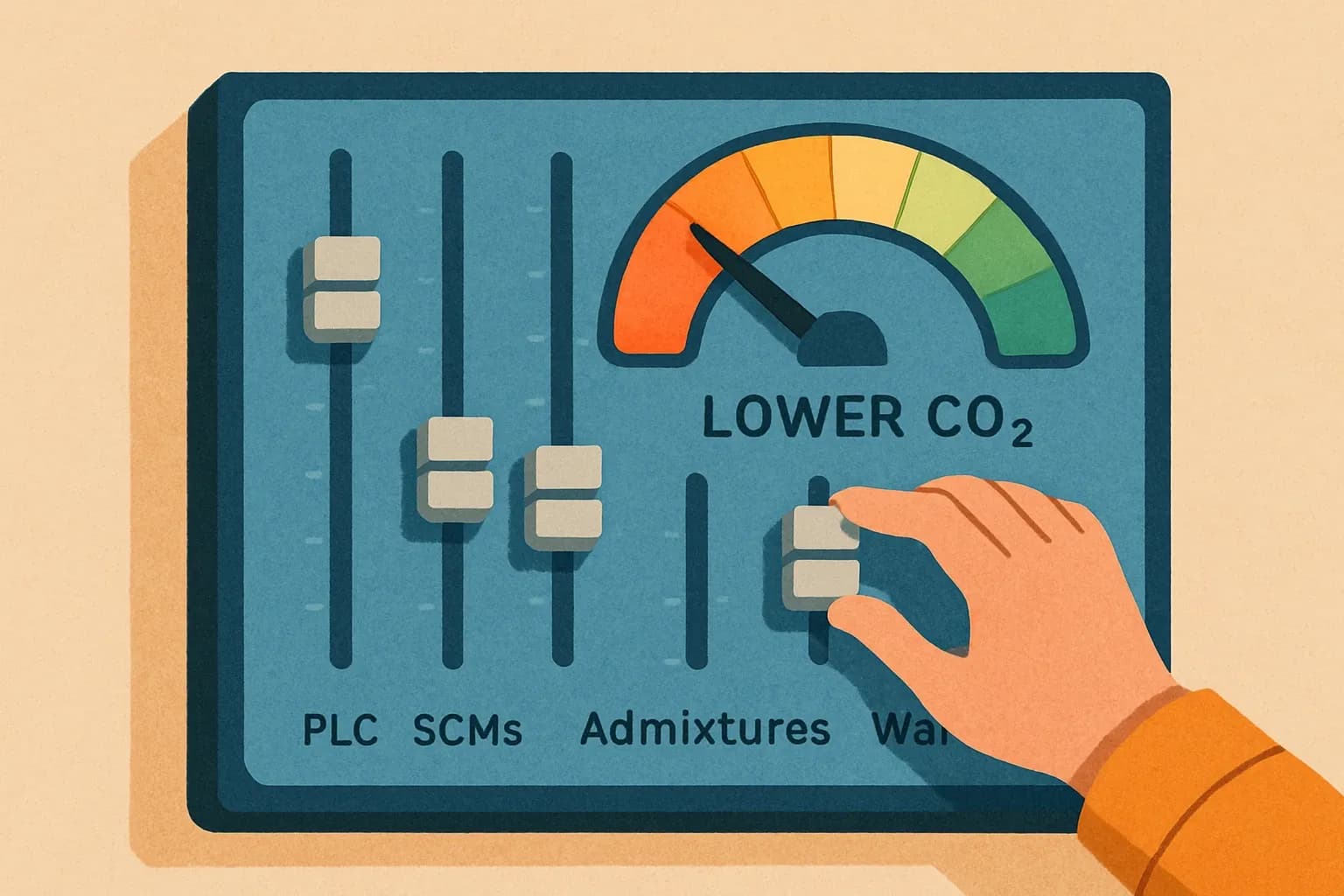
Public and private owners are leaning into embodied‑carbon accounting in LEED v5 era procurement. LEED v5 was ratified in 2025 and emphasizes quantified product data across categories, with credits and calculators living in the LEED credit library and Arc workflows (USGBC, 2025). When a spec calls for product‑specific EPDs, bidders without one are forced to use conservative default values. That can make a capable system look heavier on paper than a rival with a third‑party declaration, which hurts specability and win rates.
At ULMA Construction or competing against them?
Follow us for product-by-product EPD analysis to understand which temporary work systems get spec'd and where your positioning gaps might be.
A practical example
ULMA actively markets phenolic‑faced formwork plywood within its shoring and slab families. Comparable sheet goods now carry verified EPDs, such as EN 15804‑compliant formwork plywood published in 2025 for multi‑use concrete forming applications (EPD International, 2025). On the access side, several scaffolding elements similar to what lives inside many formwork or safety kits already have published EPDs in the public registry, so teams can specify them without penalty (EPD International, 2024). If a project team is sorting two otherwise equal offers, the one with declared data often moves to the top of the short‑list.
Competitive set to watch
On most projects, ULMA faces Doka, PERI, MEVA, Layher, RMD Kwikform, and BrandSafway/Hünnebeck. Some of these competitors are publishing carbon product data or building toward declarations in adjacent lines. For instance, Doka reports product carbon footprints across thousands of catalog items and communicates a net‑zero trajectory, which nudges owners to expect formal declarations next (Doka, 2022). Even where a full EPD is not yet live, visible carbon data normalizes the request and raises the bar in bids.
What to prioritize first
Start where the volume is and where substitutions happen quickly on the spec page.
- High‑runner plywood and panel facings that cross many systems and projects.
- Modular slab systems and aluminum post shores that repeat across floors and job sites.
- Safety components that migrate between trades and scopes.
Pick the current PCRs common in your target markets and competitors. A seasoned LCA partner will benchmark rivals, steer operator selection, and compress data collection so engineering and plant teams stay focused on delivery. EPDs are valid for five years, so plan renewals into product roadmaps and PCR refresh cycles (IBU, 2025).
Sustainability signals from ULMA
ULMA publishes a sustainability section that addresses resource use and broader commitments. It is a solid place to align messaging with published EPDs once live. See ULMA’s page here: ULMA Construction Sustainability.
Spec‑readiness checkpoint
Temporary works are often rented, refurbished, and reused for years, which is a sustainability advantage. The market still expects verified product data at the component level. Moving a few high‑leverage systems to product‑specific EPDs can flip bid math in your favor on LEED v5 projects and corporate procurement that scores disclosures. The lift to gather data is real, but the payoff shows up quickly in shortlist rates and fewer “nice system, no EPD” dead‑ends. It’s definately worth a fast, organized push.
References used inline: IBU EPD validity five years (IBU, 2025); LEED v5 status and tools (USGBC, 2025); published EPDs for scaffolding components and formwork panels (EPD International, 2024; EPD International, 2025).