Who they are and what they sell
Hebron Brick is best known for clay face brick made in the Upper Midwest. They also play in adjacent formats that specifiers often bundle on the same project, such as thin brick for veneers and pavers for site and plaza scopes. Many markets also see them act as a local source for complementary masonry items, keeping the buying experience tidy for contractors.
How many product categories and SKUs
Based on the range a typical brick plant carries across colors, textures, sizes, and matching thin units, Hebron Brick likely offers a handful of core categories with variants that add up to hundreds of SKUs. Exact counts are not publicly consolidated in one place and can shift by season or plant run, so treat those numbers as directional rather than definitive.
EPD coverage as of December 19, 2025
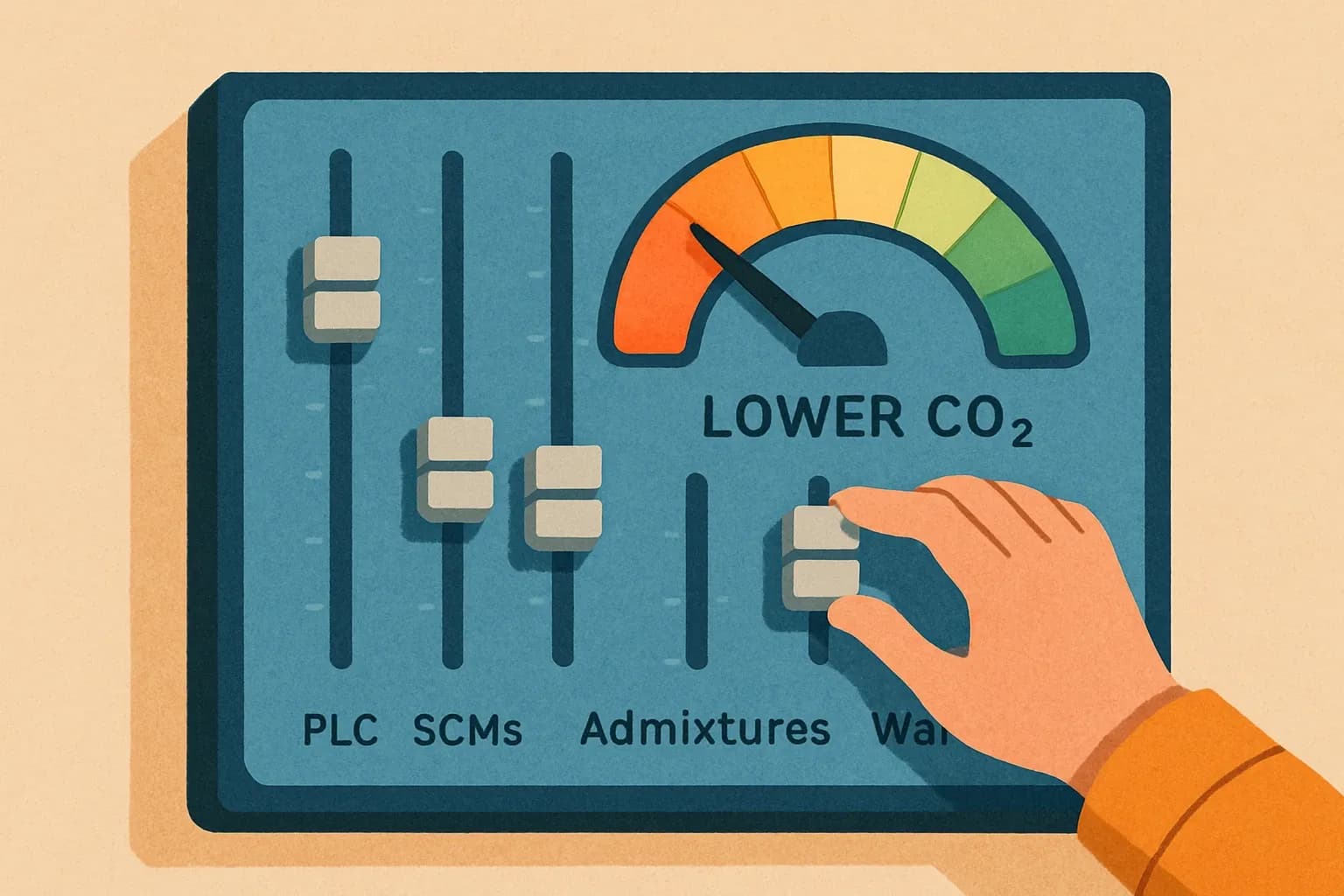
We were unable to find active, product‑specific EPDs publicly listed for Hebron Brick as of the date above. That does not mean the products are high‑carbon. It means the verified paperwork customers increasingly request is not easy to point to. Think of an EPD as the passport that gets your brick through the security line faster. Without it, owners and AEC teams often apply conservative default factors and move on to an option with a document in hand.
Work for Hebron Brick or competing against them?
Follow us for a product-by-product analysis on EPD gaps and how your SKUs compare to competitors like Interstate Brick and Bilco Brick.
Why it matters commercially in 2025
LEED v5 continues to prefer product‑specific EPDs for material credits, encouraging documented choices over generic assumptions. Private owners and large GCs have kept EPD asks in bid docs even as some federal Buy Clean efforts changed course in 2025. When a product lacks an EPD, estimators often substitute another material to protect the project’s carbon targets. The lost opportunity rarely shows up in a CRM. It just quietly disappears.
A likely best seller that risks being sidelined
Face brick for high‑visibility facades is a signature line for Hebron Brick. When that exact blend or size lacks a product‑specific EPD, a specifier can pivot to a comparable clay unit from a brand with documented options or even to an architectural concrete masonry look‑alike if the design intent allows it. Interstate Brick, for example, has historically published many brick EPDs, although several listings appear expired by late 2025, which still signals a readiness to renew quickly. Bilco Brick currently shows EPDs for concrete brick units, giving teams a paper‑ready path in value‑engineering scenarios.
The competitive set on typical projects
Hebron Brick most often faces other North American clay brick makers in education, healthcare, multifamily, and civic work, where color range and long service life carry weight. In value‑driven office or industrial scopes, concrete brick and architectural CMU sometimes step in as alternates when documentation drives the call. The real tie‑breaker in 2025 is not one more red blend. It is a current, third‑party verified EPD that plugs neatly into the project’s materials calculator.
What an EPD program would cover
For clay masonry, the relevant PCRs route to MasterFormat 04 21 13 Brick Masonry. A solid EPD program usually starts with one high‑runner blend and size, then extends to thin units and key pavers that ride the same body mix. A clean data pull across a single reference year, utility bills, kiln fuel, and outbound transport can carry multiple SKUs if the LCA is scoped smartly. That is how teams turn one document into a family of spec‑ready options with minimal extra lift.
Fast path to close the gap
Start with the product that gets requested most by architects. Map it to the prevailing PCR competitors use in the same bid pool. Get a factory‑specific LCA and EPD out quickly, then replicate across the next two or three top movers. Sales now walks in with enviromental paperwork that wins tie‑breaks, rather than a promise to “circle back.” The cost is routinely offset by a single mid‑sized project the team keeps instead of losing to a documented alternate.
Bottom line for specability
Hebron Brick has the portfolio architects want. To ensure it makes the short list on carbon‑aware jobs, it needs visible, current, product‑specific EPDs for its flagship face brick and thin brick lines first, with pavers close behind. That one move turns quiet disqualifiers into confident, fast approvals.