
Who Elevate is
Elevate is Holcim’s building‑envelope brand born from Firestone Building Products. They focus on commercial roofing and lining systems, with a strong North American footprint and active global distribution.
What they sell
The portfolio spans single‑ply membranes (EPDM, TPO, PVC in select markets), modified bitumen, polyiso insulation and cover boards, vapor barriers, edge metal and accessories, plus EPDM linings for ponds and geomembranes. It is a broad building‑envelope toolkit rather than a pure play.
How many categories and SKUs
Across membranes, insulation, cover boards, accessories and linings, Elevate participates in multiple product categories with many variants by thickness, facer, plant and attachment. The total SKU count is comfortably in the hundreds, consistent with a national roofing brand that serves new construction and reroof.
EPDs we can see today
Elevate publicly lists product‑specific EPDs for polyiso roof insulation boards and HD cover boards by plant, several EPDM membranes, multiple TPO membranes, asphalt membranes, and even aluminum or steel coil and panel products. Their sustainability hub is a good jumping‑off point to retrieve the documents directly (Holcim Elevate Sustainability).
Work for Elevate or competing against them?
Follow us for product-by-product EPD analysis that reveals which roofing SKUs get VE'd out and where Elevate's gaps may cost you specs.
Likely gaps to close
Two areas look thin. First, PVC roofing: Elevate references PVC systems in marketing, yet a PVC membrane EPD is not prominently featured alongside EPDM and TPO on their sustainability pages as of December 2025. Second, lining membranes for ponds and geomembranes appear without easily accessible EPDs on U.S. pages, which can matter when site‑hardscape packages require documentation.
Why this matters commercially
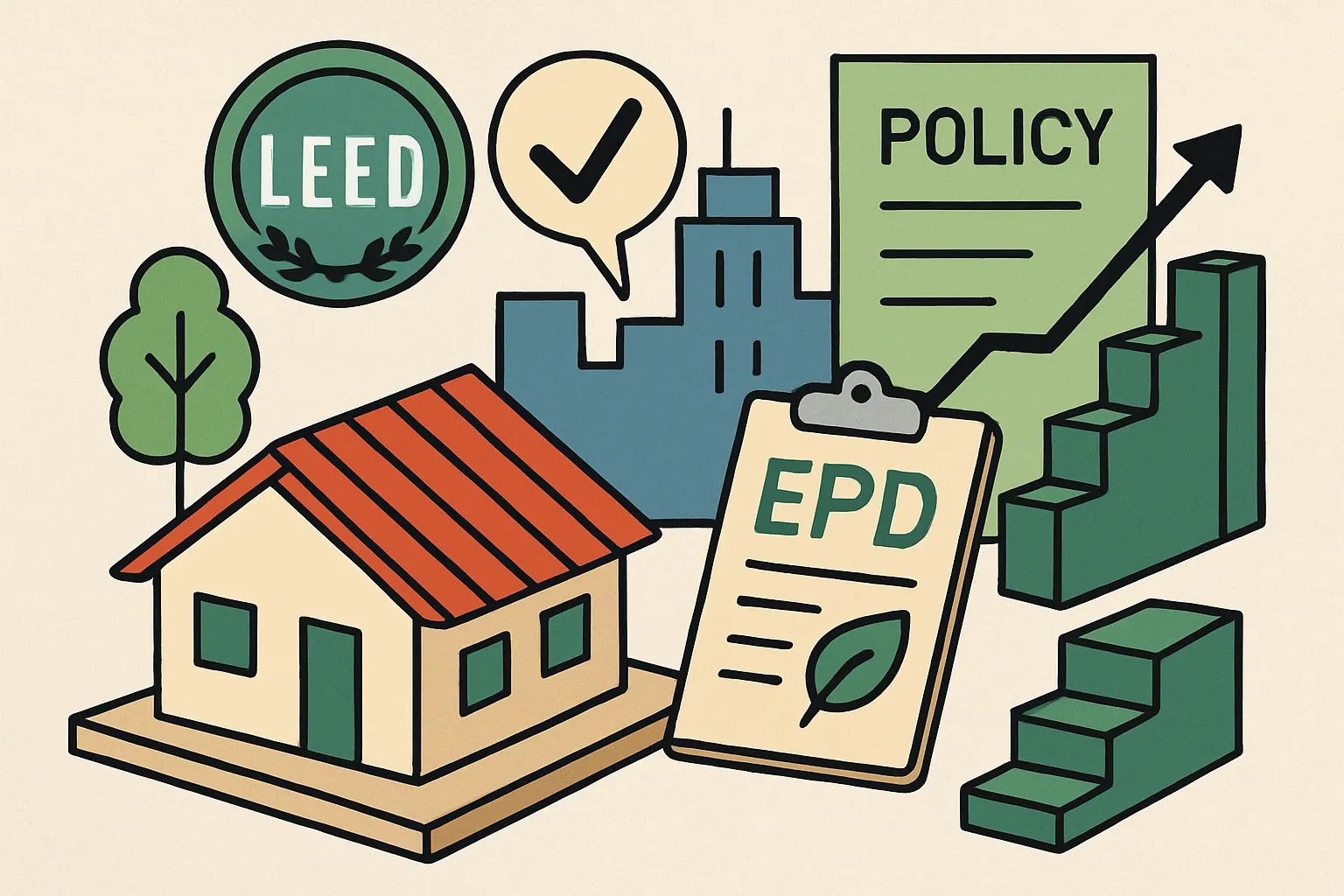
On projects targeting LEED v5 readiness or owner policies that prefer product‑specific EPDs, missing declarations create friction. Design teams avoid penalty factors that come with generic assumptions, so a membrane with a clear, verified EPD is simply easier to keep in spec. That translates into fewer last‑minute swaps and less pressure to discount just to stay in play.
Competitive context
Direct competitors frequently encountered in low‑slope roofing include Carlisle SynTec, GAF, Johns Manville, Sika Sarnafil, SOPREMA and Versico. Many publish product‑specific EPDs for TPO, PVC or SBS membranes with established program operators such as NSF or ASTM, so they are already presenting verifiable documents at bid time. If a PVC scope is in the mix and an Elevate EPD is unavailable, a Sarnafil or SOPREMA PVC sheet often becomes the path of least resistance for the spec team.
A practical playbook for manufacturers in this position
Prioritize declarations that unlock the most specs with the least effort. For a roofing portfolio like Elevate’s, that usually means PVC membranes in North America, then high‑volume accessories that ride along on most systems. Keep plant‑specific EPDs for polyiso refreshed so multi‑plant supply stays covered. If linings are strategic, publish one or two flagship EPDM liner EPDs that match the largest volume segments.
Lean into an LCA partner who will handle cross‑plant data pulls, utility normalizations and ERP reconciliation, not just modeling. The right team gathers data with white‑glove care, then turns it into dependable EPDs fast, so product and operations leaders stay focused on production and revenue rather than spreadsheet archaeology.
Where Elevate already signals sustainability
Beyond EPDs, Elevate’s public materials describe recycling programs and plant‑level initiatives, plus alignment to Holcim’s broader climate goals. The messaging is there, and the document library is growing, yet a few strategic EPD additions would make the sales story snap into place. We are commited to helping manufacturers make that leap with less friction.


