Buzzi Unicem USA at a glance
Buzzi Unicem USA and its Alamo Cement subsidiary operate eight U.S. cement plants and 36 terminals that supply more than 20 states (Buzzi Unicem USA, 2023). The group has publicly committed to Portland‑limestone cement as its default and continues to invest in decarbonization pilots and on‑site renewables.
If you want a quick window into that stance, start here: Buzzi Unicem USA’s PLC conversion update (Buzzi Unicem USA, 2023).
What they make
The portfolio centers on cement binders used by concrete producers and projects of every size. In the U.S., that includes Portland cements, Portland‑limestone cements, and masonry cements. Alamo adds ready‑mixed concrete and natural aggregates across its Texas network.
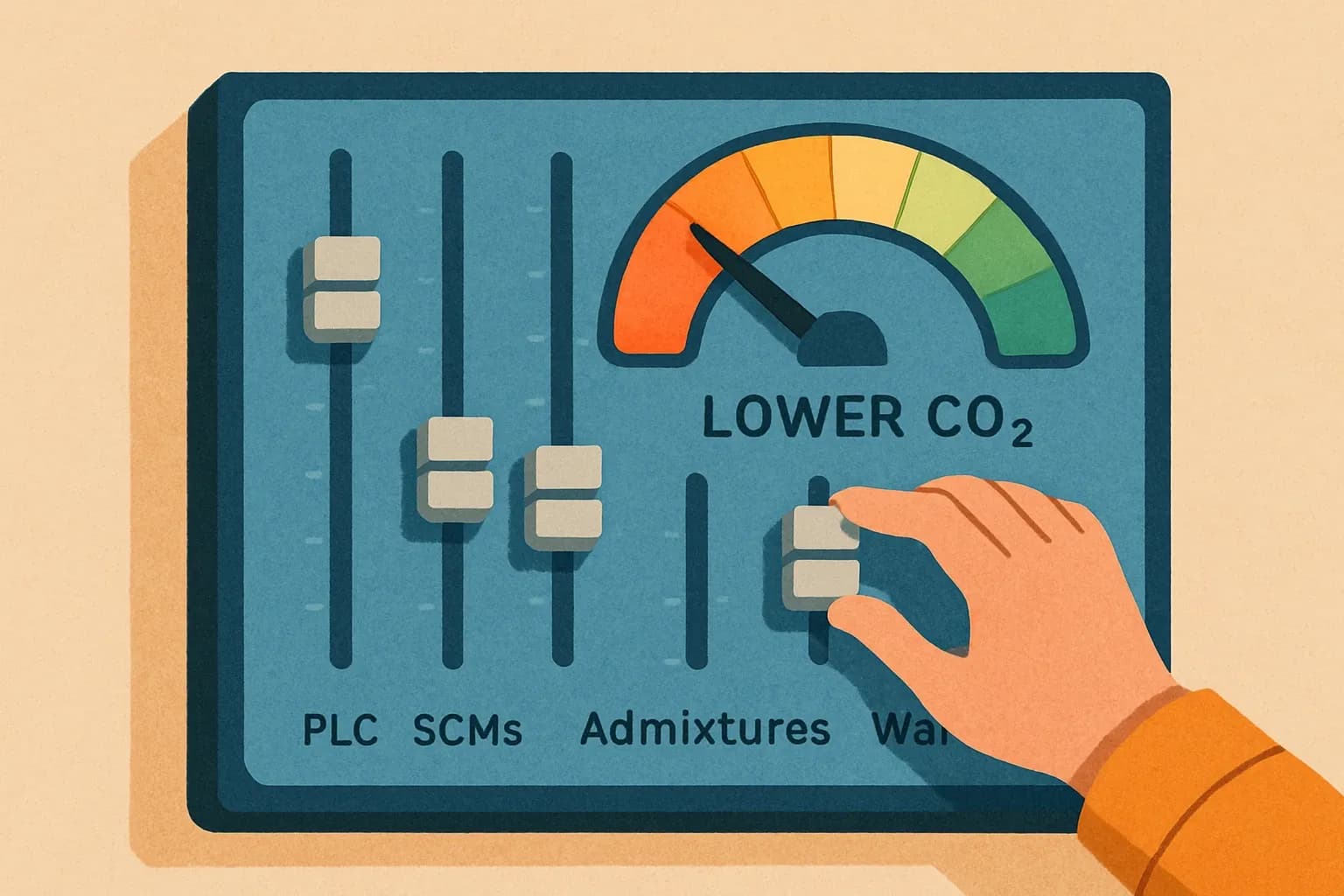
Their plants completed the switch from traditional Type I and II to Type IL PLC, which can lower CO2 intensity by up to 15 percent compared with ordinary Portland cement (Buzzi Unicem USA, 2023). Alamo’s San Antonio solar installation is sized to supply roughly 15 percent of the plant’s annual electricity use, a concrete signal the energy side is being tackled too (PR Newswire, 2023).
EPD coverage today
Ready‑mixed concrete under Alamo shows broad EPD coverage across many mix designs and plants. For specifiers, that means project teams can often match an EPD to a specific compressive strength and admixture profile with minimal friction.
Cement EPDs exist for select products and sites, largely in general‑use types familiar to DOTs and commercial work. Coverage appears in the low‑to‑moderate range for the full U.S. cement lineup when you consider every plant and every cement variant. In short, concrete EPDs look strong where Alamo sells, while cement declarations are present but not wall‑to‑wall.
Work for Buzzi Unicem or competing with them?
Follow us for product-by-product EPD and spec comparisons to see which cement and ready-mix offerings get VE'd out against Heidelberg, Holcim, and CEMEX.
Where coverage feels thin
Given Type IL is now standard, plant‑level PLC EPDs do not yet show up for every U.S. facility in public operator registries. Masonry cement also looks lighter on published EPDs in some regions. That creates pockets where distributors or contractors face avoidable paperwork, and it nudges buyers to default to competitors that have a product‑specific EPD ready.
Competitors buyers compare
On cement, common comparisons include Heidelberg Materials, Holcim US, CEMEX, CalPortland, Titan America, and GCC. Several of these peers publish product‑specific EPDs for Type IL and other cement types across multiple plants. On ready‑mix, local competition widens to regional leaders where mix‑by‑mix EPDs are increasingly the norm.
Why it matters for specs
Owners and design teams are moving fast toward product‑specific, third‑party verified EPDs as the simplest way to document embodied‑carbon targets under new policies and LEED v5 criteria. Without that EPD, a product often gets modeled with more conservative emissions, which quietly penalizes selection. The result is fewer at‑bats in bids where environmental credentials drive tie‑breaks. That is real revenue, not a side quest.
A pragmatic playbook to close the gap
Focus on volume movers first. Prioritize plant‑level PLC cement EPDs where shipment volume, DOT demand, and major accounts intersect. Add masonry cement and specialty binders next, then keep a living roadmap so sales knows what is coming and when.
Pick the same PCRs competitors use, unless there is a clear reason not to. That makes cross‑table comparisons fair and fast for procurement. Aim for product‑specific EPDs tied to the plants your customers actually buy from, not just corporate‑level declarations.
Lastly, make data collection painless. The fastest teams pre‑stage utility, fuels, and clinker ratios by reference year, then let an LCA partner do the wrangling across plants and admixture permutations. We see companies loose months when this step gets improvised.
Bottom line for Buzzi Unicem USA
The story is promising. Concrete is well covered where Alamo sells, and the PLC pivot is market‑smart. The opening is to translate that sustainability narrative into complete, plant‑specific PLC and masonry cement EPDs across the U.S. footprint. Do that and more of the spec stays in play, even when price pressure spikes. It is definately worth the push.