Where Ancon plays today
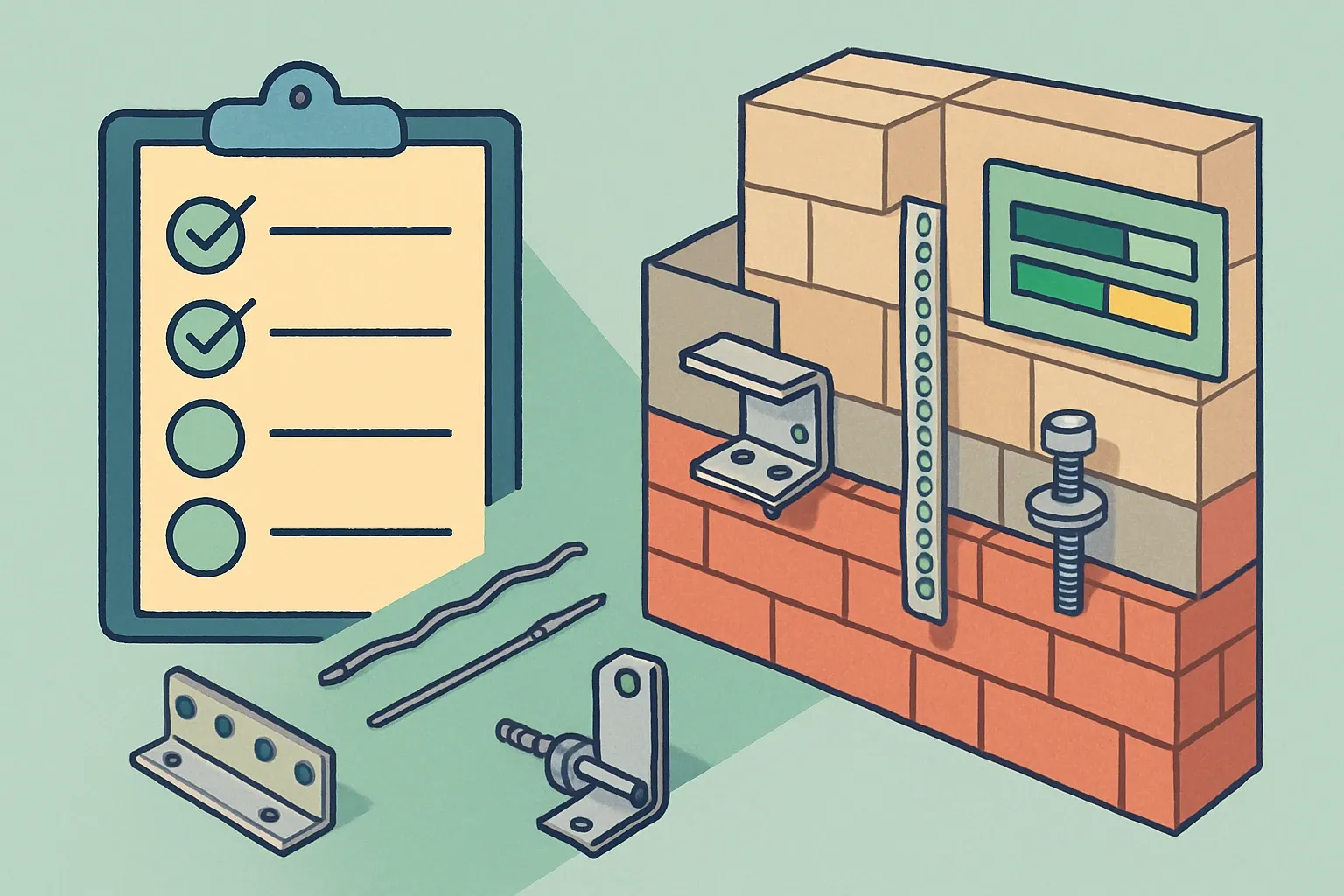
Ancon is a stainless‑steel specialist within Leviat, active across masonry support and restraint, windposts, wall ties, shear load connectors, tension systems, and channel and bolt fixings. It is not a single‑product pure play. Think toolkit, not one hammer.
Product breadth and rough scale
Across those families, the portfolio spans multiple sub‑ranges and configurations. SKUs easily land in the hundreds when you consider cavity widths, load classes, material grades, lengths and bracket geometries. That variety is why Ancon appears so widely on commercial, education and healthcare projects.
EPDs now in market
Leviat announced a new wave of brand‑specific EPDs in spring 2025 covering Ancon Masonry Support Systems, Ancon Windposts, Ancon Thermal Windposts and Helifix remedial products (Leviat, 2025) (link). Ancon’s own resource library lists downloadable EPD PDFs for Masonry Support and both windpost ranges, current as of late 2025 (Ancon, 2025) (link). Under the same corporate umbrella, the Halfen HIT thermally insulated connections also carry a valid EPD through 2028, which helps on balcony thermal break specifications (NBS Source, 2025) (link).
Coverage strengths
If your scope includes brick‑supported façades, the Ancon EPDs align neatly to the most specified assemblies. Masonry support and windposts are frequent shortlist items. Having third‑party verified EPDs here reduces friction for project teams targeting corporate carbon policies or aiming for LEED v5 credits where product‑specific EPDs are preferred as evidence. Less back‑and‑forth. Faster submittals. More bids that stay warm.
Work for Ancon or competing brands?
Follow us for a product-by-product analysis of Ancon's EPDs and insights on which masonry support and wall tie SKUs get VE'd out against Peikko and Hilti.
Likely gaps to watch
We did not find public EPDs on the Ancon site for some perennial staples, such as general wall ties, generic channel and bolt fixings, shear connectors or tension bar systems, at the time of writing. That matters when a spec set asks for EPDs across all structural fixings in scope. One missing document can force a switch to a product with a ready EPD or push the buyer into conservative default factors that make a non‑EPD product look worse on paper. It’s a silly own‑goal.
Competitive pressure in EPD‑friendly categories
Thermal breaks and anchors are crowded with EPD‑ready alternatives. Peikko’s EBEA balcony connectors and Hilti’s anchors and fasteners are examples you will see on submittal logs every week, each supported by current EPDs on European or global program operator libraries (EPD Hub, 2025). Halfen HIT, within Leviat, already has that cover, which helps against EBEA in many details (NBS Source, 2025) [(link above)]. Where Ancon competes on generic restraint hardware, the absence of an EPD can tilt a spec toward brands that do.
What specifiers and sellers care about
A PCR is the rulebook of Monopoly. Ignore it and the game falls apart. Great LCA partners look first at what PCRs competitors use and pick a path that keeps your products comparable on the same field. Teams also care about freshness only when an EPD is months from expiry. Any current EPD usually passes muster inside the tender window.
Practical next steps for closing the gap
- Prioritise hero SKUs in wall ties and channel fixings. One well‑scoped declaration per family can often carry a lot of day‑to‑day quoting.
- Reuse data smartly. Masonry support and windposts share upstream materials and processes, which can shorten analysis for adjacent lines once the data plumbing is in place.
- Publish where buyers look. IBU and The International EPD System are widely referenced by European‑led project teams, while North American designers often accept those through recognised mutual listings.
Sustainability signals buyers will notice
Leviat maintains a public sustainability hub that spells out energy, safety and product‑design priorities across the group. If your brand narrative mentions embodied carbon, link your EPDs there so the story and the evidence travel together (Leviat Sustainability).
Bottom line for commercial teams
Ancon’s EPD footing is solid in masonry support and windposts, and that already unlocks plenty of specs. The upside sits in rounding out EPDs for wall ties and channel‑based restraint so bids do not stall on paperwork. In EPD‑required projects, the cost of a declaration is frequently eclipsed by a single mid‑size project win. There are good reasons to move now, not later, before a competitor’s PDF takes your place in the schedule of fixings.