Who is ABE Group and what do they sell?
Public information tied to abegroup.se is sparse. As of December 25, 2025 we could not verify a live product catalog associated with the domain. That makes it hard for buyers to understand whether ABE Group is a pure‑play in one category or a multi‑brand distributor. If the firm operates as a distributor or private‑label owner, the right EPD strategy is still very doable, but it starts with clarifying which SKUs are actually marketed to construction buyers.
Product range, in broad strokes
Without a working catalog we won’t guess model numbers. The most likely scenario for a mid‑size Swedish supplier is a handful of product categories with dozens of SKUs. That is enough to justify a focused EPD plan that prioritizes the highest volume and the most spec‑sensitive items first, then fans out.
EPD coverage today
Searches across major European program operators did not return EPDs clearly attributable to ABE Group or the abegroup.se domain. That does not prove none exist, but it suggests low public coverage. If internal EPDs are sitting unpublished or under a different brand name, making them findable is step one.
Why this matters more in Sweden right now
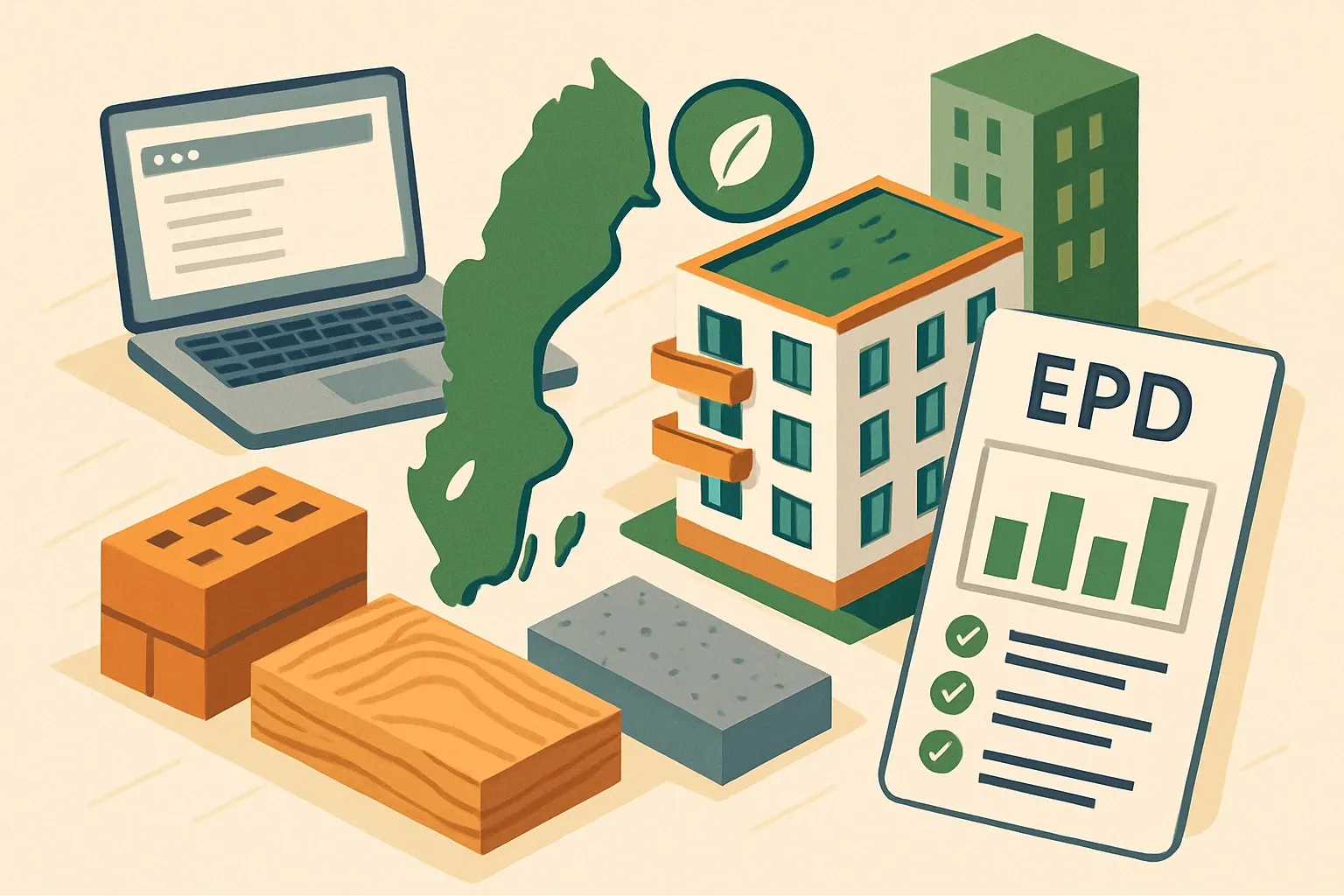
Sweden’s climate declaration rules let developers use generic data from Boverket when a product EPD is missing. That generic data is intentionally conservative, roughly 25 percent higher than typical values to nudge the market toward product‑specific EPDs (Boverket, 2024) (Boverket climate database, 2024). Boverket reports 1,765 climate declarations registered through December 31, 2024, with active follow‑up underway (Boverket, 2025) (Climate declaration statistics, 2025).
On the infrastructure side, Trafikverket keeps tightening climate requirements and accepts third‑party verified EPDs as verifikat inside the Klimatkalkyl system. The agency’s reduction milestones versus 2015 are 30 percent by 2025 and 60 percent by 2030 on the road to climate‑neutral infrastructure in 2040 (Trafikverket, 2025) (Klimatkrav, 2025). When your product lacks an EPD, buyers plug in conservative factors that raise declared impact, which can quietly push you out of contention.
Work for ABE Group or competing brands?
Follow us for a product-by-product EPD analysis that reveals which SKUs get VE'd out against competitors and where you can gain a competitive edge.
A likely spec moment where missing EPDs hurt
Two common Swedish scenarios illustrate the gap.
-
Precast walls for housing or schools. Multiple Swedish precast brands publish current EPDs for insulated and sandwich wall elements. If ABE Group sells comparable envelopes or panels without EPDs, reviewers will default to conservative data and competing walls with EPDs look better on paper even when real‑world performance is similar.
-
Windows and doors in healthcare or offices. Aluminium and PVC systems frequently come with operator‑verified EPDs. If ABE Group’s catalog includes fenestration without declarations, project teams chasing LEED v5 materials credits and Swedish climate targets will prefer ready‑to‑document alternatives.
Competitors ABE Group might meet on projects
Based on Swedish tender patterns, teams often short‑list manufacturers with publicly available EPDs in these slots: precast concrete wall systems, ready‑mix and cementitious products, and windows or doors. Names that regularly appear in those comparisons include large precast producers in Sweden and established European window system makers. The point is not brand hype. It is this: buyers can evidence performance quickly when an EPD exists, so they do.
What good coverage looks like for a portfolio this size
Start with the highest‑volume families and issue product‑specific, EN 15804+A2 compliant EPDs. A practical sequence:
- Confirm the SKU map and reference year data for the top movers by revenue or by bid frequency.
- Pick the most common PCR and operator used by direct competitors to streamline reviewer acceptance.
- Publish in batches so sales can attach declarations to live pursuits. Keep plant or line distinctions clear to avoid reviewer pushback later.
A note on speed and ease
The hard part is not the math. It is the internal data pull across energy, materials, waste and packaging, then keeping files straight through verification. Choose a partner who can shoulder that collection and project management so your team stays focused on operations. Publishing with EPD International in Sweden or IBU in Germany are both widely accepted paths.
What we’d do next, quickly
- Identify two categories where ABE Group most often loses quotes to EPD‑backed competitors and target those first.
- Stand up one product‑specific EPD per category as a spearhead, then generalize to sibling SKUs.
- Align the declarations to the data reviewers expect in Sweden, so climate declaration filings replace conservative generic data with your specific numbers.
If abegroup.se comes online with a clear catalog, we can refine this map the same week. Dont wait for perfect. In Sweden, being visible with even one or two well‑chosen EPDs changes the conversation at bid time.