The map and the territory
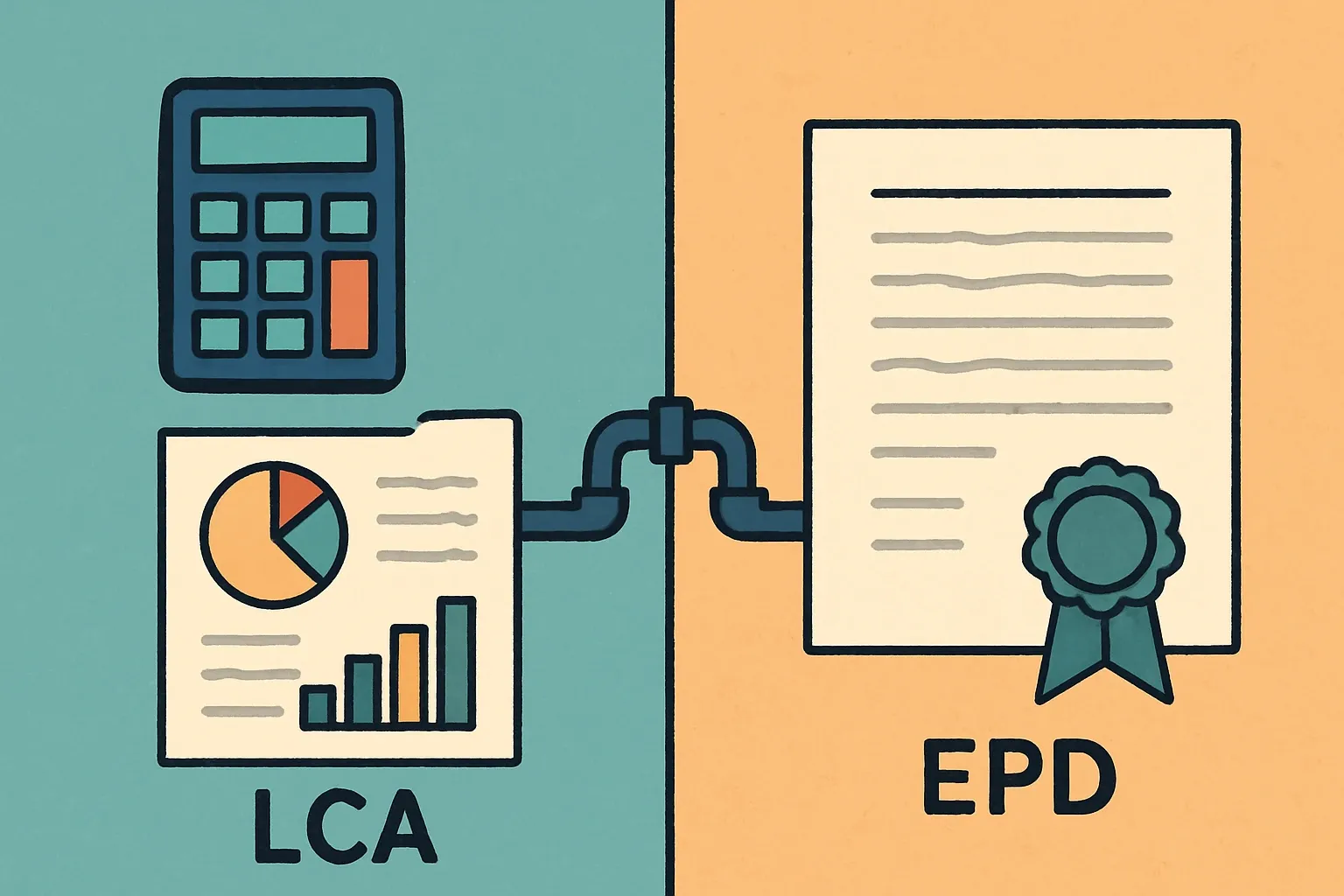
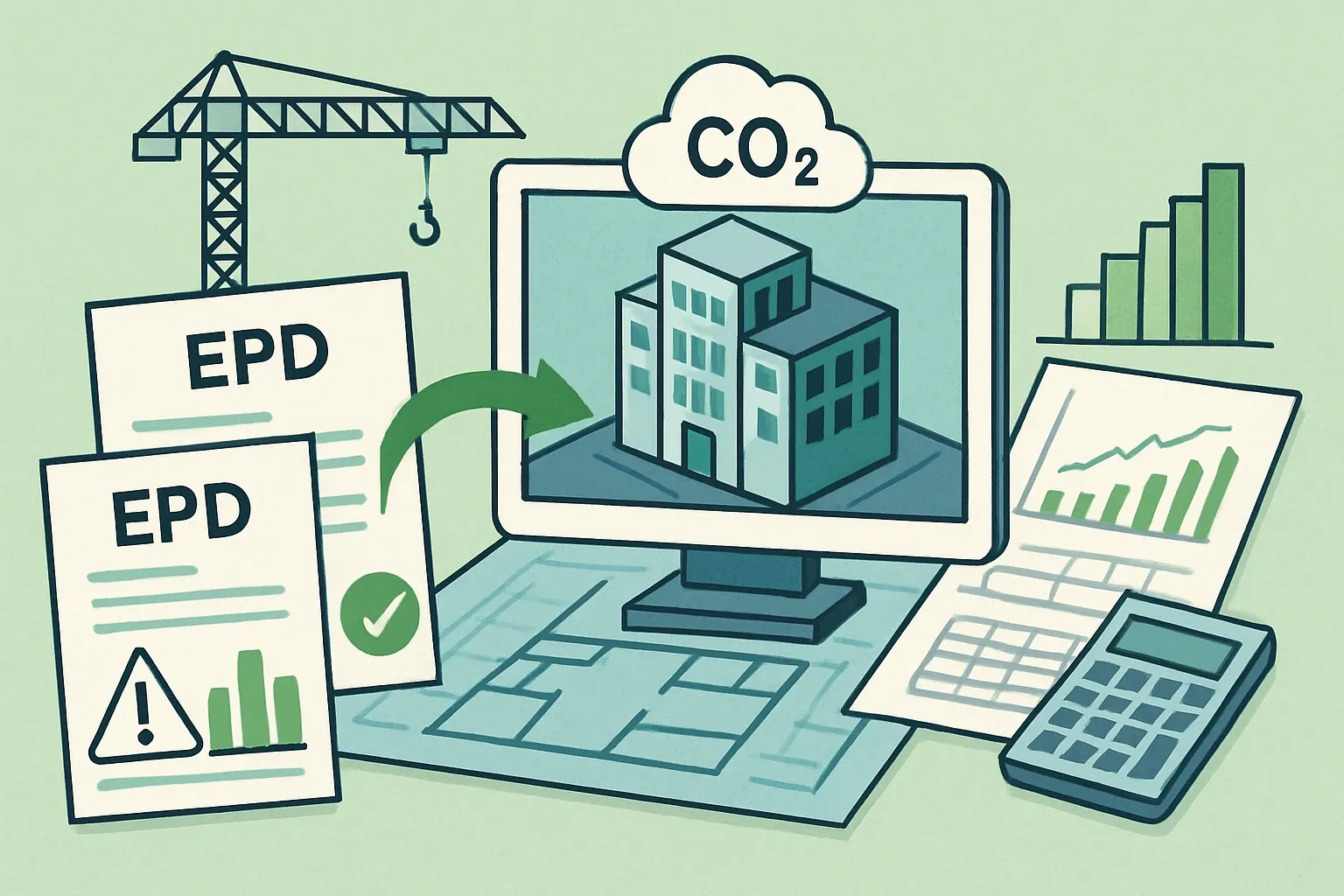
A whole-building LCA is the map of a project’s embodied carbon. EPDs are the GPS coordinates for the materials inside it. Without product‑specific EPDs, the model leans on generic data that often penalizes performance and price flexibility.
Where EPDs change the score
Design teams track upfront emissions early because that is when materials are locked. If your product has no EPD, modelers pull conservative defaults. That can push a spec toward a competitor with a credible declaration, even if your real factory performance is better.
Make your EPDs plug‑and‑play
WBLCA tools read what you publish. Give them exactly what they need.
- Use the declared unit buyers expect in your category, and keep it identical across plants when feasible.
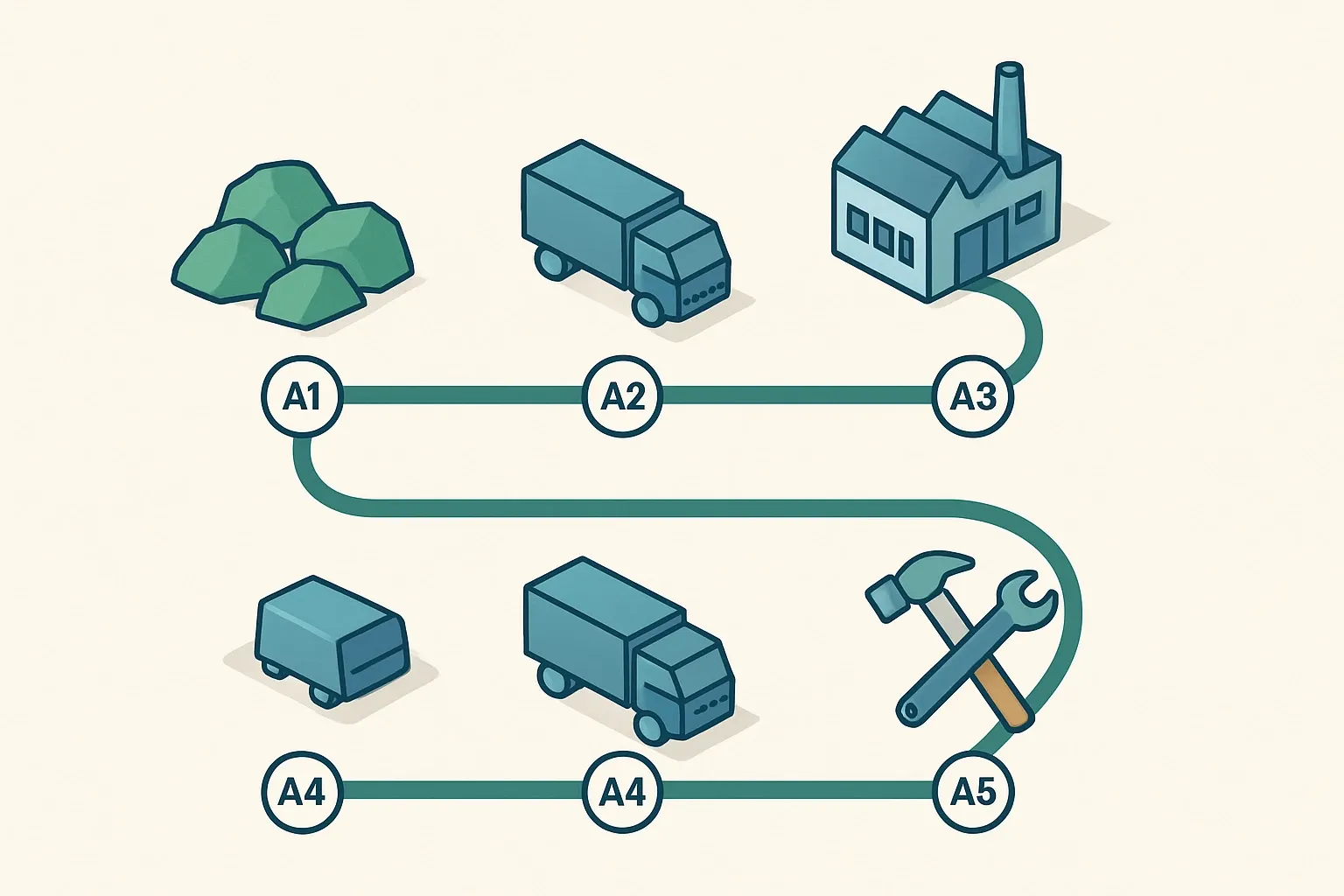
- State system boundaries clearly. A1 to A3 is the floor. Add realistic scenarios for A4 and A5 if your PCR allows.
- Publish separate EPDs for meaningfully different formulations, densities, or coatings so the model does not average away your advantage.
Want your products to shine in whole-building LCA?
Follow us on LinkedIn for insights on how to leverage product-specific EPDs to unlock specs and enhance your competitive edge.
Pick the right rules and operator
PCR choice governs comparability. Scan which PCR competitors use, its revision timing, and which operator your customers trust in the target market. Most programs cap EPD validity at 5 years, so plan your renewal calendar to avoid lapses that spook procurement (IBU, 2024) (EPD International GPI, 2024).
Data quality that WBLCA trusts
Auditors and modelers care about time and representativeness. Primary manufacturing data should cover at least 12 consecutive months to count as stable, not a lucky quarter (EPD International GPI, 2024). If a product is new, a prospective EPD can start the conversation, then be refreshed once a full year is available.
Avoid the silent killers of comparability
Cutoffs and allocation rules can quietly move results. Document recycled content accounting, co‑product allocation, and electricity factors so the building model does not misread your numbers. Keep transport distances and loads explicit for typical lanes. Tiny assumptions snowball at building scale.
Speed is a carbon strategy
Specs move fast. The teams that surface clean, verified EPDs first often shape the baseline for the whole project. That is hard to do if your engineers are stuck chasing utility bills. A partner who wrangles plant data and program‑manages verification frees R&D and operations to keep production humming while the declarations get done right.
Publishing that meets buyers where they are
In the U.S., Smart EPD is commonly selected. In Europe, IBU is frequently used. Both are recognized by building LCA practitioners and align to EN 15804, which keeps models interoperable across markets. We stay operator‑agnostic so the declaration lands where your customers actually look.
Policy snapshot you can actually use
LEED v5 is moving through pilots and early guidance that tighten embodied carbon expectations compared to v4.1. Project teams will rely even more on product‑specific EPDs to demonstrate credible reductions as these updates formalize. Several federal incentives were scaled back in early 2025, so count on owner requirements, state programs, and rating systems rather than yesterday’s grants for near‑term ROI.
A simple play that wins specs
Pick a recent reference year. Pull plant‑level data once, thoroughly. Align PCR and operator with your competitive set. Publish product‑specific EPDs for the formulations you sell the most. Refresh on a predictable cycle. This is not glamorous work, but it is the kind that quietly wins bids. It’s also the kind we’re obsesed with doing efficiently.
Tie it all together
Whole‑building LCA rewards manufacturers who make life easy for modelers. Clear PCR alignment, solid data coverage, and fast publication turn EPDs from paperwork into a performance proof. Do that, and your products show up as they are, not as a conservative default. That is how transparency becomes a sales asset, not a tax.