LCA vs EPD (and why both matter)
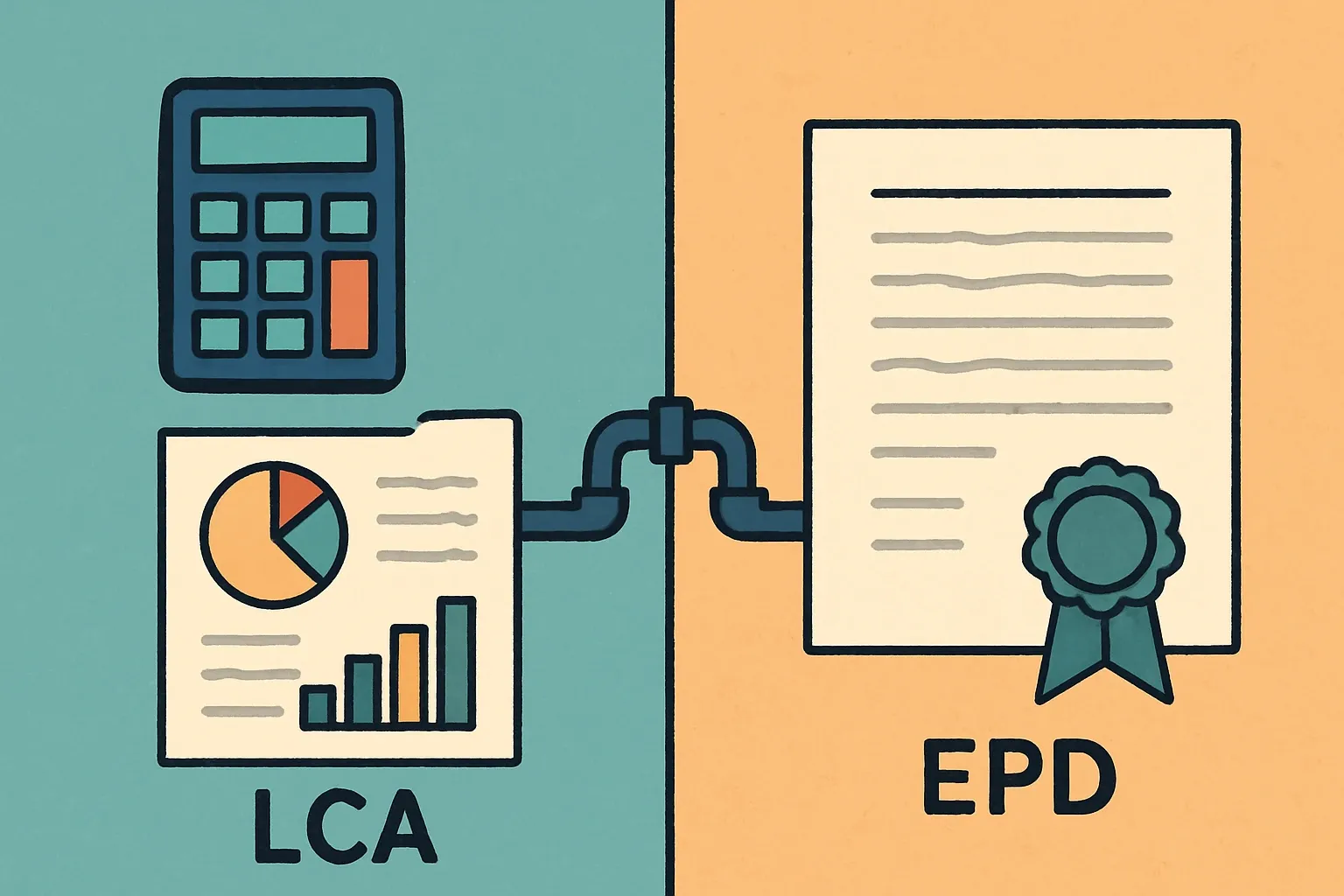
Think of an LCA as the exam and the EPD as the report card. The LCA does the math across a product’s life. The EPD communicates those verified results in a standard format so specifiers can compare apples to apples.
Most construction EPDs follow EN 15804 in Europe and align with ISO 14025 globally. EPDs are generally valid for five years (Environdec GPI, 2024). That validity window is long enough to sell, short enough to improve.
The stages, decoded without alphabet soup
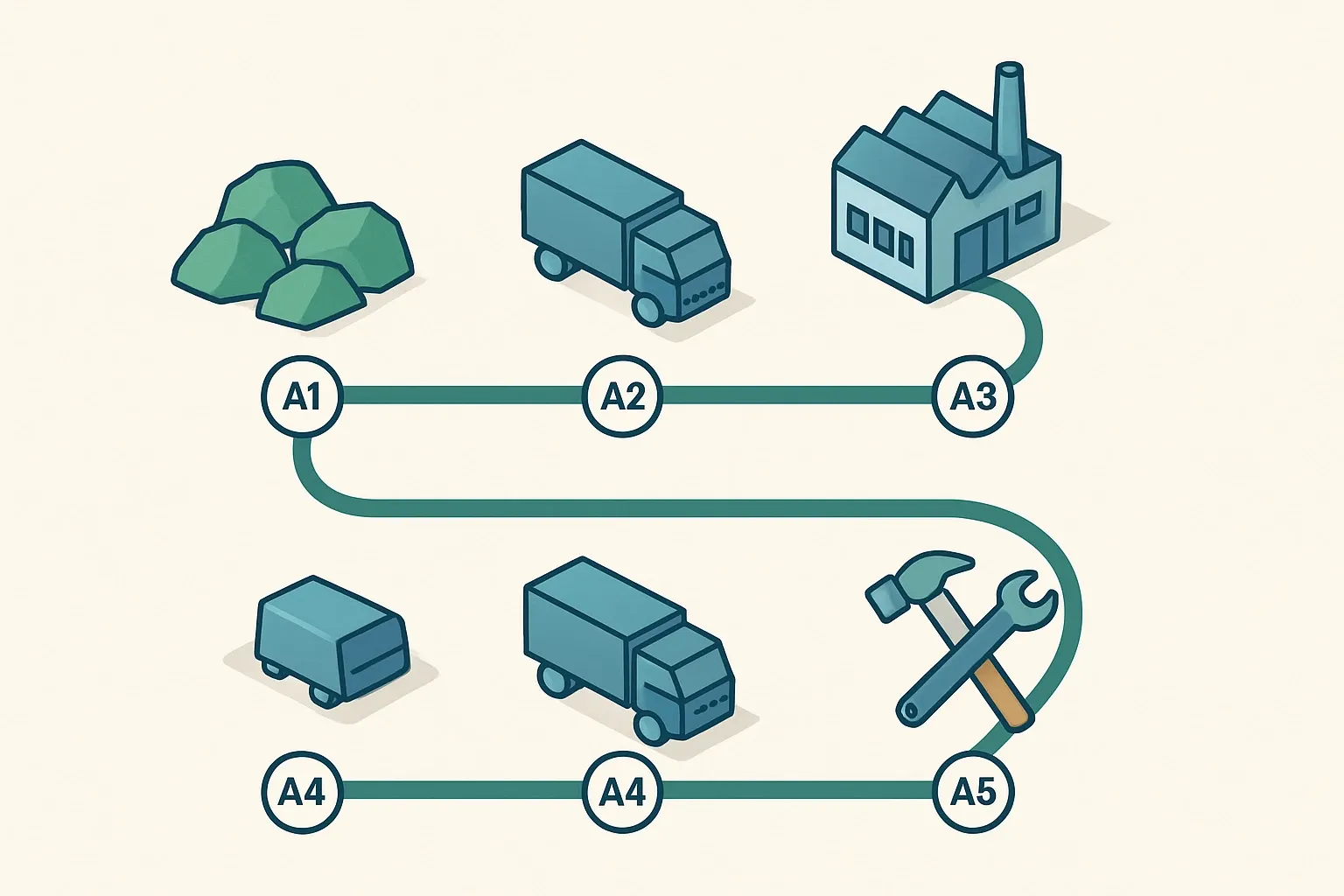
Life cycle modules are simply chapters in the product story. A1–A3 cover raw materials and manufacturing (cradle to gate). A4–A5 cover transport and installation. B1–B7 cover use and maintenance. C1–C4 cover end‑of‑life. Module D reports benefits beyond the system boundary, like recycling credits.
If you remember one thing, remember this: publish the full story your market expects. Many buyers now expect A1–A3 through C plus D under EN 15804+A2, not just cradle‑to‑gate.
What an LCA actually calculates
An LCA models energy, materials, emissions and waste per functional unit. It quantifies impact categories like climate change, acidification, eutrophication, resource use, and more under EN 15804+A2. The “functional unit” should mirror how customers buy the product (per panel, per cubic yard, per square foot with a declared thickness).
Use clear system boundaries and conservative assumptions for any missing supplier data. Reviewers care about transparency as much as the headline number.
Data you really need on day one
You will save weeks by lining up a reference year of data early. Typical asks include production volumes, electricity and fuels by meter, purchased materials and their transport, on‑site scrap and waste, packaging, water, and outbound shipping. For new products, a prospective EPD can start from a few months of real production data, then refresh after the first full year.
Small tip that saves big time: name one internal data lead per site. Don’t let spreadsheets boomerang between teams for weeks.
Confused by EPD life cycle assessments?
Follow us on LinkedIn for clear insights that help you navigate compliance and win more projects.
The role of PCRs (the rulebook of Monopoly)
A Product Category Rule sets the calculation rules and reporting format for a product family. It defines the functional unit, data quality requirements, cut‑offs, and which scenarios to include. PCRs are revised periodically and many set a five‑year cycle for updates, so check expiry before you start (IBU, 2024).
Smart teams scan competitor EPDs to see which PCR the market already treats as the baseline. Switching PCRs midstream can shift results and slow reviews.
Verification and program operators
Every credible EPD is third‑party verified. Program operators host and label the declaration. Common names include Environdec, UL, IBU, and Smart EPD in the US. Choice affects format, timelines, fees, and where specifiers look first. The document should reference the PCR, the standard (EN 15804 or ISO 14025), verification type, and validity date.
“Will this help us win specs” (the short commercial answer)
Yes, because product‑specific EPDs prevent the penalty that many project teams take when they must use generic or conservative factors. That penalty can push comparable products off a shortlist. LEED v5 efforts emphasize whole‑life carbon and clearer treatment of product‑specific EPDs, which keeps transparent products in contention longer (USGBC, 2024).
Teams that publish sooner get into databases and bid lists earlier. The EPD does not guarantee a win, it removes a common reason to lose silently.
US and EU policy signals that matter in 2025
State procurement rules like Buy Clean in several US states continue to request EPDs for covered materials on public projects. Federal incentives shifted in early 2025, so plan around state and private owner requirements first.
In Europe, CSRD pulls tens of thousands of companies into mandatory sustainability reporting from fiscal years starting 2024. The Commission’s own estimate is about 50,000 companies, which raises expectations on supply‑chain data quality and consistency (European Commission, 2024). Well‑built EPDs slot neatly into that documentation stack.
Quality signals to look for in an LCA partner
Look for ruthless help with data collection, not just modeling. Check that they propose the right PCR for your competitive set. Ask how they treat secondary datasets, cut‑offs, and allocation. Verify their review bench is independent and recognized by your target program operator. Speed is great, dependability is better. Both is best.
Common modeling pitfalls to avoid
Do not model a boutique production line if the market will buy from a high‑volume one. Keep the functional unit aligned with how the product is sold. Lock scenario assumptions early for transport and installation. Capture packaging and scrap accurately. Document everything in plain language so the verifier does not have to guess.
How results are used after publishing
Sales teams cite the verified GWP and the declared scope in submittals. Product teams use hotspots in A1–A3 to prioritize supplier switches or energy projects. Marketing shares the PDF and machine‑readable data so owners and tools can ingest it quickly. The best part is repeatability. Next renewal should be smoother and, ideally, lower‑carbon too.
Quick facts worth bookmarking
EPDs are generally valid for five years under leading programs (Environdec GPI, 2024). EN 15804+A2 expanded reporting requirements for indicators and scenarios compared to older versions (CEN, 2019). CSRD coverage is about 50,000 companies across the EU’s economy (European Commission, 2024). If a source does not publish reliable numbers for your exact product type, say so plainly and document assumptions, don’t invent them.
Bringing it together
An EPD life cycle assessment is not a thesis. It is a disciplined data pull, a transparent model, and a verified declaration that keeps your product in more bids. Get the rulebook right, pick the PCR the market expects, collect one clean reference year, and confirm the publishing path early. Do that, and the LCA becomes a dependable product asset, not a once‑a‑decade fire drill. It’s definately doable.