The quick answer
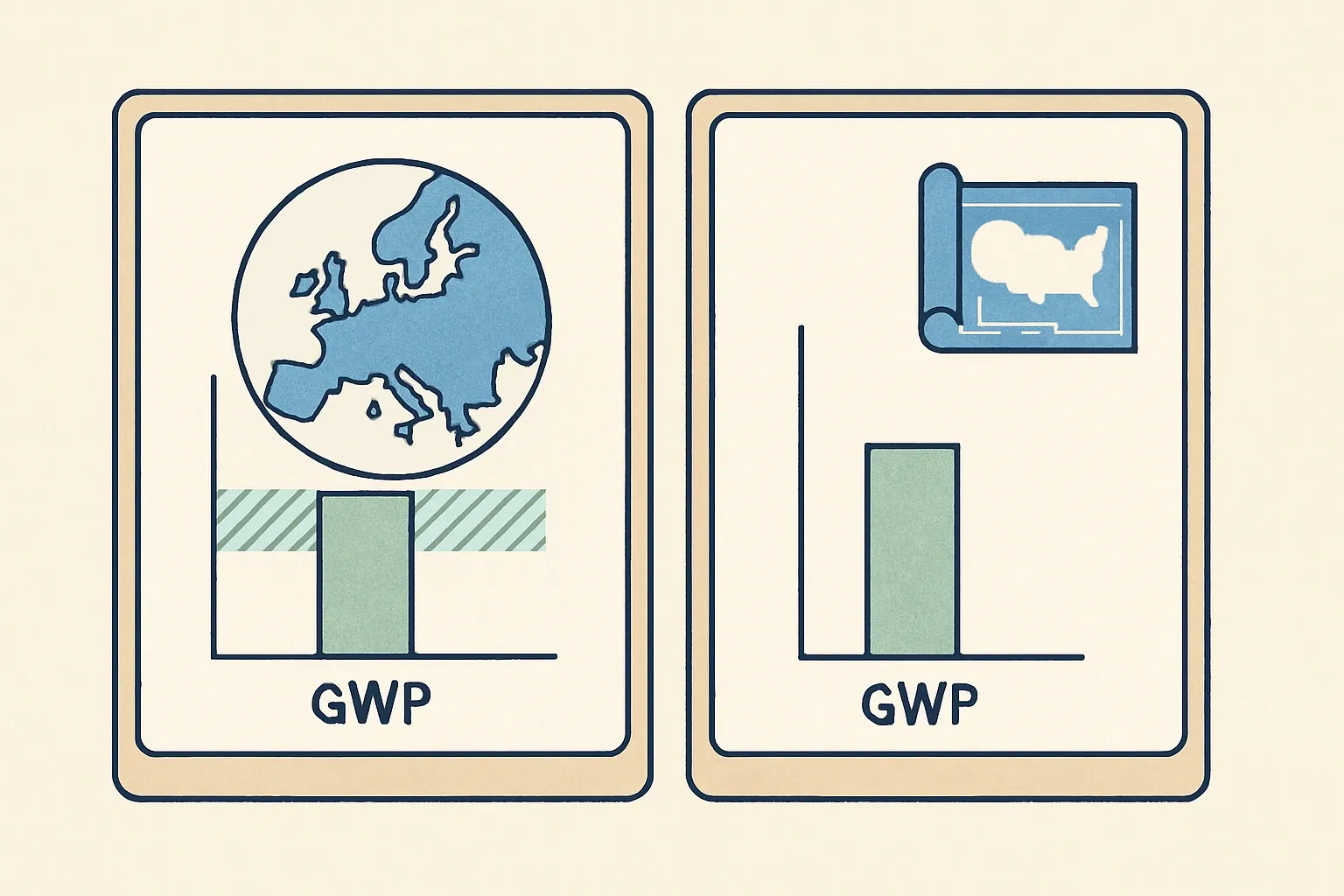
There is no industry‑wide or sector‑average EPD specifically for vapor barriers or vapor retarders at the time of writing in December 2025. Trade associations in this space have not published a shared average the way other categories have done for concrete or insulation. Program operators do host many product‑specific EPDs under related categories like Water‑Resistive and Air Barriers, and those are what design teams actually use in models and submittals.
Why this matters in real projects
When an industry‑wide EPD is missing, whole‑building LCA tools and spec teams lean on conservative generics or database defaults for vapor control layers. That can inflate the modeled footprint compared to a well‑optimized product. A verified, product‑specific EPD removes that penalty and keeps your product in play during value‑engineering conversations.
How the category is organized
Most North American product‑specific declarations for these materials sit under a Water‑Resistive and Air Barriers PCR. You will also see European EPDs labeled as vapour control layers or airtightness membranes under EN 15804. ASTM’s guide for specifying vapor transmission for WRBs and air barriers was refreshed in 2024, which helps align product families and test methods across specs (ASTM, 2024) (ASTM, 2024).
What exists today instead of a sector average
You have two options that work now.
- Select a competitor’s product with a current, product‑specific EPD and match or beat it.
- Commission your own product‑specific EPD so whole‑building LCAs use your real data, not a padded estimate. The administrative lift is often the blocker, not the modeling itself. A good partner will do the heavy data wrangling so your engineering team stays focussed.
Need clarity on EPDs for vapor barriers?
Follow us on LinkedIn for insights that help you navigate specifications and boost your project success.
Real‑world examples by region
Below are representative, product‑specific EPDs for vapor control membranes and adjacent air or water‑resistive barriers. These show clear movement from mid‑sized manufacturers across markets.
- Europe, Switzerland: SIGA Majrex 200 vapour control layer, EPD verified by IBU. Valid to late 2027. Link via NBS Source summary page for convenience. (IBU program) (NBS listing)
- Europe, Ireland: Partel Vapour Control Membranes EPD published with EPD Ireland. Portfolio includes VARA PLUS and IZOPERM PLUS. (Partel product page with EPD)
- Europe, Italy: Rothoblaas BARRIER ALU NET SD1500 reflective vapour barrier, documented EPD reference in product documents. Program Operator listed as EPD Italy. (Rothoblaas product page, EPD in Documents)
- Europe, Germany: pro clima INTELLO X vapour control membrane, EPD available and published via the International EPD System. (pro clima EPD page)
- North America, United States: W. R. MEADOWS AIR‑SHIELD series and related membranes have multiple verified EPDs under the Water‑Resistive and Air Barriers PCR, commonly used by enclosure teams. (W. R. MEADOWS EPD library)
If your product sits near these examples in performance and chemistry, you can expect a similar LCA scope and route to verification.
A note on program operators and recognition
EPD International continues to grow, with more than 17,000 published EPDs globally as of late 2025, so cross‑market comparability keeps improving (EPD International, 2025) (EPD International, 2025). In 2025, IBU and Smart EPD announced mutual recognition for verified construction EPDs, which helps European envelope EPDs appear in North American workflows with fewer hurdles (IBU, 2025) (IBU, 2025).
Sector averages are conservative by design
Even if an industry‑wide EPD for vapor barriers appears later, remember how sector averages work. They represent a central tendency across many plants and recipes. That can be useful for early design. It is rarely flattering for a specific product, and it is intentionally conservative so no one over‑claims. If your process energy mix, thickness, or polymer content lands below the average, a product‑specific EPD will show it. That proof translates into fewer RFI back‑and‑forths and faster submittal approvals.
Commercial upside when you lead, not follow
Specifiers increasingly treat missing or generic data as risk. Showing a current, third‑party verified EPD signals process control and transparency. We see product‑specific EPDs shorten the distance from submittal to accepted alternate, which is where revenue actually happens. The price of an EPD is frequently dwarfed by even a single mid‑sized project win. It’s worthwile to move early rather than wait for a sector average that may never land in your exact niche.
What to do next
Map your product to the right PCR, confirm the declared unit customers expect, pick a clear reference year for data, and align on a program operator that your core markets recognize. If your team is thin, prioritize partners who take on the heavy data collection rather than pushing it back to your plant. That is how you get a credible, on‑time EPD that helps you win more specs.