The quick answer
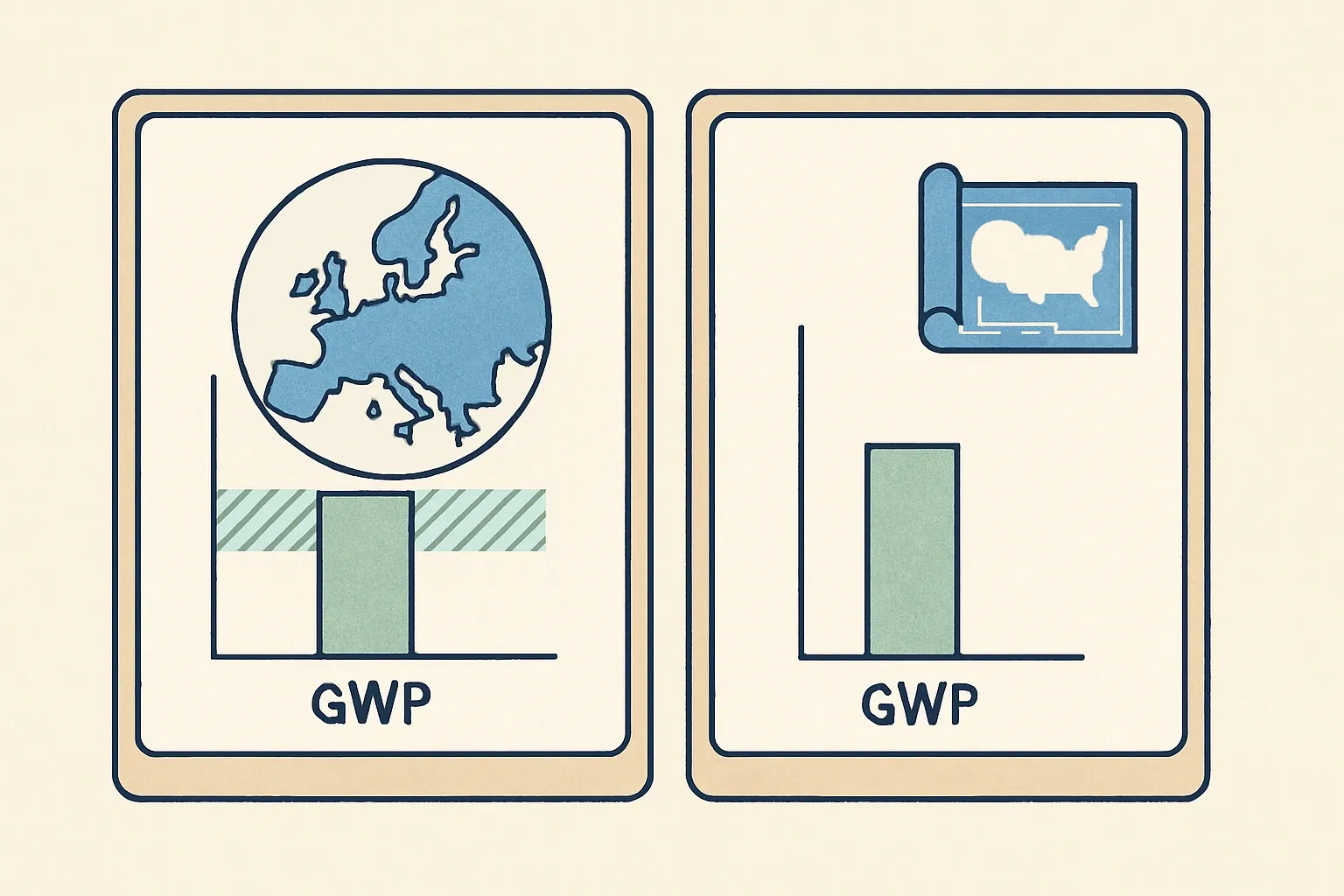
Yes, an industry‑wide EPD for OSB exists in North America. The American Wood Council hosts a U.S. industry‑wide OSB EPD on its site, with a transparency summary and downloadable files. You can start here: AWC Oriented Strand Board EPD and the related OSB transparency summary.
Canada has one too
The Canadian Wood Council released a regionalized, industry‑wide EPD for Canadian OSB in 2025 along with four other wood products (Canadian Wood Council, 2025) (CWC, 2025).
Who is behind these and how they are built
Industry‑wide EPDs pool mill data across many producers, then aggregate it under a common Product Category Rule. In the U.S., AWC explains that its industry EPDs comply with ISO 21930 and the PCR for Structural and Architectural Wood Products and are third‑party verified by ASTM International, which keeps the documents consistent and dependable for design teams.
Europe at a glance
We did not find a single, pan‑European industry‑wide OSB EPD that is current and public today. Instead, many European manufacturers publish product‑specific OSB EPDs through operators like IBU and EPD International. That pattern still gives specifiers what they need, and it leaves room for manufacturers to win on differentiated data rather than a one‑size‑fits‑all average.
Curious about EPD options for OSB boards?
Follow us on LinkedIn for insights that help you leverage industry-wide and product-specific EPDs to win more projects.
The catch with sector averages
An industry‑wide EPD is designed to represent a typical plant, not your best plant. That means the carbon results tend to be conservative. If your process uses cleaner energy, has shorter log haul, or better resin yields, the average will mask those advantages. In practice, project teams often treat averages as a safe default, but a strong product‑specific EPD can move your product to the short list when carbon targets are tight.
Why product‑specific OSB EPDs win specs
Product‑specific EPDs surface real operational advantages and often unlock credits or lower modeled impacts in whole‑building LCA. They also de‑risk substitution. When a project team can drop your verified numbers into their model, they are less likely to swap you late in design for a competitor who has an EPD. That is the quiet commercial edge many teams miss until a bid is lost. It’s also why investing in your own EPD is usually a many‑times payback, not a cost center. It’s definately the smarter move for plants outperforming the average.
Current manufacturer examples
Below are examples of companies with product‑specific OSB or OSB‑based panel EPDs. This is not exhaustive, but it shows that peers are already competing on specific data.
- Huber Engineered Woods, United States, with EPDs covering OSB‑based panels like AdvanTech and ZIP System sheathing and tape.
- SWISS KRONO, Germany, with an OSB EPD published through IBU.
- Kronospan Luxembourg S.A., Luxembourg, with an OSB EPD via IBU.
- Norbord Europe Ltd. (West Fraser Europe), United Kingdom and Belgium, with an OSB panels EPD via EPD International.
When to lean on the industry‑wide OSB EPD
Use the sector average to get moving when time is short, you are early in market entry, or you are updating literature while scoping a product‑specific study. It keeps you in the conversation and satisfies many submittal checklists. Just remember it may overstate your impacts if your operations are better than the pack.
When to commission your own OSB EPD
Move to a product‑specific EPD when you operate newer lines, source cleaner energy, or hold a strong logistics position. The individualized results can reduce modeled embodied carbon, improve your standing in procurement scoring, and make your sales team’s job simpler. The real prize is fewer surprises at the end of design, when substitutions typically happen.
Takeaway
If you make OSB boards, the industry‑wide EPD exists and is easy to point to in North America. Use it as a baseline, then convert to a product‑specific EPD to show your true performance and win more specs than the average ever will.