The quick answer
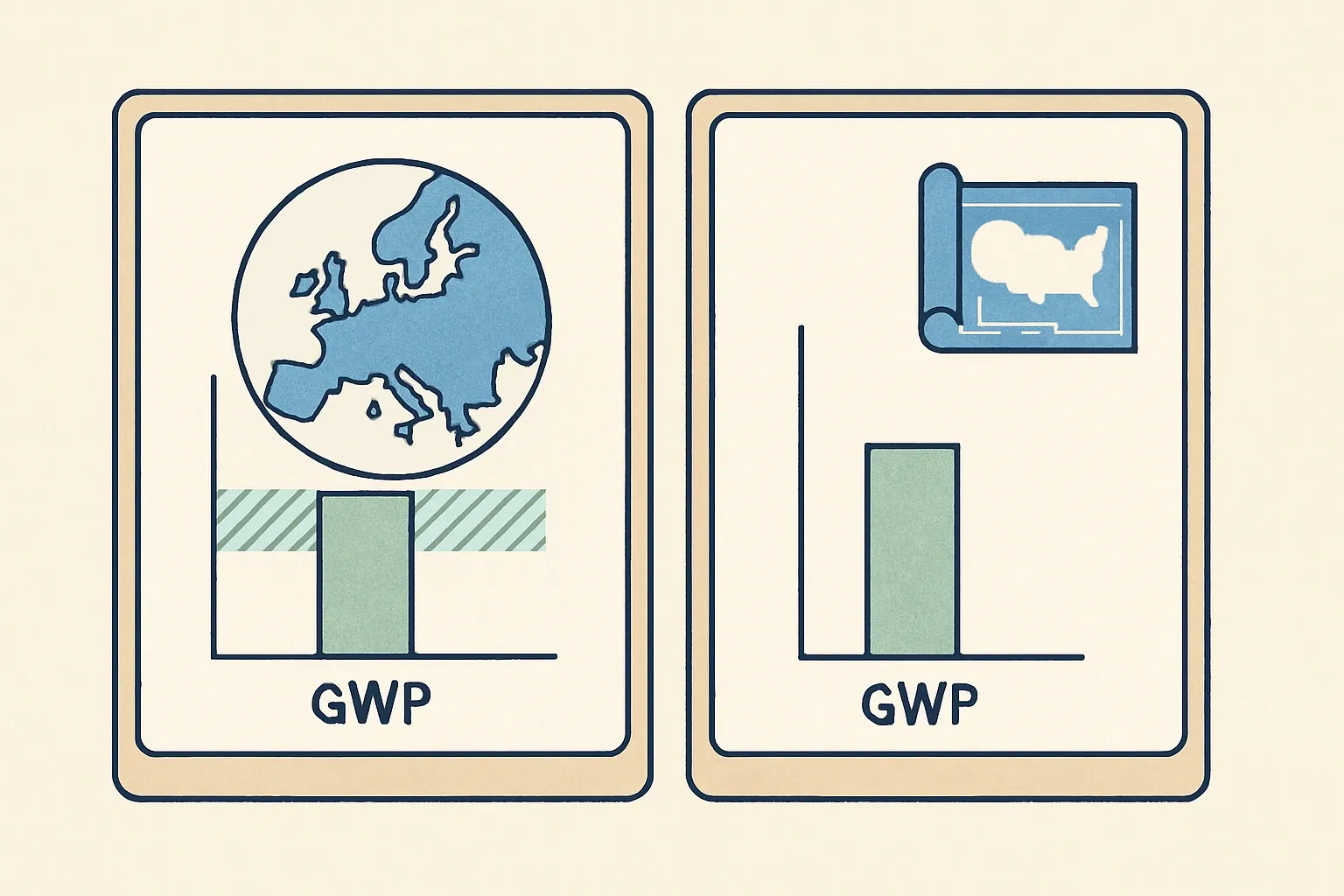
An industry‑wide EPD for interior wall paint exists in Europe. It is published by the German Paint and Printing Ink Industry Association and hosted by IBU, covering dispersion‑based interior wall paints as a sector average through June 2030 (VdL association EPD, 2025) (VdL, 2025). In the United States, we could not find an active, publicly listed industry‑wide EPD for interior interior wall paint as of December 2025. The PCR that governs architectural coatings in North America is current and maintained by NSF with validity extended through June 30, 2025, which enables product‑specific EPDs for paints to be created and verified (NSF, 2025) (NSF, 2025).
Who stands behind the European sector EPD
The association‑backed EPD for interior wall paints is managed by VdL and verified under EN 15804 by the IBU program. Think of it as the industry’s “house average” for a common class of dispersion paints. The 2025 update aligned it with current rules and set a validity window out to 2030, which gives project teams a stable reference point in tender documents and LCA tools (VdL association EPD, 2025) (VdL, 2025).
Why sector averages help… and where they fall short
Sector EPDs ease comparisons when no brand EPD is available. They also keep procurement moving when buyers need an EPD on file to satisfy specifications. The tradeoff is baked into the name. Averages are conservative. If your factory has optimized energy, solvents, packaging, or tint logistics, an average will not credit those gains. It creates less differentiation at the point of selection, which means you leave advantage on the table.
Product‑specific EPDs usually win the spec math
Contractors and LCA modelers often apply conservative defaults when a product‑specific EPD is missing. A verified, product‑specific document replaces those defaults with your measured data, which can lower embodied carbon entries and reduce the risk of getting swapped late in design. EPDs are normally valid for five years, which provides a long runway to earn back the effort across many projects (EPD International, 2025) (EPD International, 2025).
United States snapshot
There is a current Product Category Rule for Architectural Coatings maintained by NSF in collaboration with the American Coatings Association. NSF extended the rule’s validity through June 30, 2025 while a revision proceeds, so manufacturers can publish product‑specific EPDs for interior paints under it today (NSF, 2025) (NSF, 2025). If a national sector average EPD appears later, it will function as a reference baseline, not a performance ceiling.
Want to beat the competition in interior wall paint EPDs?
Follow us on LinkedIn for insights on how product-specific EPDs can elevate your market positioning and win more tenders.
Europe snapshot
The VdL association EPD covers dispersion‑based interior wall paints and is valid to June 2030. It sits within EN 15804 requirements and is accepted across common European databases and project workflows. Where EN 15804 PCRs evolve, program operators publish transition dates. For construction products under the International EPD System, the main construction PCR 2019:14 was updated with an explicit transition timeline in 2024 and 2025 to maintain continuity for EPD owners (EPD International, 2024) (EPD International, 2024).
Competitors already publishing product‑specific interior paint EPDs
Seeing peers go first reduces uncertainty. Several mid‑sized brands have current product‑specific EPDs for interior wall paints in Europe, and established North American paint makers have them stateside.
- Flügger lists multiple interior wall paint EPDs, for example Dekso Air valid to December 7, 2028 and Perform Airless valid to June 28, 2027 (EPD International, 2023 and 2022) (EPD International, 2023) (EPD International, 2022).
- Graphenstone has a premium interior paints EPD registered with EPD International and valid to June 28, 2027.
- In the U.S., Benjamin Moore lists EPDs for Eco Spec and Ultra Spec 500 interior lines, alongside primers, under its corporate responsibility disclosures.
This is not a full market census. It does signal that average‑beating, product‑specific EPDs are already table stakes in competitive paint categories.
How a sector EPD and a product EPD play together
Treat the sector average as the floor. It proves the category can deliver an EPD and gives teams a placeholder when nothing else is available. Your product‑specific EPD is the elevator. It carries your real data into LEED v5‑oriented material reviews and whole‑building LCAs so the project models your product, not a generic stand‑in. When your process is cleaner than the average, the modeled impact goes down. That improves your specability.
Planning your EPD path for interior wall paint
Start with the PCR. In the U.S., confirm your scope against NSF’s Architectural Coatings PCR and its current dates so you do not lose months of validity during a transition window (NSF, 2025) (NSF, 2025). Pick a recent reference year, lock your bills of materials and tinting assumptions, and keep utility data tight. Then publish with a program operator that aligns to where your customers buy. The result is a product‑specific EPD that is easy for specifiers to find and trust. Getting teh first one right makes follow‑ons faster.
The commercial takeaway
If you sell in Europe, the VdL interior wall paint sector EPD exists and is valid through 2030. Use it as a benchmark. Then beat it with a product‑specific EPD to show measured performance, not just membership in the pack. If you sell in the U.S., there is no active industry‑wide EPD for interior wall paint today. That means a product‑specific EPD is a clearer differentiator and can be the reason your line stays in the submittal set while others don’t. The ROI typically multiplies across bids because the same verified document keeps working for five years in most programs (EPD International, 2025) (EPD International, 2025).