The one‑minute take
There is no broadly adopted, industry‑wide Environmental Product Declaration (EPD) dedicated to industrial primers used on steel and other infrastructure substrates. Associations in Europe publish sector averages for different coating families, yet none map cleanly to zinc‑rich or heavy‑duty epoxy primers. If a project team asks for an EPD here, they expect a product‑specific one.
What exists today
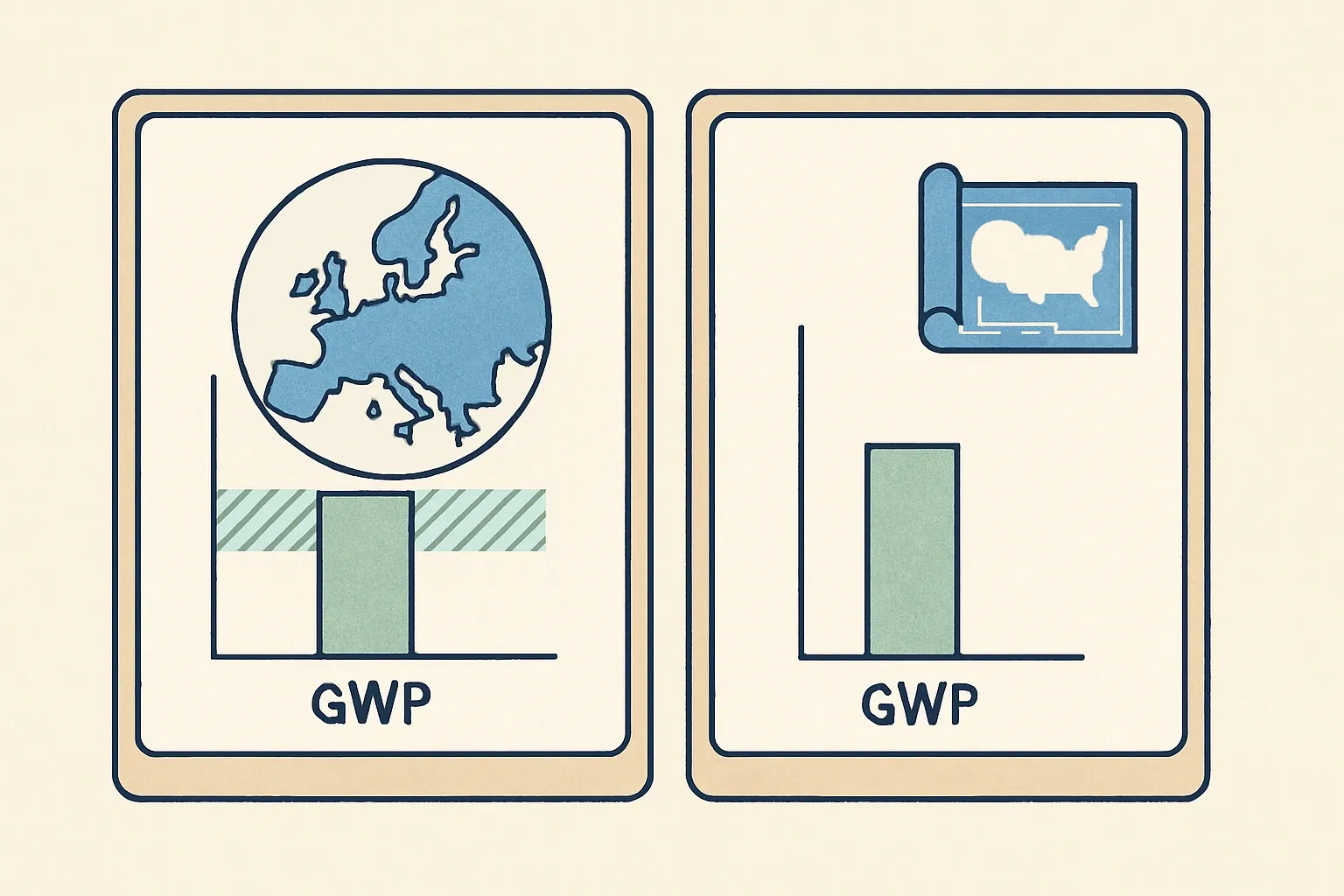
Germany’s coatings association publishes association EPDs that cover dispersion‑based paints and primers for buildings, updated to EN 15804+A2 in June 2025. There are six of these, and they are not designed for industrial metal primers (VdL, 2025) (VdL, 2025). The same group also offers three association EPDs for powder coatings, revised in 2023, again valuable for facades and OEM lines but not a fit for zinc or epoxy anti‑corrosive primers (VdL, 2023) (VdL, 2023).
In North America, the American Coatings Association coordinates PCR work for several coating types. That helps manufacturers publish compliant product‑specific EPDs. It does not currently yield an industry‑wide EPD for industrial primers.
Why a single average is hard to defend
“Industrial primer” is a catch‑all. Zinc content swings from a dusting to 80 percent by weight. Epoxy backbones vary, solvents and exempt solvents vary, and cure schedules change with shop or field conditions. A single sector average would blur these real differences, which is exactly why most program operators expect product‑specific declarations for protective‑coatings work.
Think of it like comparing a pickup and a go‑kart because both have four wheels. The label might be the same, the duty cycle isn’t.
Regional snapshot you can act on
- United States and Canada: no published industry‑wide EPD for industrial steel primers. Owners and GCs typically expect a product‑specific EPD when specs call out protective coatings.
- European Union and UK: association EPDs exist for dispersion primers and powder coatings, not for zinc‑rich or heavy‑duty epoxy primers. Nordic markets see many product‑specific primer EPDs under EPD Norway, again pointing to product‑level disclosure.
Need clarity on EPDs for industrial primers?
Follow us on LinkedIn to unlock insights that help you win specifications and improve your project outcomes.
Competitors already publishing product‑specific primer EPDs
Mid‑market and global protective brands are moving. A few live, linkable examples show the bar today:
- Carboline Carbozinc 859 VOC. A classic organic zinc primer with a published EPD available directly on the product page. Useful anywhere industrial steel is specified in bridges, water, and plant work. (See “Environmental Product Declaration” under Downloads on the product page: https://www.carboline.com/products/product-details/Carbozinc-859-VOC/)
- Carboline Rustbond PS. A surface‑tolerant epoxy primer and tie‑coat with an EPD download on the product page. Good proof that even maintenance‑friendly primers can carry third‑party data. https://www.carboline.com/products/product-details/Rustbond-PS
- Carboline Norge AS. Multiple product‑specific EPDs published with EPD Norway, including primer and mastic systems used across energy and marine. One listing example: CARBOMASTIC 652 with EPD ID NEPD‑6351‑5613 on EPD Global. https://www.epd-global.no/epder/byggevarer/maling-belegg-med-organiske-bindemidler/carbomastic-652
- Jotun Penguard family. Jotun’s product pages flag EPD availability for primers like Penguard HSP ZP and Penguard Universal, which are widely used on structural steel. “See Environmental Product Declaration (EPD)” appears on the product pages. https://www.jotun.com/it-it/industries/products/penguard-hsp-zp and https://www.jotun.com/ww-en/industries/products/Penguard-Universal
If peers have product‑specific EPDs and you do not, whole‑building LCAs will default to conservative assumptions. That makes your bid look heavier than it actually is.
Why an industry‑wide EPD wouldn’t help much here anyway
Sector averages are intentionally conservative. They smooth out outliers and protect confidentiality within a cohort. That works for commodity categories like standard gypsum or asphalt mixes, where the process is relatively uniform. Industrial primers are the opposite. Formulation choices, zinc loading, solvent strategy, and plant energy all swing the impact. A product‑specific EPD lets high‑solids or ultra‑low‑VOC formulas show their real advantage instead of hiding in an average.
The commercial angle that matters
Specs increasingly include carbon accounting. When a model uses a generic coating factor or a building database default, the number usually comes with an uplift to reflect uncertainty. A verified, product‑level EPD puts a real value in that cell, shaving risk from your submittal and keeping you from being swapped late in design. We’ve seen one mid‑size project cover the cost of an EPD by protecting a single line item from substitution. That’s not hype. It’s how estimators actually balance options.
If you want to move now, here’s a fast playbook
- Define scope precisely. Name the exact primer SKUs, resin chemistry, and cure windows used by your target customer segments. Avoid bundling dissimilar primers into one declaration.
- Pick the right PCR and operator. Protective coatings often route through architectural or coatings PCRs. Choose a program operator your clients already accept in your markets.
- Nail the data collection. Pull one recent full year of plant data for solvents, resins, pigments, packaging, energy by fuel, and waste. Include shop‑versus‑field application scenarios if relevant. A partner that handles cross‑plant data wrangling saves your R&D and ops teams days, not hours.
- Publish, then reuse. Once verified, drop the EPD into your spec kits, BIM objects, and submittal templates. Train reps to point estimators to the precise line item in the EPD that the model needs.
Bottom line for industrial primers
No credible, industry‑wide EPD exists for industrial primers today. European dispersion‑primer and powder‑coating averages are real and useful in their lanes, but they do not substitute for zinc‑rich or epoxy industrial primers. The manufacturers winning specs already use product‑specific EPDs to replace generic or sector‑average penalties with their actual numbers. That’s the move that pays back, fast, and it’s definately within reach.