What “cushion vinyl” maps to in EPD language
In everyday flooring talk, cushion vinyl is foam‑backed vinyl sheet. In EPDs, that usually lands under heterogeneous vinyl sheet. Homogeneous sheet vinyl is a single‑layer construction. If your line is residential‑only with unusual backings or thicknesses, verify that the industry category’s declared unit and specs actually match before using it as a stand‑in.
What exists today
In North America, the Resilient Floor Covering Institute publishes 2024 industry‑wide EPDs covering nine resilient categories, including heterogeneous vinyl sheet and homogeneous vinyl sheet (RFCI, 2024) (RFCI, 2024). These sector EPDs are third‑party verified under the UL Flooring PCR Part B referenced on RFCI’s site. Most PCRs review on roughly five‑year cycles, which explains periodic refreshes (UL Solutions, 2025).
The number most teams ask for
If you need a defensible baseline while a product‑specific EPD is underway, CLF’s 2025 North American Material Baselines report lists A1–A3 GWP around 5.87 kg CO2e per m² for heterogeneous sheet vinyl and 7.48 kg CO2e per m² for homogeneous sheet vinyl. It also reports 9.78 kg CO2e per m² for gluedown LVT to help frame adjacent choices (Carbon Leadership Forum, 2025) (Carbon Leadership Forum, 2025). Treat these as sector averages, not promises for any single SKU.
Validity windows that trip up submittals
EPDs are normally valid for five years, counted from verification and publication. Operators also expect updates during that window if any published indicator worsens by more than ten percent. That five year rhythm is stated in the International EPD System’s guidance and FAQs (International EPD System, 2025) (International EPD System, 2025). Dont let an almost‑expired document delay a bid.
Want to leverage EPDs for cushion vinyl projects?
Follow us on LinkedIn for insights on maximizing ROI with industry-wide EPDs and tips to get spec'd more often.
When the industry average helps versus hurts
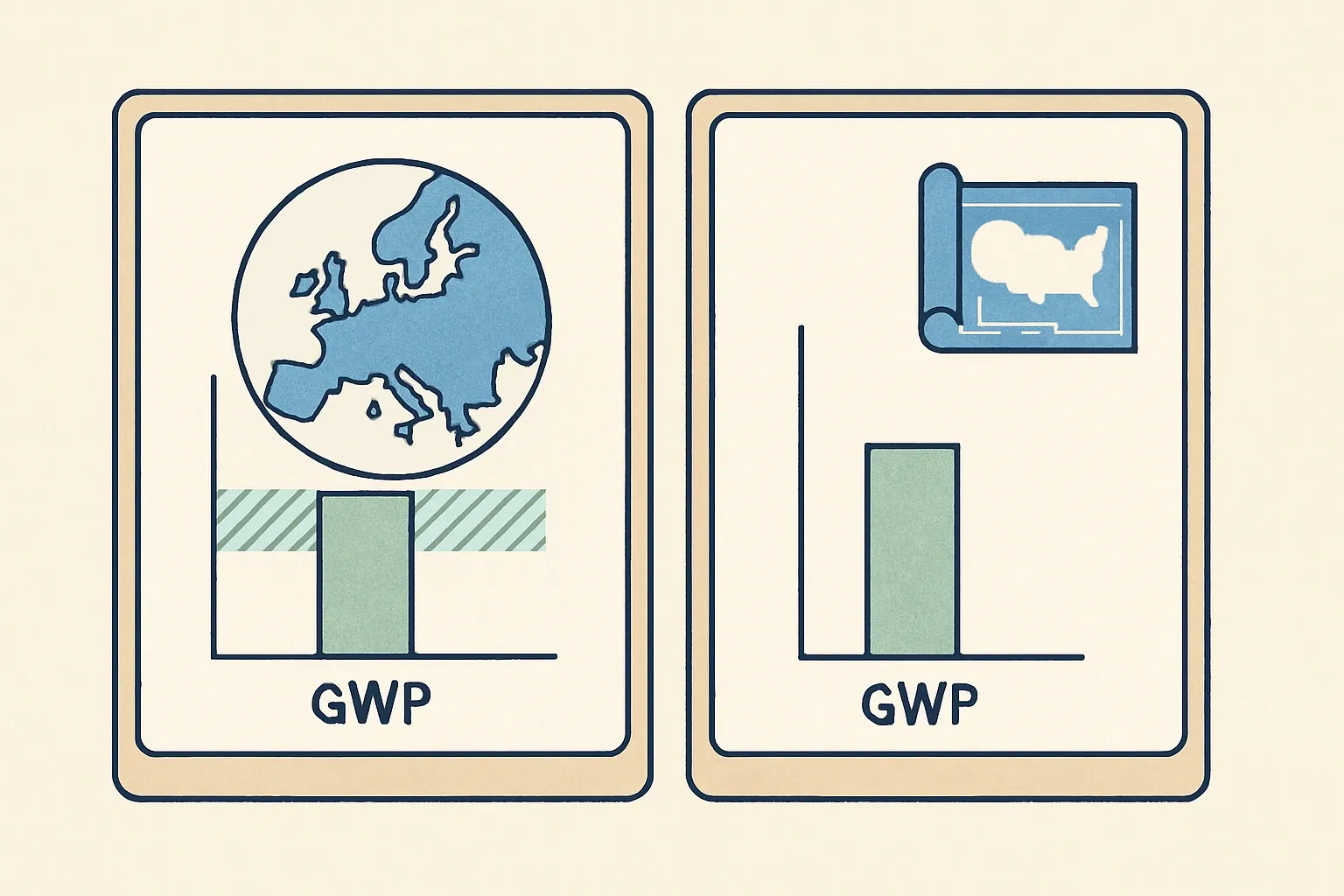
Think of the industry‑wide EPD as a league average. It fills a gap on day one, keeps you in the spec conversation, and avoids conservative penalties in project LCAs. If your plant runs cleaner power, optimized formulations, or lighter weights, a product‑specific EPD tends to show materially lower A1–A3 numbers than the sector average. That difference can protect margin in competitive alternates.
Picking the right rulebook fast
For North America, ISO 21930 with the operator’s Flooring Part B or EN 15804 with an aligned Part B both work. UL notes PCRs are generally reviewed about every five years, so check version and expiration before you start modeling to avoid rework later (UL Solutions, 2025).
Quick checklist to use an industry‑wide EPD correctly
- Match the declared unit to your quoting unit, typically 1 m².
- Confirm construction type: heterogeneous vs homogeneous sheet.
- Note validity date and program operator, capture a PDF copy for your file.
- Flag any material or energy changes at the plant that could swing results by ten percent or more during the EPD’s life.
Bottom line for cushion vinyl
Yes, an industry‑wide EPD exists and the heterogeneous sheet vinyl document is usually the right umbrella for cushion vinyl in specs (RFCI, 2024). Use it to keep projects moving, then publish a product‑specific EPD to convert your real manufacturing advantages into measurable wins.
(References for numeric statements: RFCI industry‑wide EPD listings, 2024. International EPD System FAQ on five‑year validity and update triggers, 2025. CLF 2025 North American Material Baselines resilient flooring values, 2025. UL Solutions note on typical five‑year PCR cycles, 2025.)