The quick answer
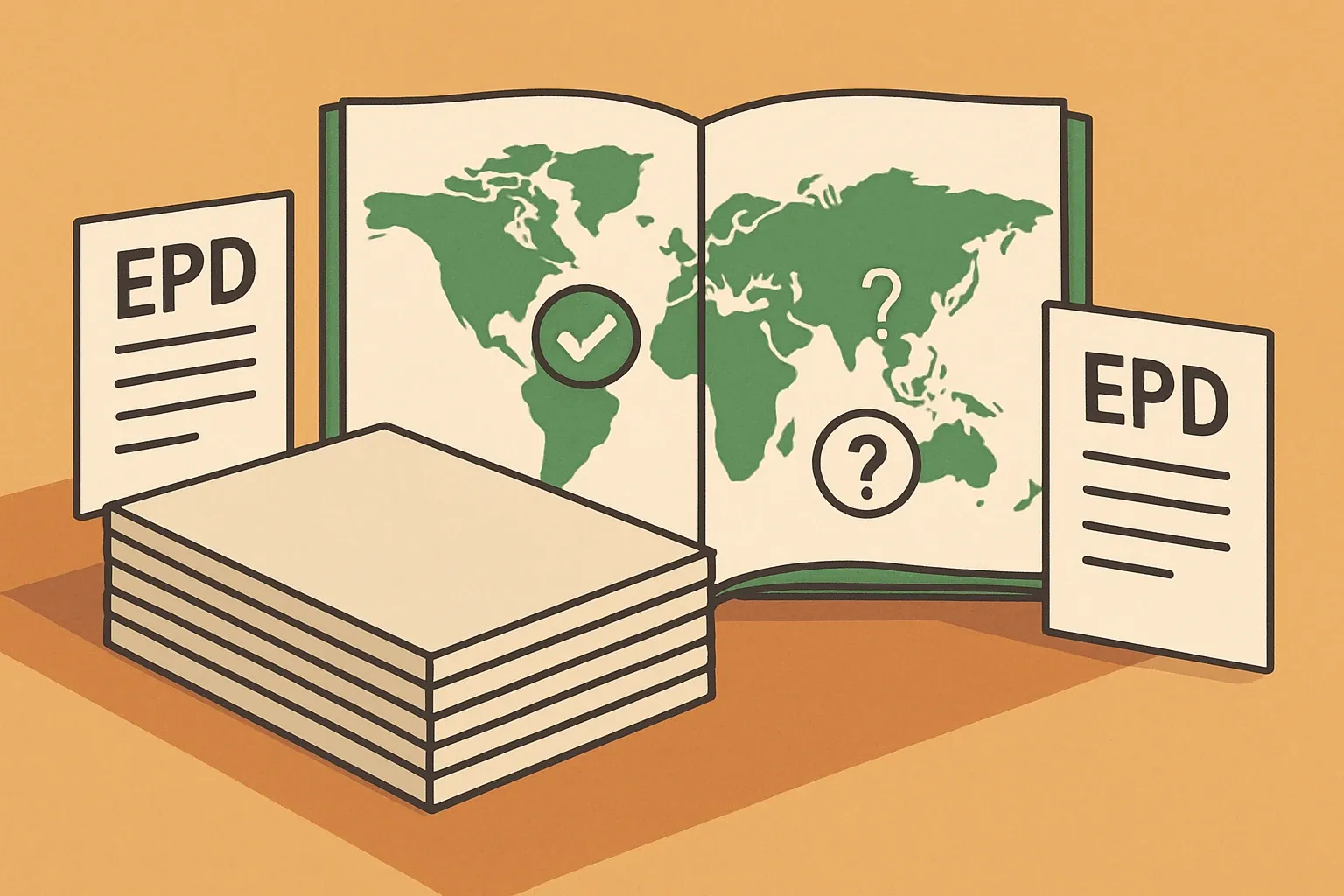
Yes, industry‑wide or sector average EPDs exist for gypsum plasterboard in some markets. In others, only manufacturer EPDs are available. If you do find a sector average, remember it represents a blended baseline rather than your plant’s best performance.
North America: a known sector average
The Gypsum Association has published an industry‑wide EPD for 5/8 inch Type X gypsum wallboard, created from member data and verified under recognized rules. It remains a common reference for design teams. See the Association’s announcement for context and access points (Gypsum Association, 2020).
Helpful links:
- Gypsum Association release for the Type X industry‑wide EPD
- American Gypsum’s EPD page, which points specifiers to the relevant board EPDs
Germany: association EPDs you can download today
Germany’s Bundesverband der Gipsindustrie publishes association EPDs for multiple plasterboard variants under EN 520, including general, fire‑resistant, and impregnated boards. These are hosted with IBU and available directly from the association’s site. Start with “Gipsplatte nach DIN EN 520 und DIN 18180,” then branch into fire‑resistant and moisture‑resistant plasterboards via the same page.
Links:
- German Gypsum Association EPD hub for plasterboard types
France: FDES in INIES, typically product‑specific
France routes building LCA through the INIES database. Plasterboard data most often appears as FDES, which is the French flavor of an EN 15804 EPD. INIES is large enough that teams default to it during modeling, which makes being listed there commercially relevant. As of November 2025 the database shows 5,326 FDES entries tied to 307,326 commercial references, underscoring that pull (INIES, 2025) (INIES, 2025).
Want to get ahead with gypsum plasterboard specifications?
Follow us on LinkedIn for insights that help you unlock market opportunities and win more tenders.
Australia and New Zealand: no sector average, strong product‑specific coverage
We are not seeing an industry‑wide plasterboard EPD for Australia or New Zealand. What you will find is thorough product‑specific coverage from mid‑sized brands. Example: Siniat’s plasterboard EPD registered with EPD Australasia covers mainstream and specialty boards with A2‑format data. That makes it usable in Green Star workflows.
Links:
- Siniat Plasterboard EPD on EPD Australasia (EPD Australasia, 2023)
Why sector averages help, but rarely sell for you
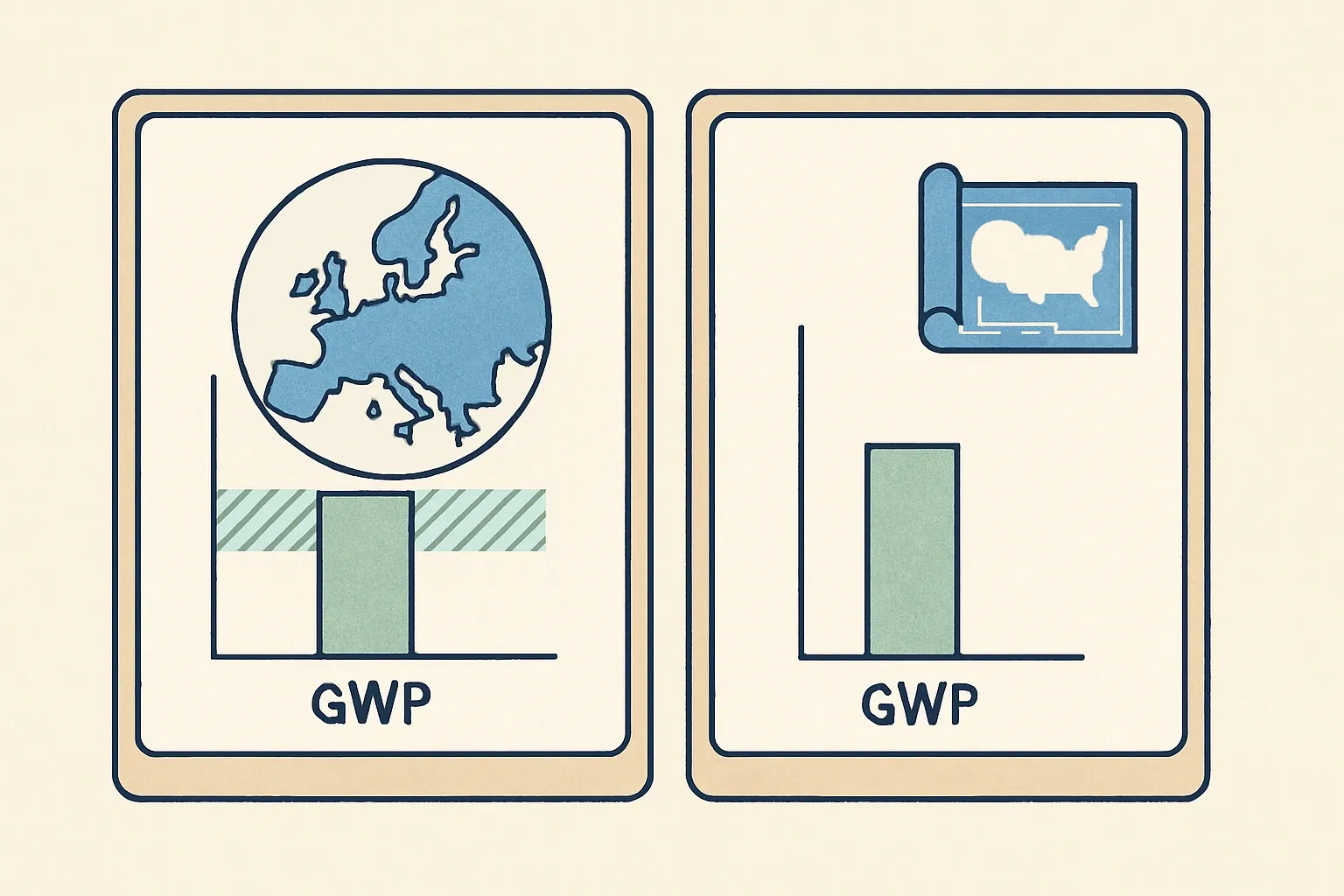
Industry‑wide EPDs are great for basic compliance and early design modeling. They are conservative by design, because they average across production, energy mixes, and transport. If your operations outperform that average, a sector EPD hides your advantage. It is like showing up to a track meet wearing the team time, not your personal best.
When a product‑specific EPD wins specs
A current, plant‑specific EPD lets modelers use your real GWP and energy data rather than the sector baseline. That can keep you in contention when projects carry carbon thresholds, especially under modern LCA‑driven procurement. The volumes speak for themselves. IBU reported 533 individual EPDs published in 2024, bringing its all‑time library to more than 4,700, which signals how frequently specifiers pull declared data in Europe (IBU, 2025) (IBU, 2025).
Positive examples to benchmark
United States and Canada: National Gypsum lists multiple NSF‑verified, plant‑specific EPDs for 5/8 inch Fire‑Shield boards, with current validity windows through May 23, 2030 across several plants (NSF, 2025) (NSF, 2025). Australia: Siniat publishes a family EPD for mainstream plasterboards that covers common thicknesses and specialty boards, valid to 2028 on EPD Australasia. This is straghtforward for tender teams to reference.
So, should you use the sector EPD or commission your own
Use a sector average EPD when you must show conformance quickly and nothing product‑specific exists in your region. If you believe your process emissions, energy mix, or logistics beat the industry norm, commission a product‑specific EPD. It replaces conservative defaults with your measured results, which can reduce modeled GWP and make your board more defensible in carbon‑constrained projects. The upside is commercial, not just compliance.
Where to look next
Start with what your market recognizes:
- North America: check the Gypsum Association’s industry‑wide EPD and program operators that verify board EPDs, such as NSF or UL Solutions.
- DACH and wider EU: look for IBU‑hosted plasterboard EPDs, then verify A2 alignment for cross‑border use.
- France: publish as an FDES in INIES if you want your impacts used inside RE2020 tools.
- Australia and New Zealand: register with EPD Australasia so Green Star modelers can count your results.
If a sector average exists in your segment, treat it as the floor. Your plant can be the ceiling.