Industry‑wide EPDs, in plain English
An industry‑wide or sector average EPD pools data from multiple manufacturers to publish one representative profile for a product type. Think of it as a league average stat line. It is useful for quick benchmarking, yet it rarely captures your plant’s best plays, like renewable electricity, high recycled content, or tight logistics.
EPDs generally carry a five‑year validity window before they need renewal, per common program rules (EPD International FAQ, 2025).
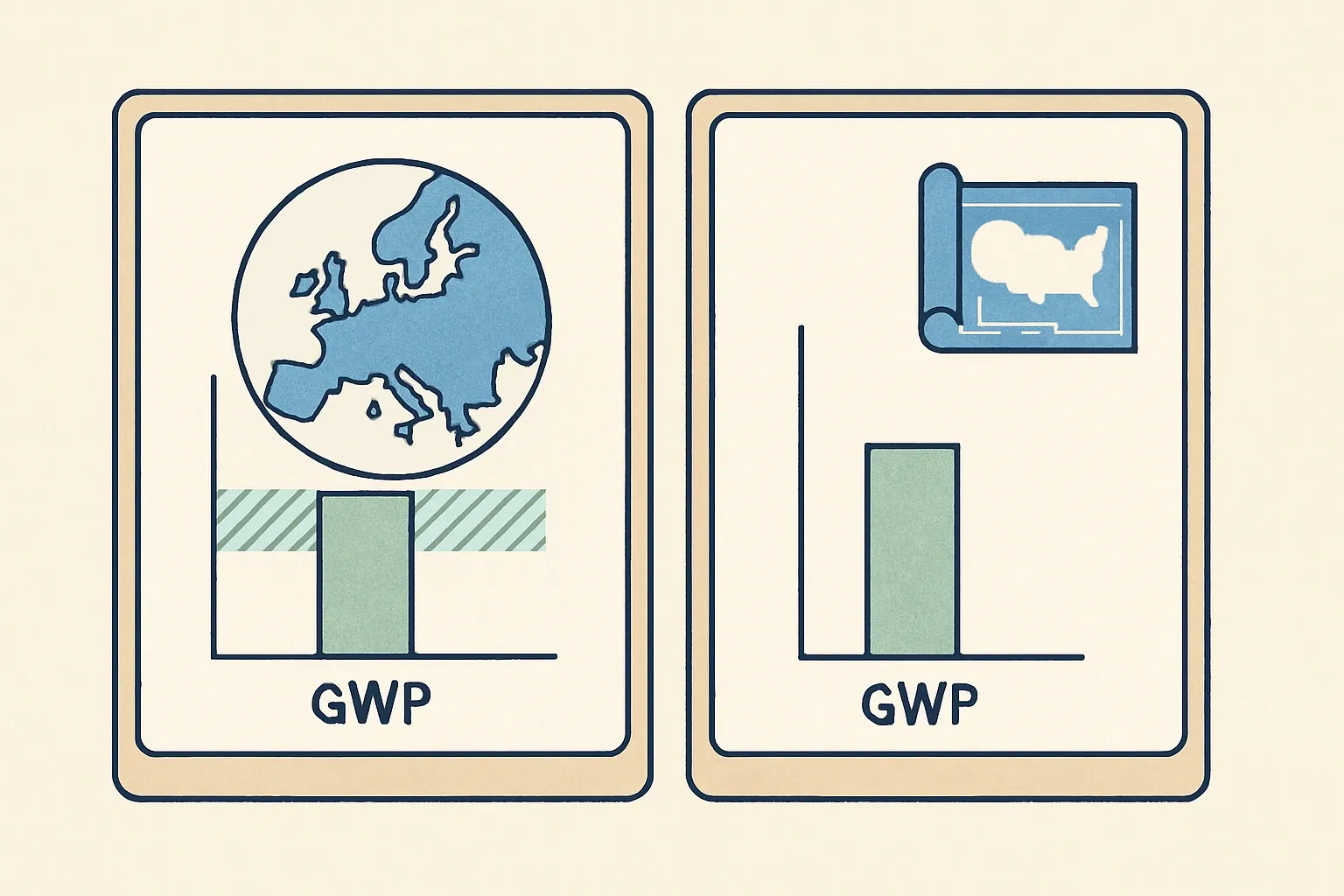
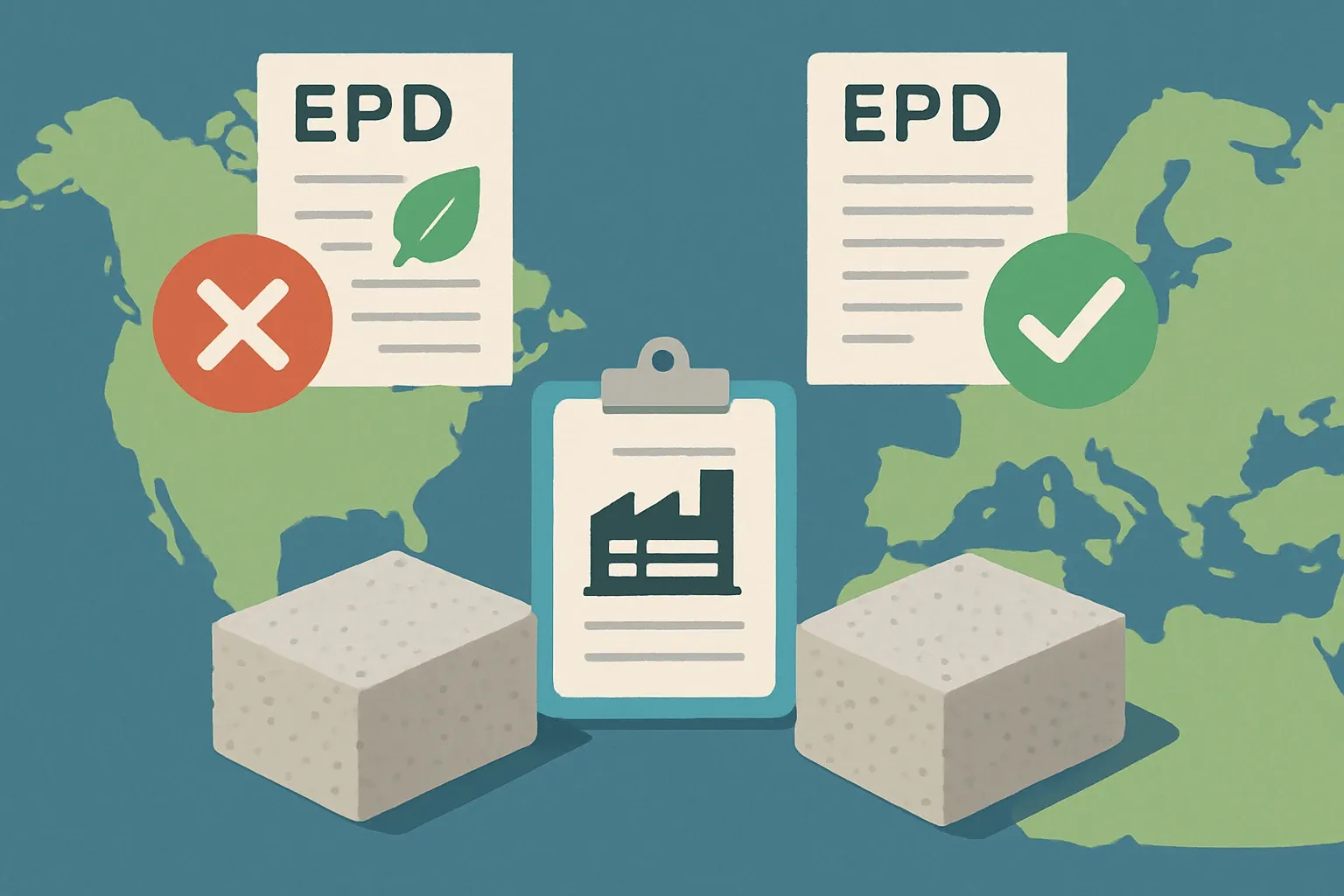
North America: a sector EPD existed, then expired in 2025
The Cellulose Insulation Manufacturers Association and CIMA Canada published an industry‑wide EPD through Sustainable Minds that was valid from 2020/01/13 to 2025/01/13. It covered loose‑fill and spray‑applied cellulose made by a group of North American producers. That declaration has reached its end date and is no longer current today (Sustainable Minds, 2025).
What this means in practice. Whole‑building LCAs and design tools will default to conservative or generic datasets if you do not present a current EPD. When a sector EPD lapses, the baseline gets even more conservative, which can make competitive positioning tougher.
Europe: a live industry‑wide EPD is available
The European Cellulose Insulation Association (ECIA) publishes an industry‑wide EPD for loose‑fill cellulose. It was issued in December 2023 and is stated as valid for five years, covering open‑blow, roof, wall, and sprayed applications (ECIA, 2023).
If you sell into EU markets, this sector EPD provides a credible baseline. Still, it is an average. If your production uses greener electricity, shorter hauls, or cleaner additives, a product‑specific EPD will usually show better numbers than the sector curve.
Want to leverage EPDs for cellulose insulation?
Follow us on LinkedIn for insights that help you win specs and boost your competitive edge.
Why sector averages can be a conservative ceiling
Sector EPDs aim to be representative and defensible across many operations, which often means they bake in conservative assumptions so no participant looks unrealistically low. That is fair for comparability, yet it caps your enviromental advantage. A plant‑specific study will reflect your actual energy mix, scrap rates, packaging, and freight. Better inputs, better results.
Who already has product‑specific cellulose insulation EPDs
A few mid‑sized names across regions are publishing their own, which signals where the market is heading:
- United States: Greenfiber lists plant‑specific EPDs for SANCTUARY cellulose and links them from its sustainability page (Greenfiber, 2025).
- Canada and US: Igloo Cellulose publishes product‑specific EPDs with ASTM International as program operator.
- Europe: Ekovilla (Finland) maintains product‑specific EPDs registered with the International EPD System, valid through 2028‑07‑04 (EPD International, 2023).
- Europe: ISOCELL (Austria) holds a product‑specific EPD published with IBU for blown cellulose insulation.
This is not an exhaustive list. It does show that manufacturers similar in scale are moving beyond sector numbers.
Commercial takeaway for manufacturers
If a current industry‑wide EPD exists in your region, it can get you on the board. If it is expired or missing, owners and engineers may default to conservative generic factors. Either way, a plant‑specific, third‑party verified EPD tends to perform better in whole‑building LCA and specification decisions, because it reflects your real process rather than the average. Many teams find the effort pays back quickly once bids start requiring EPD-backed data. One mid‑sized project win often covers the work.
A quick note on timing and rules
EPDs are typically valid for five years before renewal, and program operators expect updates sooner if your impacts shift materially by about ten percent (EPD International FAQ, 2025). If you compete in both North America and Europe, align your study with the PCRs commonly used by your peers and pick an operator your customers recognize. That choice smooths reviews and keeps your declaration usable in the databases project teams check most often.
Your next move
If you rely on a sector average today, test your own line. Start with one flagship plant or product, capture your actual electricity mix and logistics, and publish a product‑specific EPD. That gives your sales team credible numbers and keeps you out of the penalty box when projects run carbon accounting under LEED v5 pathways. Waiting rarely improves your baseline, and it certainly does not help win specs.
(EPD International FAQ, 2025).
(Sustainable Minds, 2025).
(ECIA, 2023).
(EPD International, 2023).