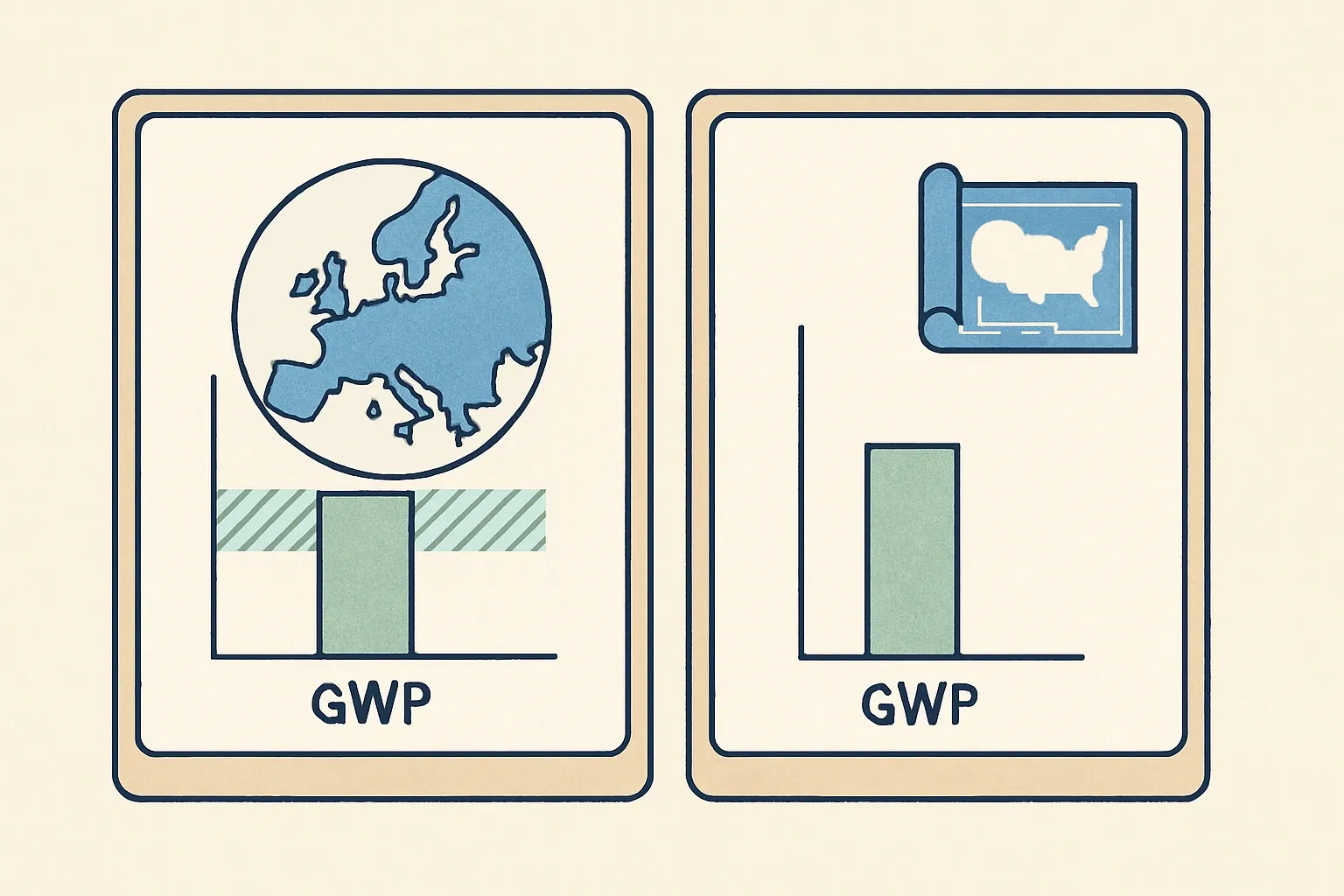
What counts as an industry‑wide EPD for coatings
A sector average EPD is created by an association or consortium to represent a typical product that many companies could sell. It relies on pooled data and a common PCR, so it does not reflect any one formula or plant. Think of it as the league average, not your MVP stat line.
The answer today
As of December 11, 2025, we do not find a cross‑manufacturer, sector average EPD specifically for anticorrosion coatings in key markets such as the United States, United Kingdom, or European Union. Protective systems used on structural steel and infrastructure are covered by product‑specific EPDs from individual brands, not a single industry‑wide declaration.
Regional notes worth knowing
Europe has association EPDs for some adjacent coating families, like powder coatings issued collectively in the DACH region, but those do not specifically represent heavy‑duty anticorrosion liquids used on steel. In North America there are industry averages for architectural paints from trade bodies, which again are not anticorrosion systems. Close categories exist, the exact match does not.
At a manufacturer of anticorrosion coatings or competing with them?
Follow us for product-by-product insights on EPDs that help you win specs and understand competitive positioning.
Who already publishes product‑specific EPDs in this space
Several mid‑market and specialty players have moved first on product‑specific EPDs for protective coatings. Carboline publishes EPDs covering zinc‑rich primers, epoxies, and polyurethane finishes in the protective category across multiple formulas. Specialty Polymer Coatings lists EPDs for its SP‑2888 series used on steel assets. Jotun publishes EPDs for protective epoxies and primers in multiple countries through European operators. These are concrete examples your specifiers can cite in whole‑building LCAs and procurement files.
Why a sector average would be conservative anyway
Even if an industry‑wide EPD for anticorrosion coatings appeared tomorrow, it would use averaged datasets and confidentiality‑driven assumptions. That usually means a safety‑first, conservative carbon profile. For plants that run high recycled‑content resins, optimized solvents, or best‑in‑class energy mixes, a sector average tends to blur the advantage. It tells the market you are average, even when you are not.
ROI reality for protective coatings
A product‑specific, third‑party verified EPD lets project teams model your actual impacts rather than a pessimistic default in their LCA tool. That can keep you in scope on projects with carbon thresholds and it reduces the risk of late‑stage swaps to competitors who have better documentation. Most EPDs are valid for five years, which spreads the effort across many bids and budget cycles (EPD International, 2024). The time saved for technical and plant teams when an expert partner runs the process is often the biggest hidden win, not just the spec lift.
What to do next if you make anticorrosion coatings
Confirm the PCR your competitors use for protective coatings, then map one hero system per use case, for example zinc‑rich primer, barrier epoxy intermediate, and polyurethane topcoat. Start with the biggest revenue driver or the system you most want architects and fabricators to keep. If you operate multiple plants, decide whether a single‑site or multi‑site model fits your sales footprint. Move quickly on data pulls from a recent 12‑month reference period to avoid rework. It sounds basic, but it is definately the fastest path to a credible, sales‑ready EPD.
The takeaway for manufacturers
There is no industry‑wide EPD for anticorrosion coatings today, and that gap is an opening. Product‑specific EPDs are already normal among serious protective‑coatings players, and they help teams win specs where average data would overstate impacts. If you are above the curve operationally, let the numbers prove it.