The short answer
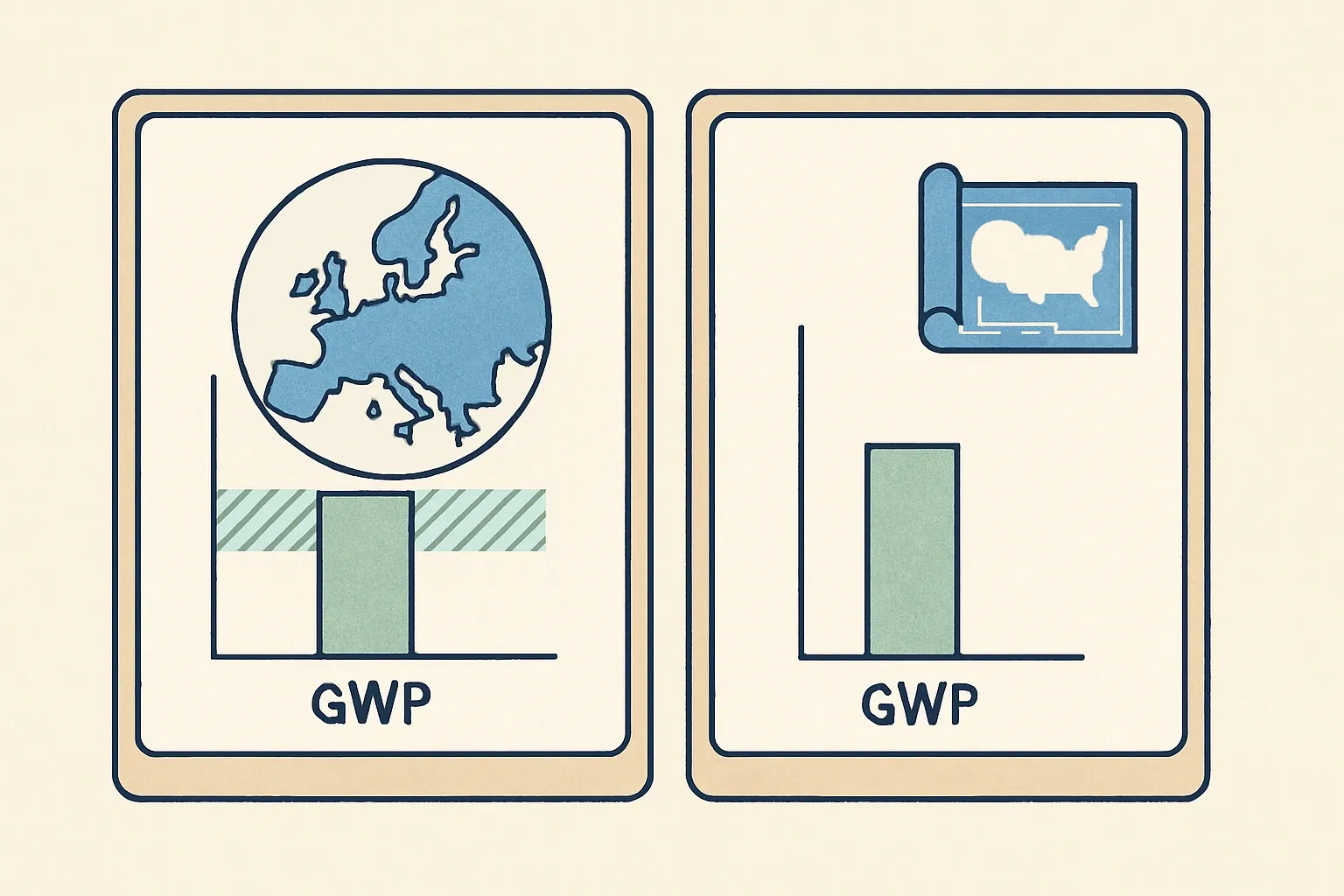
There is no single, active industry‑wide EPD covering all construction sealants today. What you will find are region‑specific frameworks and, in Europe, “model EPDs” by chemistry that behave like a conservative fallback.
Europe: FEICA model EPDs, not sector averages
FEICA, the Association of the European Adhesive & Sealant Industry, does not publish one average EPD for all sealants. Instead, it offers model EPDs structured by chemistry that members can individualize if their formulation fits the defined bounds. These model EPDs follow a worst‑case approach and can be used by many products in the eligible range. They are valid for five years (FEICA, 2025) (FEICA, 2025).
North America: PCRs are being refreshed, but no sector EPD
In North America there is not a current, industry‑wide EPD for construction sealants. The Adhesive and Sealant Council engaged Smart EPD in June 2025 to update the Product Category Rules used for adhesives and sealants in building and construction. That work sets the rulebook for comparable LCAs and EPDs rather than creating a single sector average EPD on its own. See ASC’s update for context.
Why sector or model EPDs are conservative by design
An industry‑average or model EPD must fairly represent many formulations. To avoid overstating performance for any participant, the modeling leans conservative on inputs like formulation ranges or energy intensity. That keeps everyone in bounds, but it also makes it harder to showcase a formulation that already runs cleaner. If a competitor publishes a product‑specific EPD that reflects efficient plants, recycled packaging, or lower solvent content, their numbers can look better on whole‑building LCA screens that design teams use every day.
Want to win more bids with product-specific EPDs?
Follow us on LinkedIn for insights on how to leverage EPDs to get specified more often and unlock new business opportunities.
What this means for bids and specs
Procurement teams frequently default to conservative generics when a product‑specific EPD is missing. That default can add a hidden penalty in project carbon accounting, which is one reason product‑specific EPDs quietly tip close calls. EPDs usually remain valid for five years, so a single publishing cycle supports many selling cycles (FEICA, 2025) (FEICA, 2025).
Positive examples you can benchmark
Here are examples of product‑specific EPDs for construction sealants in different regions. None of these are sector averages.
- Momentive SCS2000 SilPruf silicone weatherseal has a UL‑verified product‑specific EPD covering facade use. This is a classic example of a single high‑runner product carrying its own declaration.
- EPD International’s public library lists multiple silicone and elastic joint sealants with current EPDs, for example “Silicone, Silicone Color” with validity through 2029‑12‑09 for Europe (EPD International, 2024) (EPD International, 2024).
- Selena Group, the company behind Tytan Professional, publishes EPDs verified under Eco Platform recognition across its portfolio, including sealants in European markets. See their corporate EPD page for downloads.
These are not the only ones. Europe alone counts roughly 800 manufacturers of adhesives and sealants, many mid‑sized, which creates plenty of room for differentiation once even one hero product carries its own EPD (FEICA, 2025) (FEICA, 2025).
When an industry‑wide EPD would help, and when it won’t
If your product sits near the middle of its chemistry class and you need coverage fast for a public tender, a FEICA‑style model EPD can be a pragmatic stopgap in Europe. It quickly clears compliance boxes. It will rarely showcase your best‑case footprint though. A product‑specific EPD is the tool that can actually prove advantage in carbon‑aware specifications.
How to move from idea to published EPD without the drag
The heavy lift is data. A strong LCA partner will map your bill of materials to recognized datasets, capture real utility and waste data for a defined reference year, select the right PCR, and publish with the program operator your market prefers. In the U.S. that is often Smart EPD, in Europe frequently IBU. The time you save by having someone else chase supplier EPDs and meter reads is the real ROI. We see teams reclaim weeks of engineer time that would otherwise disappear into spreadsheets.
Bottom line for construction sealants
There is no universal industry‑wide or sector average EPD for construction sealants right now. In Europe, FEICA model EPDs exist by chemistry and are designed to be conservative. In every market, a product‑specific EPD is the asset that lets your actual footprint show up in whole‑building tools and on submittal day. If getting specified more often matters this quarter, commissioning your own EPD is definately the faster way to move the needle.