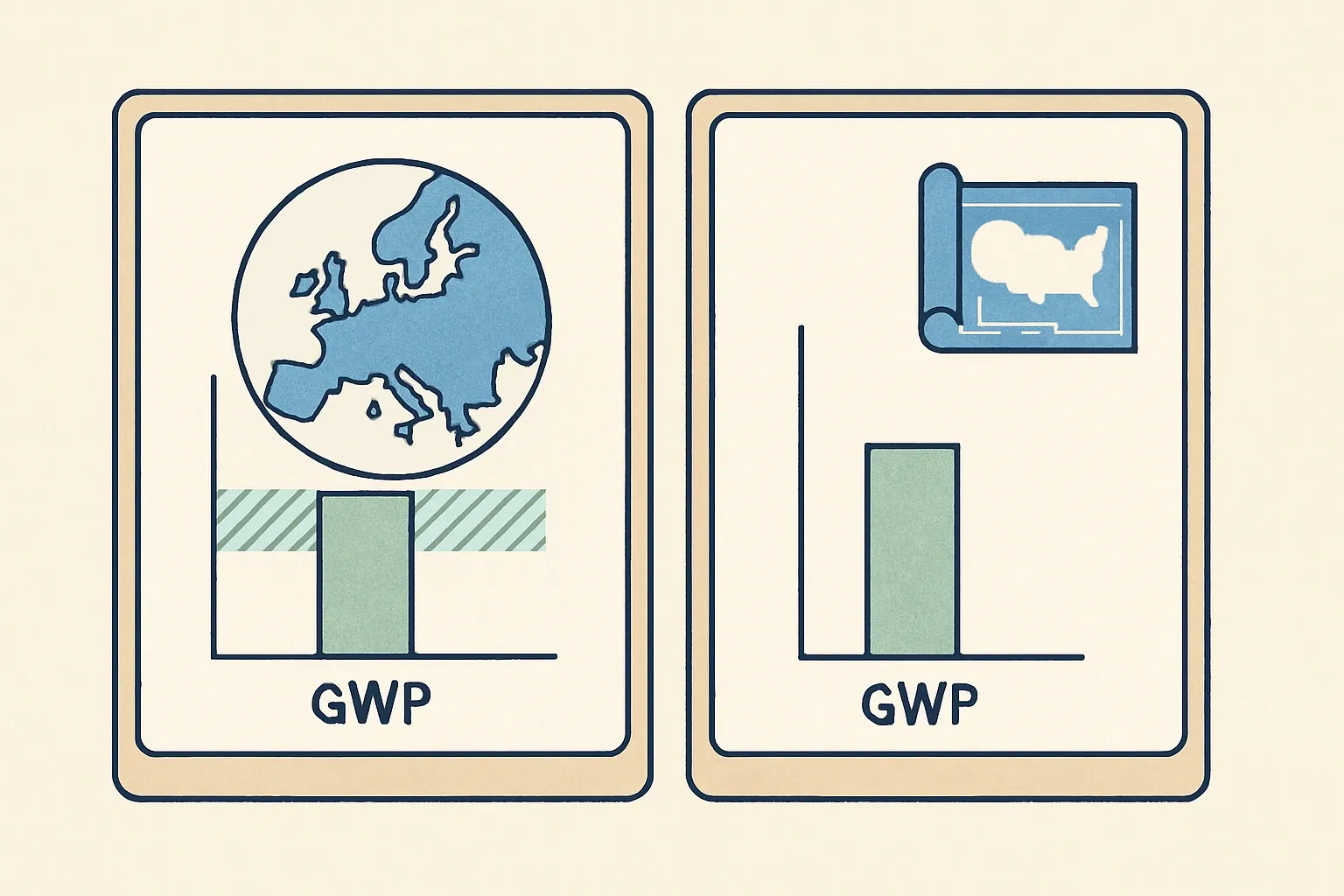
An EPD You Did Not Write
Industry groups often sponsor cradle-to-gate studies that roll many plants and processes into a single average profile (NRMCA, 2025). The document lets every participating producer claim compliance, yet none can prove a specific advantage. High-performing lines look ordinary, while laggards hide in the crowd.
LEED Credits Reward Specificity
LEED v4 counts an industry-wide EPD as only half a product toward Materials and Resources credit MRc2. LEED v4.1 tightens the rules by requiring each manufacturer to be named in the document, raising the value to one product, while an externally verified product-specific EPD earns one and a half products (Green Badger, 2024). On projects that need twenty qualifying products, the math quickly shows why owners keep asking for brand-specific declarations.
Buy Clean Laws Raise the Bar
Nine states now enforce Buy Clean policies that set maximum global-warming-potential limits for steel, concrete, glass, and asphalt delivered to public jobs (Green Energy Times, 2025). Agencies accept only product-specific EPDs because auditors need to pin emissions to a named facility. If your paperwork stops at the industry average, you risk disqualification before pricing even enters the conversation.
Average Data Hides Competitive Edge
Process tweaks like substituting slag cement or switching to renewable electricity can slash cradle-to-gate CO₂ by double-digit percentages (Giatec Scientific, 2025). An industry-wide EPD cannot showcase those gains, which means marketing teams lose a carbon story that specifiers want to hear. That forfeits margin in tight markets where a two-percent premium is acceptable for verified lower impact.
Speed Without Compromise Is Possible
The usual knock on product-specific EPDs is the calendar. Traditional consultants quote six months or more because they hand off data gathering to your engineers. Parq pairs a dedicated collection crew with a digital backbone so manufacturers see verified, Smart EPD-published results in a fraction of that time, without nights spent chasing utility bills. Faster to market means faster into specifications.