What counts as “construction foils”
In practice, this bucket covers polyethylene construction films, damp proof membranes (DPM), vapor control layers (VCL/AVCL), roofing underlays, and reflective foils used to keep air and moisture where they belong. Think of them as the building’s raincoat and zipper working together.
The short answer
As of December 11, 2025, we don’t see a single, widely recognized industry‑wide EPD for “construction foils” as one category in the US or EU. There are many product‑specific EPDs for membranes and foils, and a few association EPDs exist in adjacent categories like roofing membranes, but not a one‑size‑fits‑all average that covers construction foils as a whole.
Region snapshot
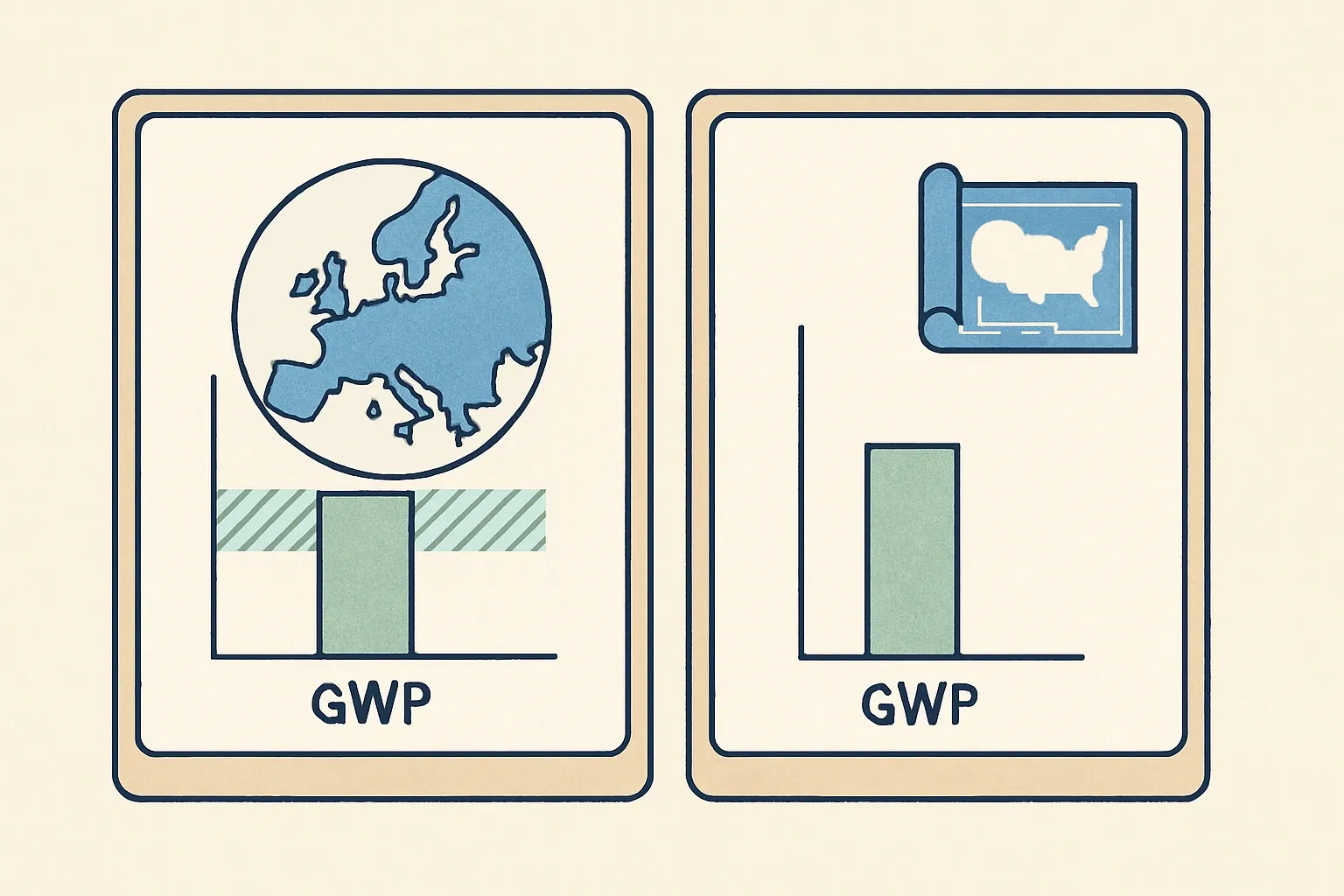
In North America, program operators publish robust product‑specific EPDs for single‑ply roofing membranes and tapes. Those are adjacent but not the same as generic PE construction foils or vapor barriers. In Europe, program operators like IBU, EPD Italy, INIES, and EPD Hub list numerous product‑specific EPDs for VCLs, underlays, and PE membranes. The pattern is clear. Sector averages appear for certain roofing systems, yet a pan‑category average for “construction foils” is not standard.
Want to win more specs with product-specific EPDs?
Follow us on LinkedIn for insights that help you unlock opportunities and improve your competitive positioning.
Why that matters for specs
When an industry‑wide EPD does exist, it is an average of participating products. Averages are, by design, conservative for individual leaders. If your foil is cleaner than the herd, an average masks that advantage. If a buyer runs a whole‑building LCA with generic or average factors, your product can look heavier than reality, and you lose the tie‑breaker you earned in the factory.
The upside of product‑specific EPDs
A product‑specific, third‑party verified EPD showcases your actual process energy, resin mix, recycled content, and scrap strategy. That precision can remove penalties from LCAs that fall back to generic data, which is often higher than real plant numbers. EPDs typically carry a five‑year validity window, so teams get a long commercial runway from one investment (EPD International, 2025; IBU, 2024).
Who already has product‑specific EPDs in foils and membranes
Mid‑market peers are publishing today. SIGA Cover AG has EPDs for Majrex and other vapor control layers under IBU. Rothoblaas publishes EPDs for air and vapor barrier membranes with EPD Italy. DAFA A/S lists EPDs for damp proof courses and sealing profiles via EPD Hub. These are credible, product‑specific declarations that show the category’s direction. Your competitors are not waiting.
Choosing the right PCR and operator
For construction foils and membranes, the rulebook often falls under EN 15804 with Part B documents for underlay sheets or plastic and elastomer sheet systems at operators like IBU or Smart EPD. Teams sometimes use flexible sheet or roofing‑related PCRs when a foil sits inside a roof system. A good LCA partner will benchmark competitors, confirm the applicable PCR, and sequence publication with the operator your market prefers. That workflow keeps your EPD clean, consistent, and ready for LEED v5‑era submittals.
Speed without the spreadsheet storm
The heavy lift is data wrangling across resin grades, extrusion lines, scrap loops, packaging, inbound shipping, and plant utilities. Streamlined collection and tight project management decide whether you publish in weeks or watch the season slip by. Do this well and you free your R&D and operations to focus on yield and quality while the EPD work moves forward. Done poorly, and the team chases meters, microns, and SKU variants all quarter long, which is definitelly avoidable.
Bottom line for construction foils
There is no dominant, industry‑wide EPD that covers all construction foils today. That gap is your opening. A product‑specific EPD replaces conservative averages with your real numbers, often improving LCA results and making it easier to hold the spec when projects tighten carbon budgets. With a five‑year validity horizon, the ROI compounds across many bids, not just one (EPD International, 2025; IBU, 2024).