What exists today
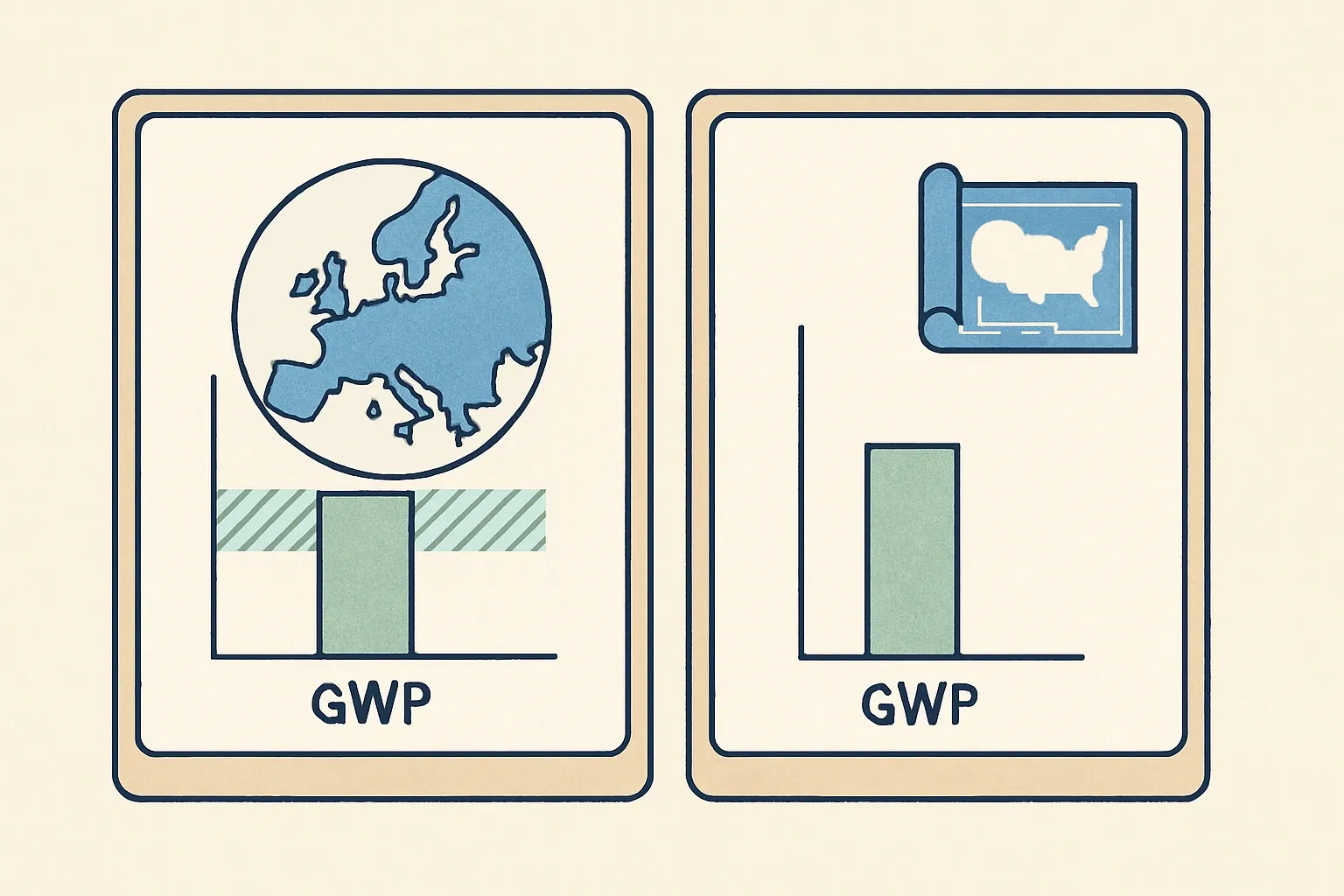
Yes. In the United States and Canada, an industry‑wide EPD for fiberglass glass wool batts is published by the North American Insulation Manufacturers Association (NAIMA). It is listed on NAIMA’s site alongside other fiberglass EPDs for faced and unfaced batts, loose‑fill, and board insulation (Insulation Institute). You can start here: https://insulationinstitute.org/im-a-building-or-facility-professional/commercial/environmental-considerations/
These documents are third‑party verified and follow the thermal insulation PCRs used by leading program operators, including Smart EPD in the US and UL. The key idea is simple. They provide a transparent, sector average for glass wool that specifiers can cite when no product‑specific data is available.
Europe and other regions
There is no single pan‑European industry‑wide EPD for glass wool that mirrors NAIMA’s. Instead, we see a rich field of manufacturer‑specific EPDs under EN 15804, often published with The International EPD System, IBU or BRE. A few examples that are current and easy to access:
- URSA glass wool family and TERRA range on The International EPD System, covering rolls, slabs and framed wall products. Example: URSA GLASSWOOL, valid until 2030‑02‑23 https://www.environdec.com/library/epd2844
- Superglass Superwhite blowing wool with a downloadable EPD in the product documentation hub. Example: https://www.superglass.co.uk/products/superwhite-42-loft-blown-wool/
- CSR Bradford glasswool in Australia with multiple EPDs registered via EPD Australasia and Environdec. Roof products example: https://epd-australasia.com/epd/bradford-roof-products-manufactured-by-csr-building-insulation-products-limited/
If you work across regions, this pattern holds. Where a sector average is missing, product‑specific EPDs fill the gap effectively.
How industry‑wide EPDs are built
A trade association coordinates data from member plants, applies a relevant PCR, and engages an independent verifier. The result is a category average that represents typical manufacturing for a defined scope and geography. It is credible and useful for early design, portfolio baselines, or where brand‑level data is not yet available.
Want to win more specs with glass wool insulation?
Follow us on LinkedIn for insights on why product-specific EPDs can unlock new business opportunities.
The catch with sector averages
Industry‑wide EPDs are conservative by design. They rarely capture optimizations in a particular plant or recipe, so the declared carbon results land near the middle of the pack. If your line runs on cleaner power, uses higher cullet rates, or has tighter yields, the average will understate your performance on whole‑building LCAs and procurement screens. That leaves value on the table.
Why product‑specific glass wool EPDs win more specs
A product‑specific, third‑party verified EPD proves your exact mix, energy, scrap and logistics. That lets design teams model real impacts instead of applying a penalty for generic or sector‑average data. In markets where carbon is now a hard constraint, that credibility can be the difference between being shortlisted or swapped late in design. The investment usually pays back quickly, sometimes with a single mid‑sized project win, because you dont have to discount purely on price when your performance is visible and trusted.
Fresh proof points you can cite
- EPDs for construction products are normally valid five years, which gives teams a practical window to use and market the declaration before the next refresh is due (EPD International, 2025) (EPD International, 2025).
Who already has product‑specific glass wool EPDs
- URSA Insulation publishes multiple product‑specific glass wool EPDs across Europe with EN 15804 compliance, e.g., URSA TERRA ranges valid through 2027–2029 on Environdec.
- Superglass in the UK offers blown‑wool glass mineral insulation with an up‑to‑date EPD in its documentation portal.
- CSR Bradford in Australia lists glasswool EPDs for roof, HVAC and envelope applications through EPD Australasia and Environdec.
These are not the only players, but they illustrate a useful benchmark. If your competitors already surface product‑level data, their bids will avoid generic penalties in whole‑building LCA tools while yours might not.
A practical path if you need one fast
- Decide the reference scope aligned with where you sell most. In North America, publish with Smart EPD or UL. In the EU or UK, IBU, BRE or The International EPD System are common program operators.
- Reuse the dominant PCR in your competitive set so specifiers can compare like with like.
- Make data collection painless across energy, raw materials, scrap, packaging and outbound transport. A partner who handles plant‑level data wrangling and verification prep saves your R&D and ops teams weeks of effort.
- Aim for publishable quality first, then plan a mid‑cycle improvement update if you switch power contracts, raise cullet content, or optimize yields.
Bottom line
- If you are selling in the US or Canada, an industry‑wide glass wool insulation EPD exists via NAIMA and is acceptable for many early‑stage needs.
- If you want to win more specifications, a product‑specific EPD almost always creates a better commercial outcome than relying on a conservative sector average.
- In regions without a sector EPD, moving first with a product‑specific declaration is a strategic advantage that compounds on every bid cycle.