The quick answer
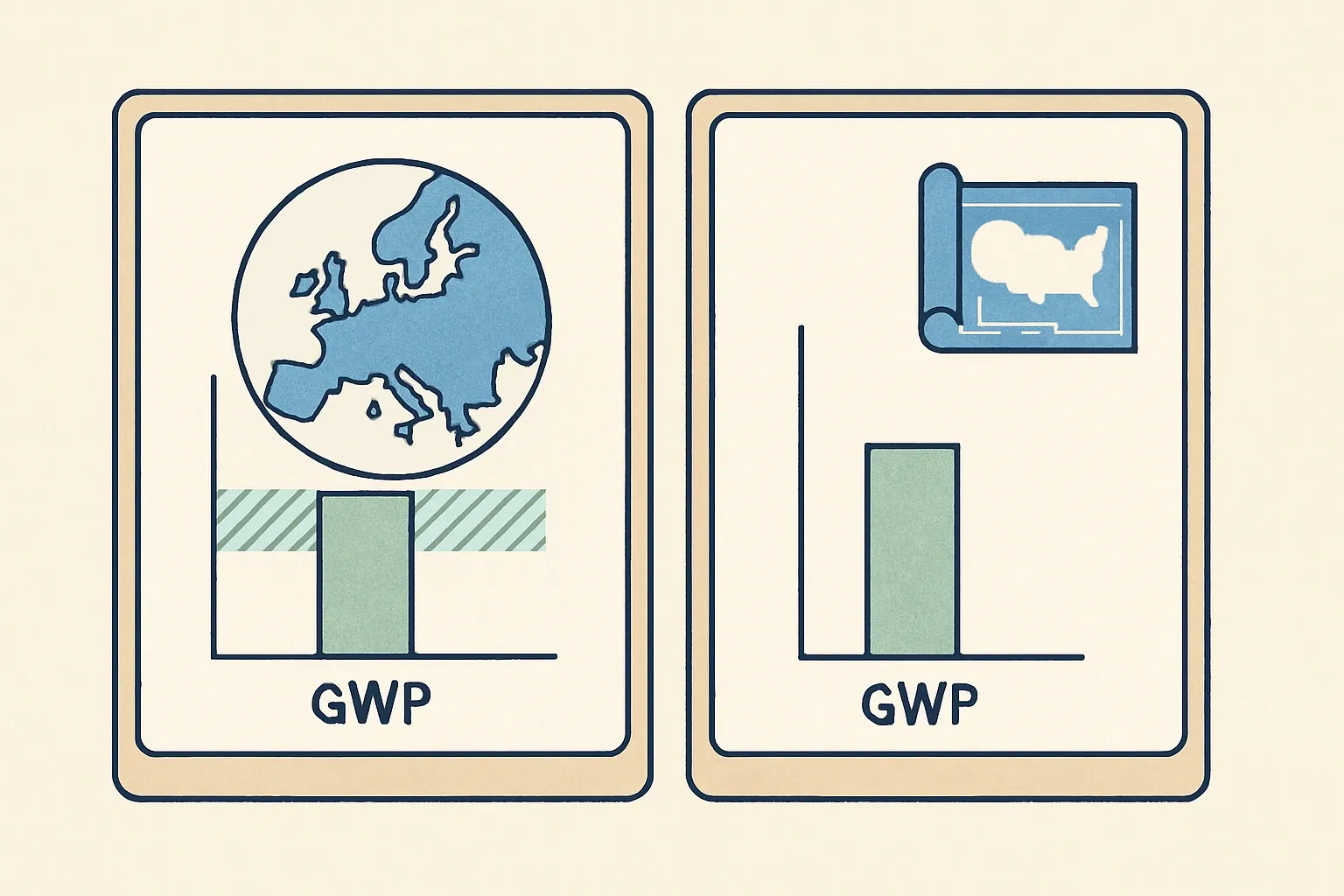
Yes in parts of Europe, and not currently in the United States. Germany’s IVPU association publishes an industry‑wide EPD for polyurethane rigid foam boards with foil facers under the IBU program, and it remains valid into 2026. In the U.S., the Polyisocyanurate Insulation Manufacturers Association previously offered industry‑wide EPDs, which have since expired in 2025 without a posted replacement as of today.
Region check: where a sector average exists
Europe first. IVPU covers factory‑made PIR/PUR rigid foam boards with multilayer aluminum facings and publishes through IBU, the German EPD program widely accepted under EN 15804. If your projects touch DACH or broader EU markets, that document functions as the industry‑wide baseline. In the U.S., look to individual manufacturers’ PIR EPDs rather than an association average, since the PIMA set is currently inactive.
Helpful homes for more context: IVPU’s site lists the category and updates (ivpu.de). PIMA maintains technical resources for polyiso, even though the sector average EPD is not live right now (polyiso.org).
Who is behind these documents
Industry‑wide EPDs are typically commissioned by trade associations that gather anonymized plant data across members. A program operator then verifies and publishes. Think of it like a league box score for the whole team rather than a single player’s stat line. It is credible, third‑party verified, and easy to cite on submittals.
Why a product‑specific PIR EPD wins more specs
Sector averages are conservative by design. They blend outcomes across older and newer lines, different blowing agents, and mixed energy profiles. If a plant has invested in clean electricity, high recycled content facers, or tighter yields, that advantage is diluted in the average. Whole‑building LCAs often apply defaults or add percent penalties when only industry‑wide data is available, which can make a low‑carbon product look ordinary. A product‑specific PIR EPD lets the real performance show up in the model, so it gets selected more often. The ROI usually pays back fast in spec retention and bid credibility, even on one mid‑sized project.
Want to win more specs for your PIR insulation products?
Follow us on LinkedIn for insights on how product-specific EPDs can unlock new business opportunities and enhance your competitive edge.
Positive examples: product‑specific PIR EPDs now in market
Below are mid‑market manufacturers with current declarations for PIR boards in multiple regions. This isn’t exhaustive, it’s proof competitors are already doing it.
- Hunter Panels, U.S. wall and roof polyiso boards published with a North American program operator and valid into 2026. Product‑specific, plant‑based modeling is available for several lines.
- Paul Bauder, Germany. PIR insulation boards verified by IBU and valid into 2027 for common roofing build‑ups.
- Recticel Insulation, EU. Multiple PIR board EPDs across wall and roof applications, several running to 2028 and beyond under European program operators.
What specifiers really need from a PIR EPD
Clarity on declared unit and lambda class, transparent A1‑A3 modeling, and a short path to project‑specific takeoffs. Keep the document aligned to the common PCR for building envelope insulation so it compares apples to apples with peer products. If teams can’t map the EPD quickly into the LCA software, they move on. That’s avoidable.
If there is no sector average where you sell
That’s an opening. When a country lacks an industry‑wide PIR EPD, whole‑building LCAs lean on generic or pessimistic datasets, which raises the modeled footprint for everyone. The first manufacturer with a credible product‑specific PIR EPD becomes the easy choice on projects with carbon targets because the penalty disappears. It’s a quiet, repeatable advantage.
Getting it done without the data drag
The heavy lift is data wrangling across utilities, resins, facers, blowing agents, and scrap loops. The fastest path is a partner that handles plant outreach, normalization, and QA so engineering and operations don’t lose weeks to spreadsheet archaeology. We prefer a program operator that matches your go‑to markets, like IBU in Europe or a well‑recognized North American operator, but we’re agnostic to the publisher as long as the result is robust and easy to specify.
Bottom line for PIR insulation EPDs
If you sell in the EU, you can cite the IVPU industry‑wide EPD as a baseline. If you sell in the U.S., act as if no sector average exists and move straight to a product‑specific PIR EPD. It will differentiate performance, smooth LCA workflows, and unlock more specs with less friction. That’s the point, really. Don’t wait for someone else to re‑publish the average, it might be a while, and it definately won’t showcase your best plant.