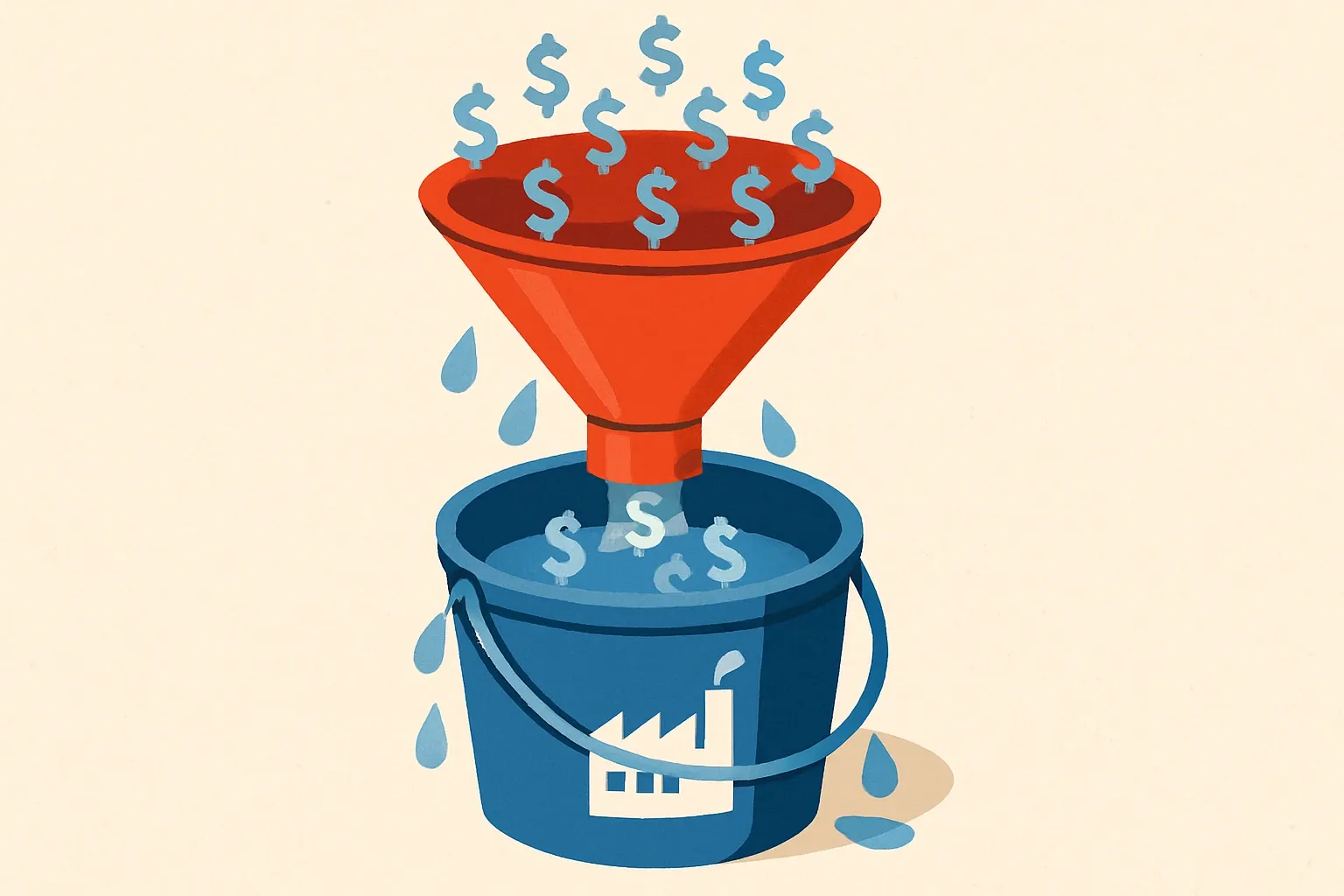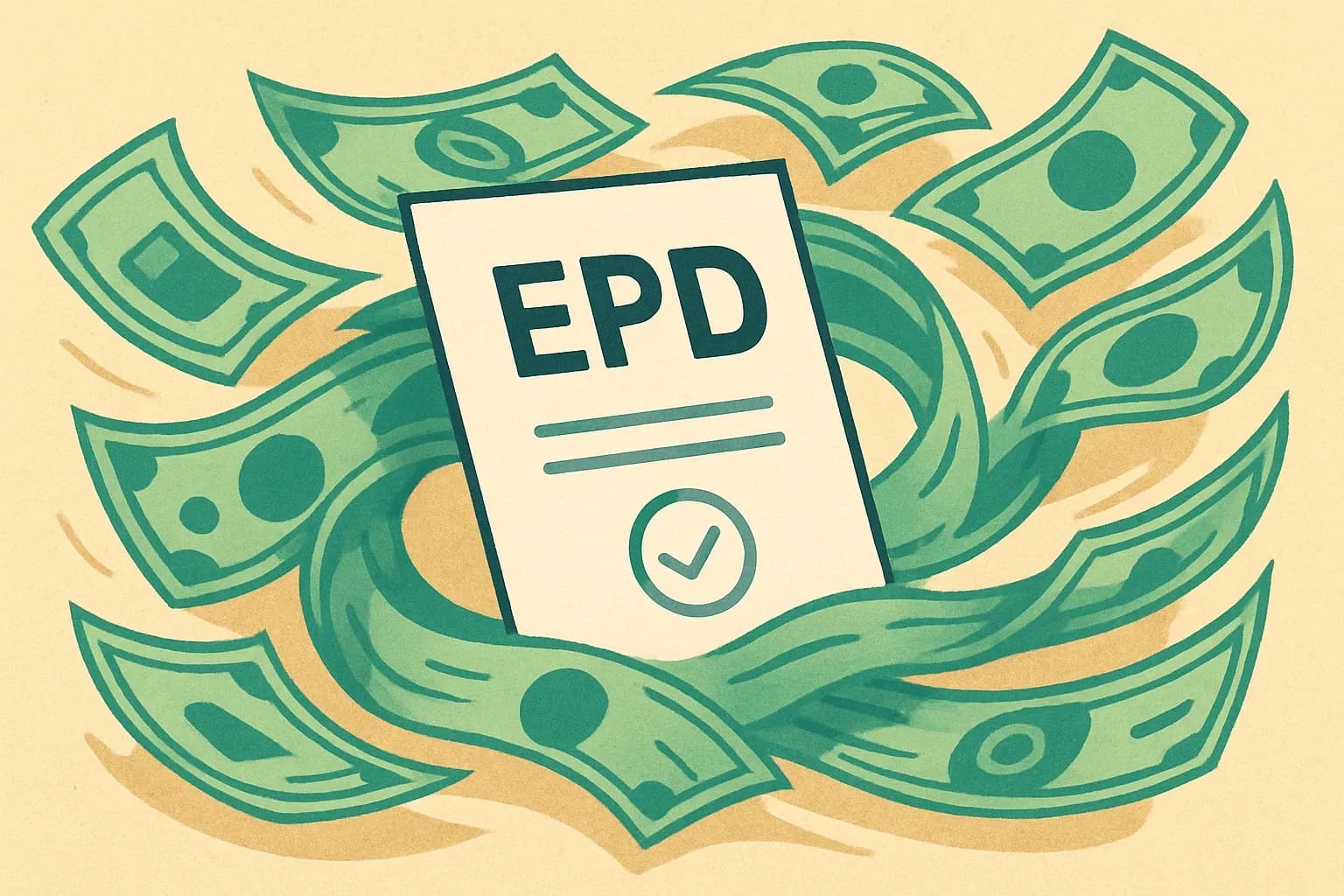
Cost Is The Sticker, Access Is The Value
EPDs are increasingly a gatekeeper for specs where verified carbon data matters, which is a growing share of projects as owners sharpen embodied‑carbon goals. Buildings and construction account for roughly 37% of energy‑related CO₂, with materials and construction around 10%, so transparency keeps moving center stage (GlobalABC, 2024).
The One‑Page ROI Math
Start with a typical target project, the margin profile, and the probability lift when a product meets the EPD ask. Even a conservative scenario where one mid‑sized win lands each year can pay back an EPD program many times over, since the credential travels across multiple bids.
Time Is A Budget Line Too
Leadership cares about opportunity cost. EPD work that drags R&D, product, operations, and plant staff into endless data chases slows launches and eats margin. Pick a partner who actually collects the data from inside the organization, runs the LCA, and project‑manages the operator process so internal teams stay focused on core work.
Risk You Can Retire
Without a product‑specific EPD, many teams must use generic factors that are intentionally conservative, which can make a product look heavier than it is. An EPD replaces those defaults with verified numbers, shrinking the chance of being swapped late in the spec for a competitor carrying proof.
Want to prove EPDs are worth the investment?
Follow us on LinkedIn for insights that help you unlock revenue and reduce risks with EPDs.
Five‑Year Runway To Compound Gains
Most EPDs remain valid for up to five years, which creates a long window to convert bids, learn from the LCA, and bank reductions before renewal (IBU General Program Rules, 2024). That span also lets commercial teams build repeatable playbooks around the credential.
Policy Signals Still Point To Transparency
Federal incentives shifted in early 2025, yet state and owner policies continue to prefer or require EPDs. California’s Buy Clean rules still require EPDs and set GWP limits for select materials on eligible public projects (California DGS Buy Clean, 2024). LEED v5, now in development, centers embodied carbon and verified product data more explicitly than prior versions (USGBC LEED v5 draft, 2024).
The Six Buckets Leadership Approves
- Revenue access, more bids answered that previously filtered out products without EPDs.
- Margin defense, fewer last‑minute swaps to higher‑carbon generics that force discounting.
- Sales velocity, faster prequal and submittals when verified data is ready.
- Brand credibility, verified disclosure beats marketing claims every time.
- Operational learning, the LCA maps hotspots that guide cost‑saving improvements.
- Risk management, procurement boxes ticked, fewer red flags in audits and owner reviews.
Build The Internal Case Like A Bid Package
Keep it visual and concrete. One slide shows the ROI scenario, one shows the sales enablement flow with EPD in the checklist, one lists policy and customer asks by region, and one clarifies internal time saved because the external team handles collection and verification.
Choosing Partners Who Remove Work, Not Add It
If pricing feels high, test the scope. Strong partners commit to white‑glove data collection inside plants and ERPs, reliable modeling across the correct PCR, and publication with a reputable operator, for example Smart EPD in the U.S. or IBU in Europe, while staying operator‑agnostic. Speed matters because every month without an EPD is a month of bids gated by defaults. This is definately where value shows up.
Close The Loop With Milestones, Not Promises
Tie the ask to milestones the CFO can track. Target dates for data freeze, LCA completion, operator review, and publish, with a parallel list of bids unlocked per month after publication. Add a reminder that five‑year validity turns a one‑time effort into a multi‑year revenue engine (IBU GPR, 2024).