What counts as “power systems” in construction
In Division 26 terms, we are talking electrical raceway and boxes, wire and cable, switchgear and switchboards, distribution equipment, UPS and batteries, lighting, and supporting hardware. Most building‑facing EPDs in this space follow EN 15804 with ISO 14025 third‑party verification. Some specialist gear can also use electronics PCRs when they are the better rulebook.
The short answer
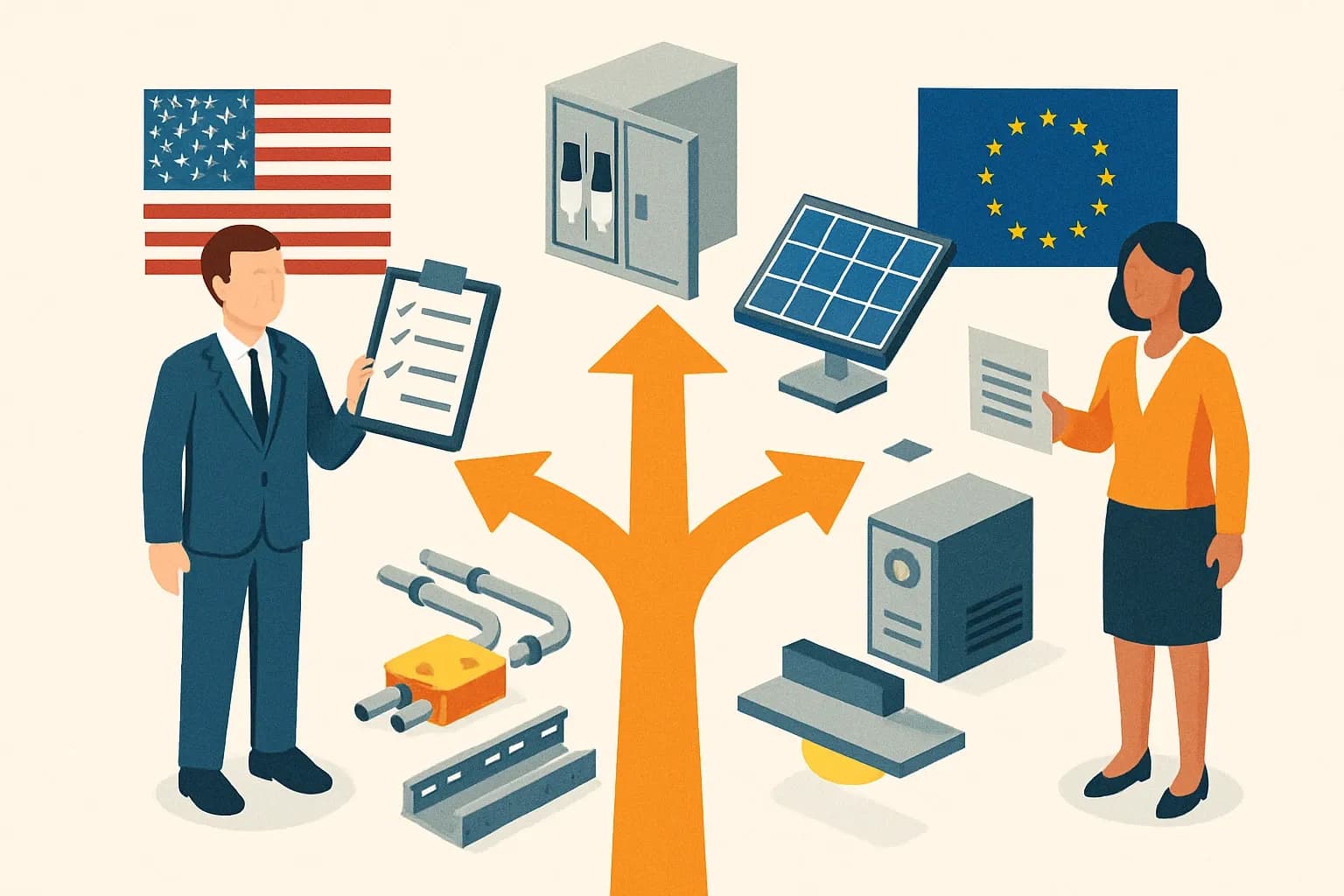
- In the United States, Smart EPD, UL Solutions, and ASTM International are the most straightforward homes for power‑system EPDs.
- In Europe, IBU and The International EPD System are broadly recognized. For France, PEP Ecopassport and INIES matter. For the Nordics, EPD Norway is a frequent pick. For the UK, BRE remains familiar.
Pick where your buyers and project databases actually look. That single decision often saves weeks.
United States: operators electrical buyers recognize
Smart EPD is widely used for conduits and electrical hardware and is built around EN 15804 requirements with North American practice. UL Solutions is a known name in electrical, with robust stakeholder recognition across GCs and inspectors. ASTM International also publishes many Division 26 declarations. Federal incentives shifted in 2025, so demand is now driven mostly by state rules and private specs, not national subsidies.
Want to speed up your EPD publishing for power systems?
Follow us on LinkedIn for insights that help you win more tenders and navigate EPD operator choices.
Europe: where specifiers expect to find you
IBU is tightly integrated with German public procurement through ÖKOBAUDAT listing. The International EPD System is accepted across the EU and supports multilingual publication. In France, PEP Ecopassport and INIES are the default routes for electrical and HVAC‑R products. EPD Norway is common across the Nordics. BRE is familiar in the UK and aligns with EN 15804.
Database checkpoints that change the answer
- Germany: publish with an operator whose EPDs can be listed in ÖKOBAUDAT. IBU does this natively.
- France: plan for deposit in INIES. PEP Ecopassport is the conventional path for electrical and HVAC‑R.
- Corporate portfolios that sell on both continents should choose the operator that minimizes duplicate verification effort while satisfying national databases.
PCR fit for common power‑system products
- Conduit, cable tray, and raceway: North America has a dedicated Part B PCR for electrical and telecom conduit. Europe typically uses EN 15804 Part B documents for metals or plastics, plus product‑specific rules where they exist.
- Switchgear, PDUs, UPS, drives, and controls: in Europe, PEP Ecopassport PSRs often fit better than generic construction PCRs. In the US, publish under a construction operator that accepts electronics PSRs when appropriate and keeps EN 15804 alignment.
- Luminaires and components: both regions have clear Part B rules for luminaires. Use the same family across your portfolio to keep comparisons clean.
Timelines, validity, and renewals
Most operators set a five‑year validity window for EPDs, which means renewal planning should start in year four so approvals never lapse (IBU General Program Instructions, 2024, The International EPD System GPI, 2024, PEP Ecopassport Program Rules, 2024). If your PCR updates before then, your next edition must follow the newer rules. That is normal and usually manageable with a good data model.
Speed without the scramble
The biggest drag is not modeling. It is gathering plant utilities, bills of materials, scrap, packaging, and logistics for the chosen reference year. A strong partner centralizes that data pull, chases gaps, and prepares the operator‑specific templates so engineering time stays on product. That is how teams launch credible EPDs in weeks, not quarters.
When in doubt, use this tie‑breaker
Publish where your next three bids will be reviewed. If that is a US hospital campus, Smart EPD or UL will feel familiar to reviewers. If it is a German public project, IBU is the safer door. For a French retail rollout, PEP plus INIES keeps you visible. This matter, deserves a quick decision. And it will definately pay off in fewer bid questions and faster acceptance.