What UPM just launched
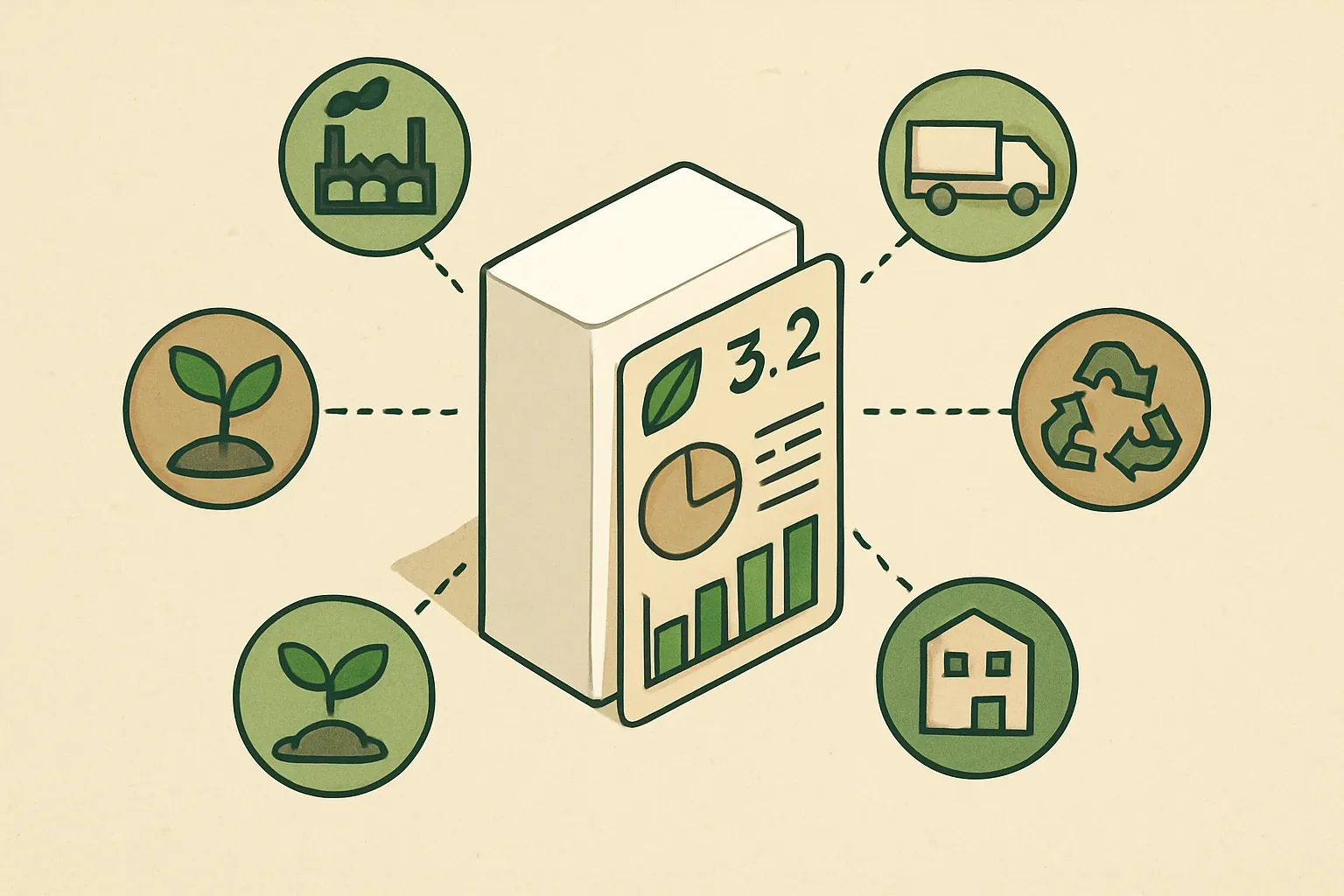
UPM Raflatac introduced the Carbon Action plastic label portfolio in April 2024, first in EMEIA and the Americas. The range leans on Reduce, Recycled, and Renewable materials, with options designed for Recycling and Reuse. Claims are backed by DEKRA‑validated LCA through the Label Life service, so the portfolio speaks in data, not adjectives.
Why lifecycle math matters to sales
For most manufacturers, supply‑chain emissions dwarf factory‑floor emissions. Corporates reported Scope 3 supply chain emissions averaging 26 times higher than Scopes 1 and 2 combined (CDP, 2024) (CDP, 2024). When a component shows its full footprint with credible LCA, it makes your bill of materials easier to defend in bids and audits.
Where labels sit in the Scope 3 picture
Packaging is not small. The EPA’s latest comprehensive dataset shows containers and packaging reached 82.2 million tons in 2018, about 28.1 percent of total municipal solid waste generation in the United States (EPA, 2024) (EPA, 2024). Labels are a sliver of that mass, yet they can tip a package from hypothetical to measured. Think of it like turning on subtitles during a fast movie, suddenly the plot is clear.
Want to win projects with measurable sustainability claims?
Follow us on LinkedIn for insights that help you leverage lifecycle data to enhance your EPDs and unlock new business opportunities.
What this means for EPDs
An EPD is only as good as the inputs. Label materials that arrive with cradle‑to‑grave data can tighten Modules A1 to A3 and sharpen downstream assumptions for A4 and C stages. That improves comparability across SKUs that otherwise look similar on paper. It also reduces the back‑and‑forth during EPD review because supplier datasets are already verified and attributional.
Procurement signal under LEED v5
LEED v5, ratified by USGBC members on March 28, 2025, keeps disclosure while raising the bar on embodied carbon outcomes (USGBC, 2025) (USGBC, 2025). Teams will still ask for product‑specific, third‑party‑verified EPDs, and they will increasingly prefer components with traceable Scope 3 data. UPM’s move aligns with that arc, giving specifiers fewer reasons to default to conservative estimates that penalize your product.
How to act without blowing up your calendar
Start with the BOM you already sell. Map label SKUs to each product variant, then ask suppliers for LCA results that can be referenced in your own EPD model. Prioritize facilities and high‑volume SKUs first, since that is where verification time pays back faster. Choose an LCA partner who takes the data‑collection and follow‑up load, not one who hands you a questionnaire and walks away. Your engineers have real work to do.
Make the claims stick
If a supplier cites recycled or renewable content, ensure it is tied to a recognized standard and that cut‑off rules are clear. Require unit processes for adhesives and liners, grid location for electricity, and transport modes for A2 and A4. Ask for uncertainty notes. Dont skip end‑of‑life, since labels can affect recyclability assumptions in your packaging EPD.
Watchouts we see often
Avoid mixing background databases across SKUs mid‑stream. Be specific about allocation for co‑products in film lines. If you change a label spec during the EPD cycle, log it immediately, small changes tend to ripple.
The takeaway
UPM’s Carbon Action portfolio is another nudge toward a market where every component shows its lifecyle homework. Manufacturers that gather supplier LCAs early will publish cleaner EPDs, answer procurement questions faster, and win specs with less drama. We support moves that make sustainability claims measurable, since measurability keeps your team focused on building and selling, not hunting spreadsheets.