What just went live
EPAS has issued four product‑specific EPDs. The set covers three GreaseShield units (1500, 1850, 2000) and the FilterShield 1000 solids filtration system. All were issued in October 2025 and published with program operator EPD Hub, using its Core PCR. Several GreaseShield models list Heriot‑Watt University as the LCA developer, signaling academic‑grade modeling rigor.
Why this matters in specs
Commercial kitchens are now squarely in scope for materials transparency across healthcare, education, and hospitality projects. With product‑level EPDs, design teams can compare like for like instead of leaning on generic or conservative proxies that quietly penalize products without declarations. That shifts EPAS from a “nice‑to‑have” to a ready‑to‑spec option when carbon accounting shows up.
A quick read on the portfolio
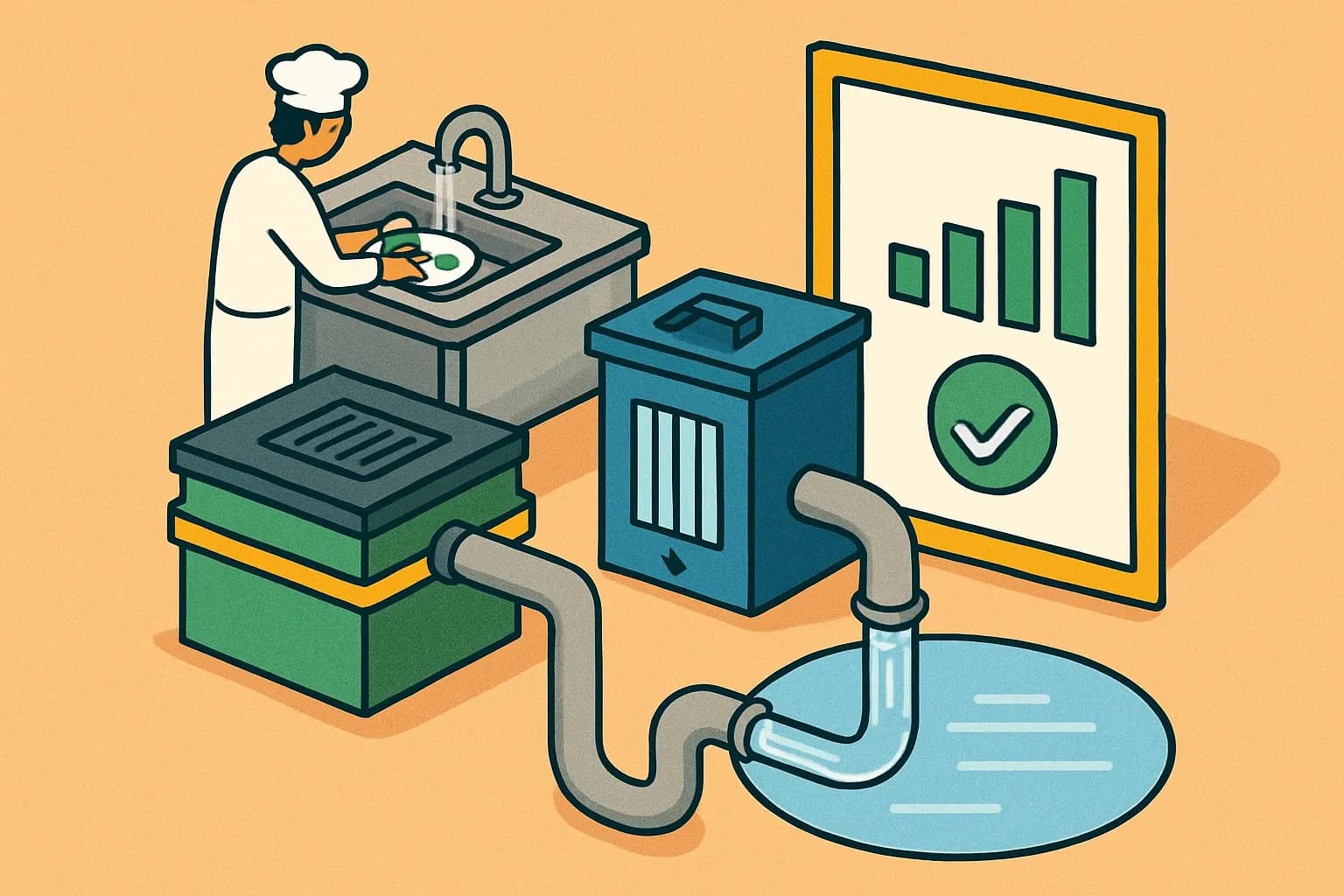
GreaseShield removes fats, oils, and grease at the sink line, intercepting FOG before it hits the pipework. FilterShield captures solids like coffee grounds and starch that clog traps and bump up maintenance. Both lines target retrofit‑friendly installs in busy kitchens where downtime is expensive and compliance is non‑negotiable.
Competitive snapshot
ACO appears in the same drainage and separation conversations. We see at least one current EPD for a light‑liquid separator in Europe under the ACO banner, yet category coverage for grease management looks narrower than EPAS’ kitchen‑focused scope today.
Watts is a frequent alternate on Division 22 packages and publishes multiple valve EPDs, though we do not see grease‑management units covered at similar depth. See their coverage overview here for context: Watts Water: products, brands, and their EPD coverage.
In the U.S. grease‑interceptor niche, brands like Zurn and Schier regularly compete on performance and certification, but we could not locate publicly listed, product‑specific EPDs for grease interceptors as of today. That gap gives EPAS an opening on transparency‑filtered shortlists where a verified declaration can be the tie‑breaker.
Program operator context
The declarations are published with EPD Hub, a digital‑first program operator that supports EN 15804 and ISO 21930 aligned rulesets. If your team is weighing operator choices for adjacent products, our explainer outlines when EPD Hub fits and how recognition affects visibility: EPD Hub: a digital‑native program operator overview.
Where to find EPAS’ documents
EPAS highlights the new EPDs on its site here: GreaseShield and FilterShield Green Credentials: New, Independently‑Checked. If the EPD PDFs are not yet linked from product pages, add a “Sustainability” or “Documents” tab so specifiers can pull them in one click. Visibility wins.
What this debut means commercially
- Bid friction drops. A verified EPD lets engineers plug real impacts into their model instead of risk‑averse defaults.
- Substitution risk falls. When two kitchen systems perform similarly, the one with a product‑specific EPD often stays in the spec.
- Portfolio planning gets clearer. With GreaseShield and FilterShield now covered, adjacent assemblies like pre‑filters, stands, or packaged pump options are logical next candidates.
What to watch next
Keep the EPDs easy to find in distributor portals and submittal packs. Align renewal timing across the family so updates stay predictable. For future declarations, bundle similar variants where rules allow to maximize coverage without multiplying documents. A white‑glove LCA partner that shoulders data wrangling and verification can keep the cadence quick and the numbers trusted.
Bottom line
EPAS has entered the transparency arena with four targeted, project‑relevant EPDs issued in October 2025. That catches the market where spec decisions increasingly prefer verified data and puts real momentum behind kitchen wastewater systems that are definitley ready for prime‑time.