What an insulation EPD actually covers
An Environmental Product Declaration is a verified summary of a product’s life‑cycle impacts under ISO 14025 and EN 15804. Most insulation EPDs report cradle‑to‑gate results for A1 to A3, and often include A4 transport, A5 installation, C end‑of‑life, and D benefits from reuse or recycling. Valid EPDs typically last five years with the operator, then require renewal to stay publishable (IBU, 2024) (IBU, 2024).
PCRs set the rulebook you must follow
A Product Category Rule defines goalposts for modeling, data quality, the declared or functional unit, and which modules to include. PCRs usually refresh on a five‑year cycle, so checking expiry dates keeps you aligned with what reviewers expect (UL Solutions, 2025) (UL Solutions, 2025). If a PCR sunsets mid‑cycle, your published EPD does not vanish, but the next update must use the current PCR.
Declared unit, functional unit, and the R‑value trap
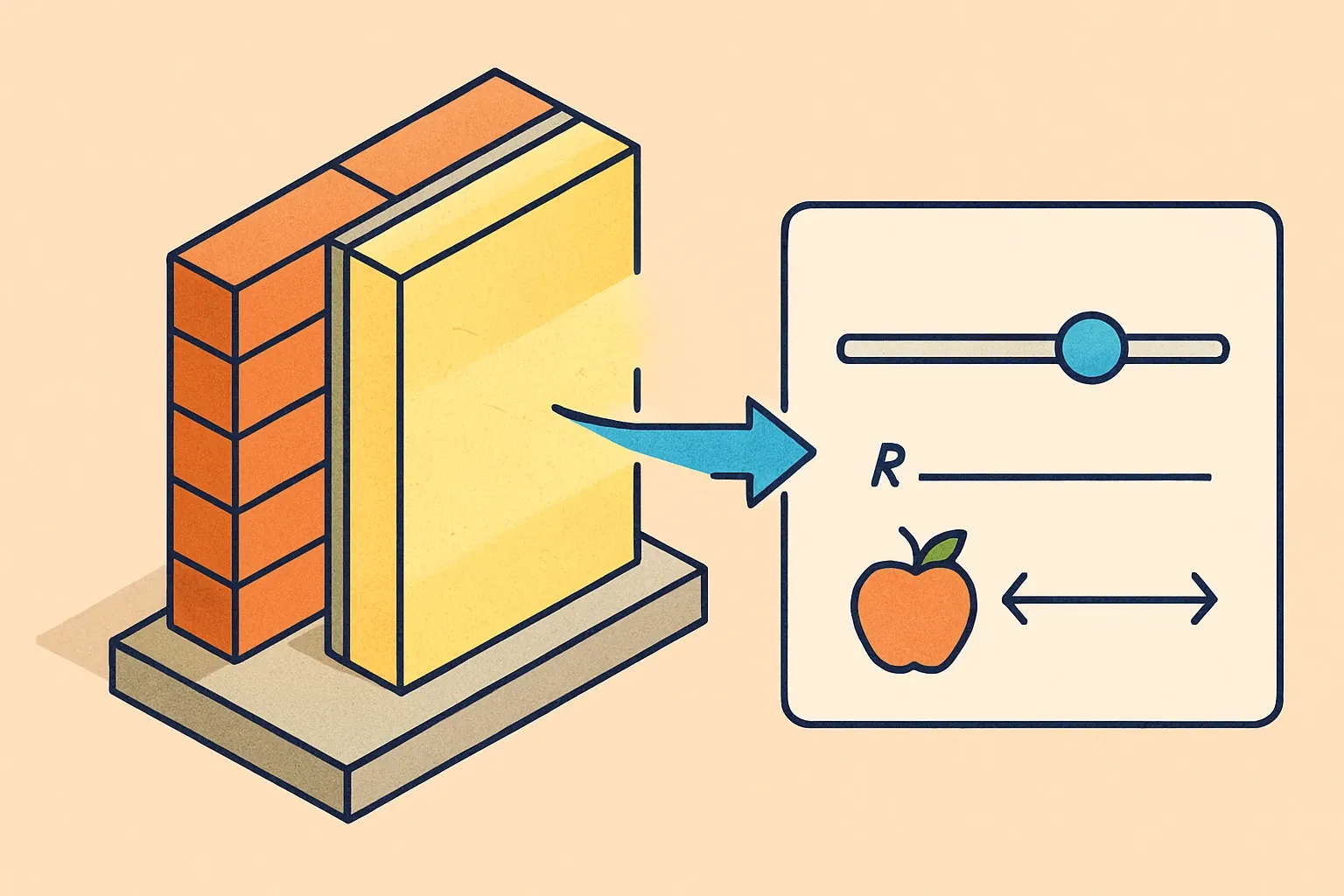
Insulation is performance by thickness. Many PCRs ask you to declare per area that achieves a specified thermal resistance, or per volume, or per kilogram. When comparing two “insulation EPD” PDFs, match the unit first, then map it to the thickness or R‑value your customers actually install. If units differ, convert to the same R‑value and area before judging GWP.
The big drivers behind the numbers
For polymer foams, blowing agents dominate. Legacy HFCs inflate GWP, while newer HFOs land much lower. The United States is phasing down HFC production and consumption by 85 percent by 2036, which is accelerating the shift in insulation foams and accessory products (EPA, 2025) (EPA, 2025).
Fiberglass and mineral wool are shaped by melt energy and recycled content. Cellulose revolves around recovered fiber and additives. Wood‑fiber boards hinge on biomass sourcing and process heat. Installation waste, adhesives, and facers can move results at the margins, especially in A5.
Ready to unlock insulation market opportunities?
Follow us on LinkedIn for insights that help you meet EPD requirements and boost your competitive edge.
Make apples‑to‑apples comparisons
Before you decide Product A is greener than Product B, do this quick check.
- Confirm the declared or functional unit and convert to the same R‑value and area.
- Align system boundaries. If one EPD adds A5 and the other does not, add equivalent installation assumptions or set A5 aside for both.
- Match geographic electricity mixes for A1 to A3. Grid carbon shifts year to year, so the reference year matters.
- Verify service life assumptions. Some PCRs guide typical lifespan for building assemblies, others leave it open.
- Inspect packaging, shipping modes, and cut lengths, since dense batts and rigid boards behave differently on trucks.
Where these EPDs live and who publishes them
Manufacturers publish with program operators such as Smart EPD in the United States, UL Solutions, IBU in Germany, and the International EPD System. Each operator follows ISO 14025 and EN 15804, with slightly different templates and review processes. Choose based on your markets and how your customers search for documentation, not on who shouts the loudest.
Reading the GWP line without getting burned
Global Warming Potential for A1 to A3 is the headline most readers jump to. Read the footnotes. Look for allocation rules on recycled content, biogenic carbon accounting for wood‑based products, and whether any benefit or load was pushed to Module D. If two EPDs are within a small margin, your installation waste rate or adhesive choice may swing the result more than the product itself.
Data you will be asked for
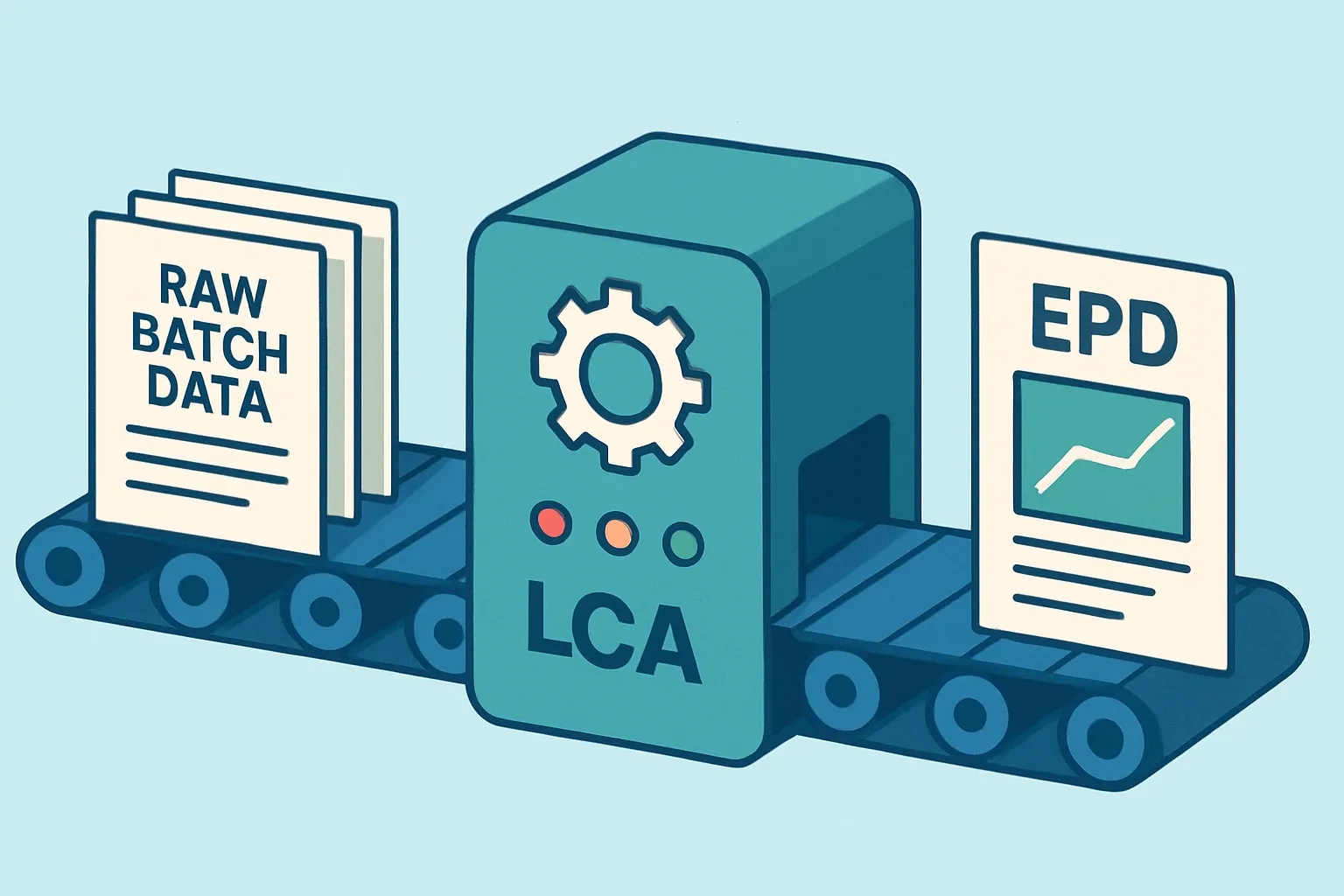
Expect bills of materials with exact formulations, plant utilities by month, fuels, on‑site emissions, waste streams, packaging, inbound and outbound transport, and installation ancillaries. A good LCA partner will collect supplier data, chase certificates, and translate ERP line items into LCI inputs. That white‑glove lift is what frees engineering and operations to keep lines running rather than emailing spreadsheets.
Timelines without the stress
Lead time depends on product complexity, data readiness, and verifier bandwidth. What makes timelines predictable is ruthless organization of data requests and proactive choices on PCR, program operator, and publishing format. Prospective EPDs can be an option for new lines when you have a few months of production data, then they are updated once a full year is available.
Strategy for fiberglass, mineral wool, foam, and cellulose
If customers ask for an “EPD for insulation,” bring options. For batt and board products, a product‑specific EPD reduces risk of conservative defaults in carbon accounting on projects. For spray foam, disclose blowing agent and density clearly so designers can model thickness. For cellulose, highlight recovered content and dust control at install. Do not forget accessory pieces like tapes and adhesives if the assembly needs them, otherwise their impacts land elsewhere and comparisons get fuzzy.
Why this matters commercially
Many project teams apply penalties when a product has no verified EPD, which pushes choices toward brands that document impacts. With a current, transparent EPD, your product competes on performance and availability, not price alone. The cost of producing one is often dwarfed by the revenue unlocked when you stop getting filtered out silently. That is definitly a blind spot for many teams.
Quick reality checks
Insulation’s operational benefit is real in most climates, and the bar is rising on embodied impacts too. Air sealing plus insulation can save about 15 percent of heating and cooling costs in typical U.S. homes, a reminder that performance and documentation both matter on bids (ENERGY STAR, 2024) (ENERGY STAR, 2024). EPDs remain valid until their own renewal date, even if the underlying PCR updates mid‑cycle, but plan your next revision window early so you are never close to expiry during a critical bid week (IBU, 2024) (IBU, 2024). PCRs commonly revise on five‑year intervals, so build those checkpoints into your product roadmap (UL Solutions, 2025) (UL Solutions, 2025).