The quick map of the field
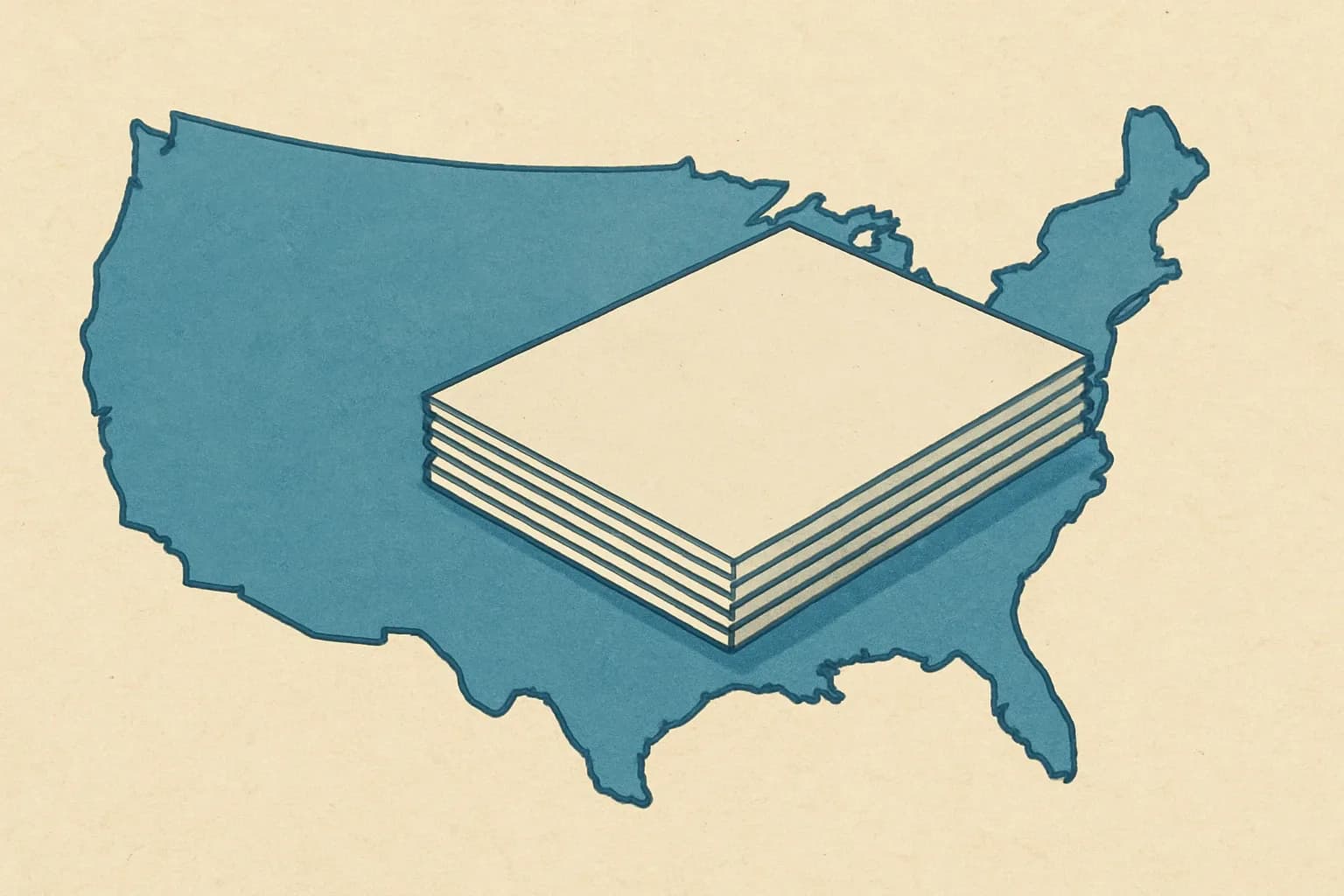
Six manufacturers dominate U.S. wallboard, operating about 60 plants with roughly 32.3 billion square feet of annual capacity, and industry shipments were about 27.9 billion square feet in 2023 (Eagle Materials 10‑K citing Gypsum Association, 2024). Imports and exports matter at the margins. In the first quarter of 2025 the U.S. imported about 230 million square feet of wallboard, 96% from Mexico, while exports were about 267 million square feet, 96% to Canada (USGS Mineral Industry Surveys, 2025) (USGS, 2025).
Why it matters for specs is simple. Where your customer builds often decides which brands are stocked nearby, and whether your product’s EPD is plant‑specific enough to avoid penalties in carbon accounting.
West and Northwest
Common brands: USG, Georgia‑Pacific Building Products, PABCO, CertainTeed. USG maintains product‑specific EPDs for multiple gypsum panels published through the ASTM program, which specifiers can cite with confidence (ASTM EPD Program, 2025) (ASTM, 2025). Georgia‑Pacific’s DensDeck family is widely used in the West for roofs and has EPDs current to 2030 for several thicknesses, which is helpful for schools and healthcare jobs that ask for them (NSF International EPD Listings, 2025) (NSF, 2025).
PABCO is a regional stalwart from Northern California into the Pacific Northwest. Their portfolio references industry‑wide coverage for some panels and product‑specific coverage for lines like QuietRock. If you sell here, verify whether the project needs a product‑specific EPD rather than relying on an industry‑wide one.
Southwest and Mountain
Common brands: USG, CertainTeed, American Gypsum, National Gypsum. CertainTeed has been refreshing product‑specific, plant‑level drywall EPDs in North America, including Type X and specialty boards that spec teams pull into submittals quickly. American Gypsum provides EPD documentation for core products such as 5⁄8 in Type X and glass‑mat panels, which keeps you in play for municipal and healthcare work when owners require a declaration.
Is EPD coverage affecting your gypsum board specs?
Follow us on LinkedIn for insights that help you identify new opportunities and win more projects.
Midwest
Common brands: USG, National Gypsum, CertainTeed. USG’s plant network and ASTM‑published EPD set mean submittals are usually straightforward on large interiors packages. National Gypsum’s plant‑specific EPDs for Type X and XP boards run through May 2030 for multiple plants, minimizing renewal risk on long programs (NSF International EPD Listings, 2025) (NSF, 2025).
Northeast
Common brands: National Gypsum, USG, CertainTeed. Distribution density is high, but procurement often prioritizes declarations that match the shipping plant. If a bid substitutes plants late, make sure the EPD number on the cut sheet still matches the plant that will supply the job. It sounds small, but it saves re‑work with owners and GCs.
Southeast and Gulf
Common brands: National Gypsum, CertainTeed, Georgia‑Pacific. Roofing cover boards are frequent add‑alts in hurricane country, so those DensDeck EPDs validated to 2030 are often requested by designers who standardize details across districts (NSF International EPD Listings, 2025). On interiors, CertainTeed and National Gypsum both offer plant‑specific coverage across popular Type X SKUs, which keeps LEED documentation clean when projects batch submittals.
What to check in five minutes before you bid
Think of it like choosing a streaming bundle. Get the channel you actually watch, not the bundle you never open.
- Plant specificity. Does the EPD list the exact plant likely to ship the project, or a family EPD that still satisfies the spec intent.
- Freshness. Anything expiring in the next few months invites RFI churn. USG and National Gypsum both show many current drywall EPDs that extend well into 2028 and 2030 on common SKUs (ASTM EPD Program, 2025; NSF International EPD Listings, 2025).
- Category fit. For gypsum, make sure the declaration aligns to the gypsum panel PCR, not just a generic construction PCR. Owners care about comparability, not just a PDF with a logo.
A note on supply and regional swaps
Even the best plan meets a curveball. Import exposure is small but real, and quarter‑to‑quarter shifts happen as border‑state supply flexes with demand and outages. The USGS data shows Mexico supplying the lion’s share of U.S. wallboard imports in early 2025, which tracks with what distribution teams see when plants go into outages or maintenance windows (USGS Mineral Industry Surveys, 2025) (USGS, 2025). Keep a backup EPD PDF for an alternate plant in your submittal pack.
Commercial payoff and how to get there with less stress
An EPD does not magically win a job. It removes friction. On projects where embodied‑carbon accounting applies, showing a current, product‑specific declaration means your product is evaluated on performance and availability rather than default penalties. The capacity picture supports this focus on readiness, with six domestic makers, about 60 plants, and ample headroom relative to shipments (Eagle Materials 10‑K citing Gypsum Association, 2024). If your internal team is slammed, prioritize partners who make data collection painless and keep your file set complete and verifiable. That ease is what moves submittals from maybe to yes. It is definately the quiet advantage.