What are environmental impact categories?
Impact categories are the lenses used in life cycle assessment to translate raw inputs and emissions into comparable signals on issues like climate change, smog, or acid rain. An Environmental Product Declaration reports these category results in a verified, apples to apples format defined by a Product Category Rule and the applicable standard.
The carbon quartet most teams track first
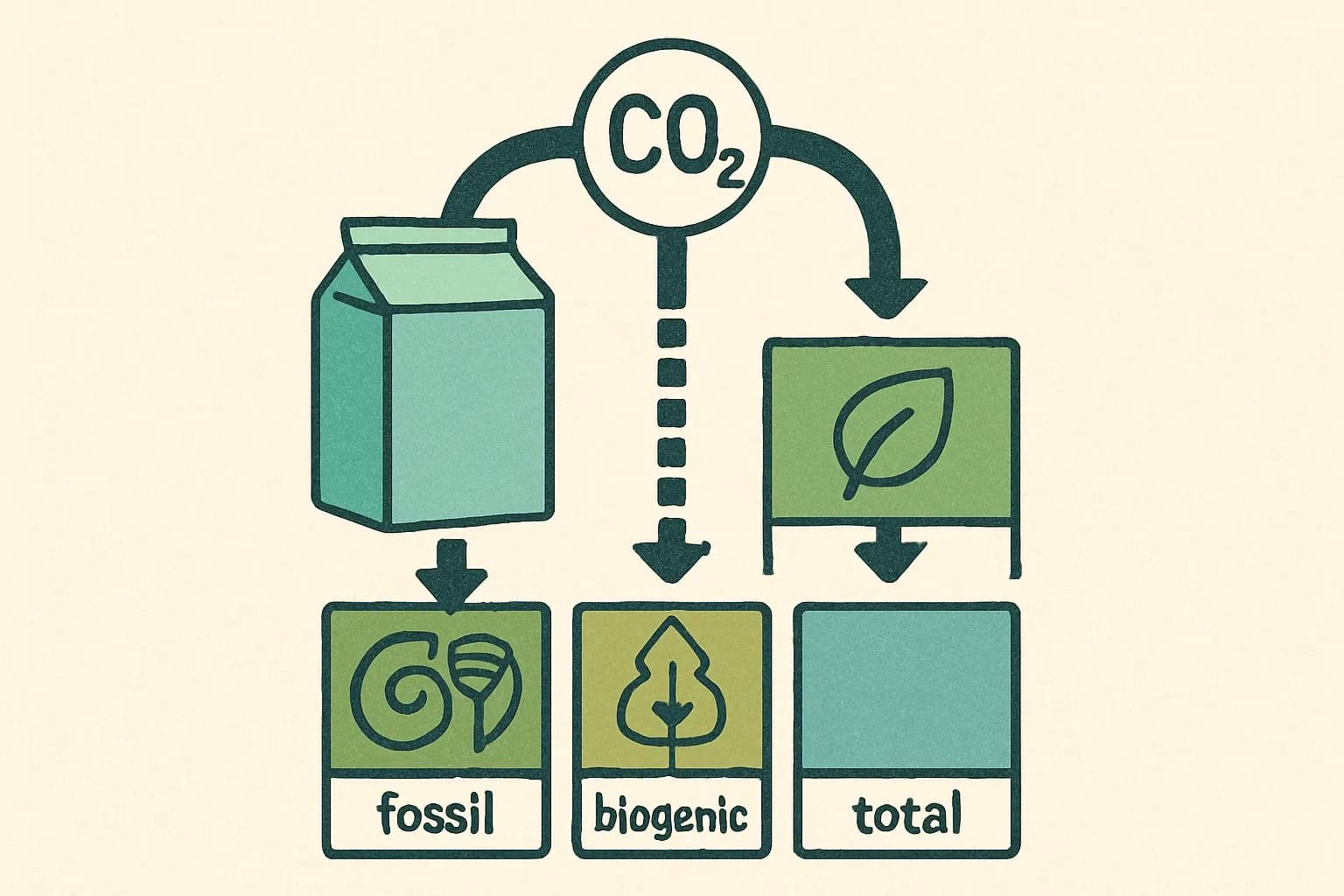
Climate change is expressed as Global Warming Potential in kilograms of CO₂ equivalent. Under EN 15804+A2, GWP is split into fossil, biogenic, land use change, and a total that sums them. The split matters. A wood composite might store carbon in A1 to A3, then release it at end of life in C3 to C4. Model both early so your story is consistent across sales, submittals, and procurement portals.
Acidification, eutrophication, and smog in plain English
Acidification reflects air emissions like SO₂ that can acidify soils and water. Eutrophication tallies nutrient releases that trigger algae blooms in freshwater, marine, or terrestrial contexts. Photochemical ozone formation tracks ground level ozone precursors that harm lungs and reduce crop yields. These categories often respond strongly to fuel switching, kiln optimization, packaging changes, and cleaner freight.
Ozone depletion is quiet, not absent
Modern refrigerants and foaming agents have reduced ozone impacts for many products, yet leaks or specific additives can still move the needle. Treat it like a smoke alarm. You do not hear it often, but when it rings you act fast with substitution or containment.
Resource use and circularity signals
Buyers are watching resource indicators alongside impact categories. Primary energy demand reveals how hard your process pulls on energy. Secondary material content and output flows show circularity in practice. Clear scrap and take back assumptions can turn a line in Module D into real commercial advantage when project teams compare otherwise similar bids.
Need to navigate EPD impact categories for better specs?
Follow us on LinkedIn for insights that help you make informed product decisions and win more projects.
Water metrics without the mystery
Many EPDs report both water consumption and a scarcity weighted view. The latter uses regional characterization to avoid greenwashing a liter saved in a wet region as equal to a liter in a water stressed basin. If your process has cooling loops or washing stages, metering and location data decide whether the number looks pritty good or problematic.
Which rulebook defines the categories on your EPD
In North America, many PCRs follow ISO 21930 and TRACI characterization while increasingly aligning with EN 15804 style reporting. In Europe and for EU projects, EN 15804+A2 sets the structure and requires 13 core environmental impact indicators, plus additional indicators often placed in the background report (EN 15804+A2, 2019). Ask your LCA partner to confirm the exact set before modeling so procurement portals and certification systems accept the file without edits.
How reviewers actually read the table
Most specifiers scan GWP first, then check for obvious trade offs. If your carbon story improves but particulate matter or terrestrial eutrophication spikes, expect questions. Provide a one sentence driver for any big change between prior and current EPDs. Keep units consistent, avoid unexplained negative numbers, and explain any credits in Module D with plain language.
Practical moves to improve the right numbers
Start with electricity and fuels because they ripple across GWP, smog, and acidification. Tune transport assumptions by mass and realistic routes rather than placeholder distances. For water, confirm withdrawal versus consumption and the facility location used for scarcity. Where biogenic carbon is relevant, lock down moisture content and end of life pathways so the biogenic ledger balances from A1 to C4, with any substitution benefits cleanly documented in D.
Verification timing that avoids fire drills
Most program operators keep EPD validity at five years, with updates required sooner when any declared indicator worsens materially. Plan review windows so the verification cycle does not collide with peak production or product changeovers. If a PCR is rolling to a new version, budget analysis time to map old indicators to the new set and to refresh any data quality requirements.
(EPD International, 2025) (FAQ)
Dates that matter for construction PCRs
For the International EPD System, the Construction products PCR 2019:14 version 2.0.1 is currently registered through 2030 04 07. If your next renewal lands near that date, expect new editorial templates and data quality rules that may touch how you present indicators even if your factory data is stable. Plan for it during sampling and metering upgrades.
(EPD International, 2025) (PCR 2019:14 v2.0.1)
Quick glossary for common searches
If you are scanning for environmental impact categories, these are the usual headliners you will meet in product EPDs. Climate change total and its fossil, biogenic, and land use change splits. Ozone depletion. Acidification. Eutrophication freshwater, marine, terrestrial. Photochemical ozone formation. Resource indicators like primary energy and material use. Water use and sometimes water scarcity. The exact lineup depends on PCR and geography.
Bring it together
Treat the category table like a nutrition label for your product line. Decide which numbers you want to move in the next 12 months, then collect the plant data that actually moves them. Line up the PCR version, confirm the indicator set, and keep reviewers looped in while you model. Small upstream decisions, captured cleanly, turn into measurable impact and fewer headaches when the project team hits submit.